Ford's business will gradually transition from its internal combustion vehicles to battery electric vehicles, but combustion vehicles will continue to grow for the next few years, CFO John Lawler told Cheddar News.
"Over time, we do see the transition between internal combustion engines — gas vehicles — to [battery electric vehicles] but that's going to be over time," he said. "We still see growth for [internal combustion engine] businesses over the next few years."
That optimism comes in spite of a $2.1 billion loss that Ford's electric vehicle division reported in 2022. The company anticipates the segment will lose an additional $3 billion in 2023, as it works toward profitability in 2026.
Lawler joined "Wake Up with Cheddar" after the automaker announced a major change in the way it reports financials. Instead of reporting geographic results, the new format will break out financials for three customer-facing groups. "Ford Blue" will include its traditional gasoline, diesel, and hybrid vehicles like the F-150 and Mustang. "Ford Model E" includes all electric vehicles, and "Ford Pro" includes commercial vehicles and fleets. The company is framing this shift as a whole new Ford.
"What we've done in creating Ford Blue, Ford Model E, and Ford Pro is far more than an accounting exercise. After 120 years, we've essentially refounded Ford," Lawler said on a call with the press on Wednesday evening.
Following the change, Ford also reviewed what 2021 and 2022 financials would have looked like in the new format. Whereas the Model E segment lost about $2.1 billion, Ford Blue and Ford Pro brought in $6.8 billion and $3.2 billion, respectively.
Lawler justified Model E's losses as par for the course for electric vehicles, describing the segment as a "startup that was buried inside of Ford Motor Company."
"Like all electric vehicle startups, you lose money at first as you're building scale, as you're designing your products, as you're growing and building share," he said.
The company's path to achieving 8 percent EBIT margin by 2026 in the Model E segment will be facilitated by scale and design efficiency for things like batteries, Lawler said. The company also plans to shave about $3 billion in structural costs from the company's balance sheet by 2026. Lawler said reducing design complexity and increasing reuse and commonality would be "some of the main levers" to cut those costs.
Ford was one of the biggest producers of electric vehicles in 2022, second only to Tesla. In spite of all the buzz around EVs, Lawler emphasized that Ford is still focusing on all three of its segments.
"Right now all three businesses are growth businesses," he said.
Healthcare workforce management platform ShiftMed
recently announced a $45 million funding round.
The company's platform connects nurses and healthcare professionals to hospitals and other healthcare providers.
ShiftMed's new funding comes amid widespread labor shortages in the healthcare sector. The company's CEO Todd Walrath joins Cheddar News' Closing Bell to discuss.
The S&P closed at a record at the major markets ended Thursday's session higher for a third straight day. Adam Coons, Portfolio Manager at Winthrop Capital Management, joins Cheddar News' Closing Bell, where he discusses what has investors feeling jolly before Christmas, and gifts investors with winning buying opportunities entering 2022.
Jeanenne Tornatore, travel expert, media personality, content creator, and former Orbitz senior editor, joins Cheddar News' Closing Bell, where she runs through items flyers should be mindful of this holiday season as the omicron coronavirus variant continues to spread.
With only two days left until Christmas, last-minute shoppers are facing major issues caused by supply chain shortages and the rising omicron variant. Kristen Gall, president of Rakuten Rewards, joins Cheddar News to discuss.
Supply chain issues have become one of the biggest roadblocks for the U.S. EV market, with production woes likely to stunt the industry's growth in 2022. Rich Steinberg, electric vehicle expert and industry advisor, told Cheddar that the Biden administration investing in domestic mining for essential minerals used in battery manufacturing — such as lithium — could help alleviate the bottlenecks. "Some of those same materials are available domestically, they just haven't been prioritized," he said, noting the paradox between green tech and "dirty" mining. "The good news is that there are ways to extract those materials cleanly."
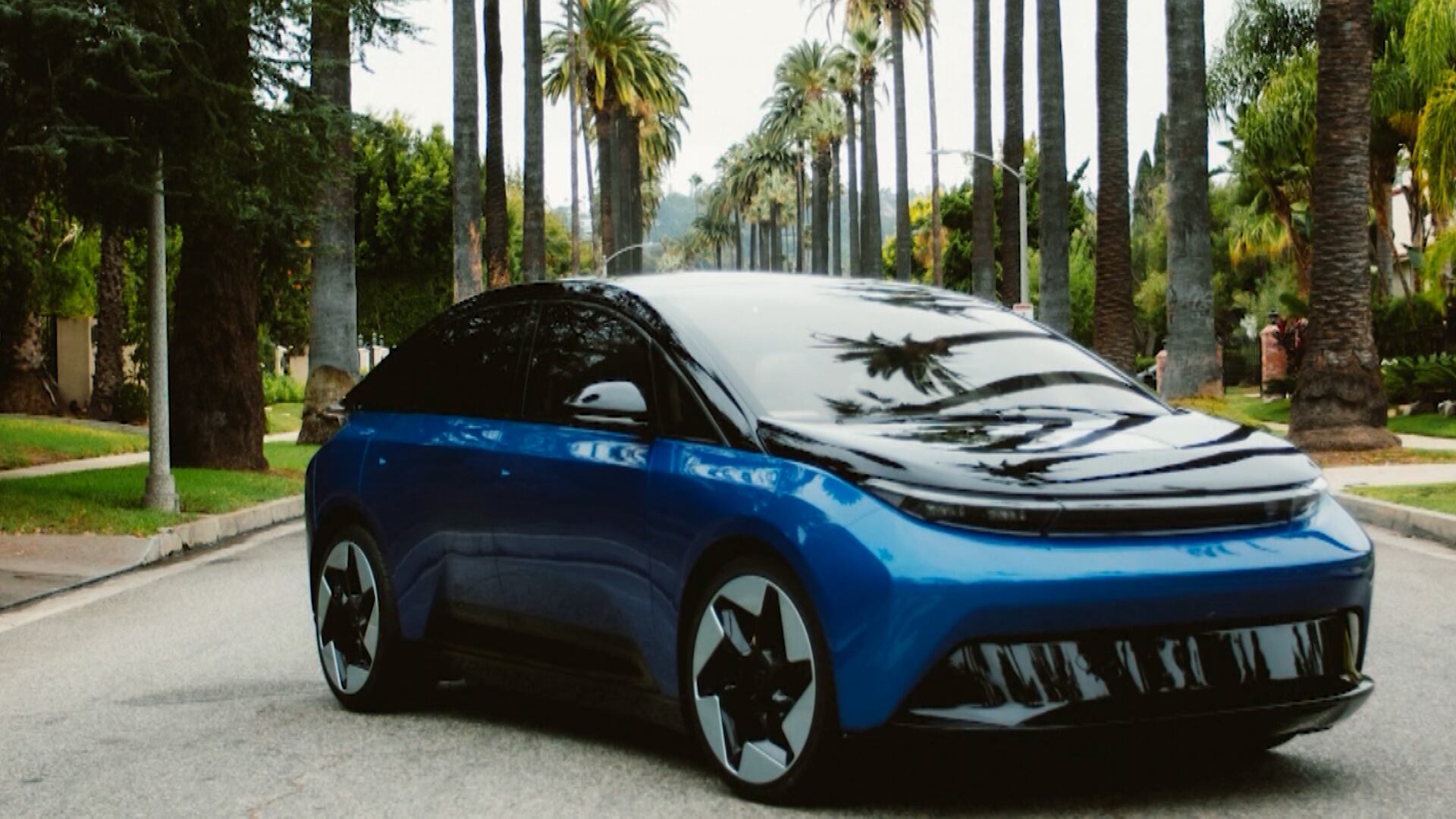
California-based startup Indi EV is gearing up to release its first crossover vehicle incorporating a supercomputer that will allow, among other things, gaming. Andre Hudson, head of design at Indi EV, joined Cheddar to talk about the launch of the Indi One and how the company is distinguishing itself from leaders in the EV space like Tesla. He also talked about the tech behind the Indi One and noted that the car's computer system will enable people to run applications and even create their own. "As a company, we fundamentally saw a major disconnect between how people transition into their cars using the digital devices in their life," Hudson said
Cheddar is looking back at the 12 biggest buzzwords of the year leading up to Christmas. The term for Day 12 is Web3. Definition: (noun) Also known as Web 3.0, a version of the internet where data is decentralized and based on peer-to-peer technologies.
Hyperfine, the pioneer of the very first FDA-approved portable MRI device, made its public debut on the Nasdaq via a SPAC merger. CEO Dave Scott joined Cheddar's "Opening Bell" to discuss the IPO launch, the company's valuation at $580 million, and the impact of its machine called Swoop. "We can roll an MRI system, our MRI Swoop system, right into the room where you are, right up to your patient bedside, and scan you right there and get an image in less than an hour," he explained.