New fintech startup PrizePool, which combines online banking with a monthly sweepstake designed to incentivize personal savings, has picked up $4.25 million in seed funding.
"It's a new way to save money, and hopefully incentivize folks to save money, for those unexpected expenses," CEO and co-founder Frank Chien told Cheddar.
PrizePool will guarantee $50,000 worth of prizes each month, including at least one $25,000 sum given out to a single winner. The rest of the prizes begin at $2 and go up.
"The way you enter is simply by saving money," Chien said.
The entrepreneur stressed that user deposits will be held by Evolve Bank & Trust, a commercial bank with a footprint in Arkansas and Tennessee.
"So your money is FDIC insured and risk-free completely," he said. "We actually run the entire program under sweepstakes law, so we're completely compliant and eligible in all 50 states."
The startup is also promoting how users can further incentivize each other to save through a system that rewards referrals with a 10 percent bonus on the new user's winnings.
"We're making savings a more shared experience," Chien said. "Every friend or family member that refer to PrizePool gives you more chances to win."
The seed funding will help PrizePool develop its software and pay for a marketing push, he said.
Chien was also behind the education-technology startup LearnSprout, which Apple acquired in 2016. The tech giant at the time was developing educational tools on its iPad product to compete with Chromebook in serving classrooms.
LearnSprout appears to have since been absorbed into the larger company.
The global oil benchmark has crossed the $100 per barrel mark for the first time since 2014. Oil prices have surged nearly 10 percent since Russia's invasion of Ukraine. Russia is the number two oil producer in the world, and it comes at a time when global oil supplies have already been constrained over the course of the past year. Rob Thummel, portfolio manager at Tortoise, joined Cheddar Movers to discuss.
Russia's economy is falling on hard times as businesses throughout the world continue to shut out the country after its invasion of Ukraine. Cheddar News was joined by Christine McDaniel, Senior Research Fellow at the Mercatus Center, to learn more about the situation.
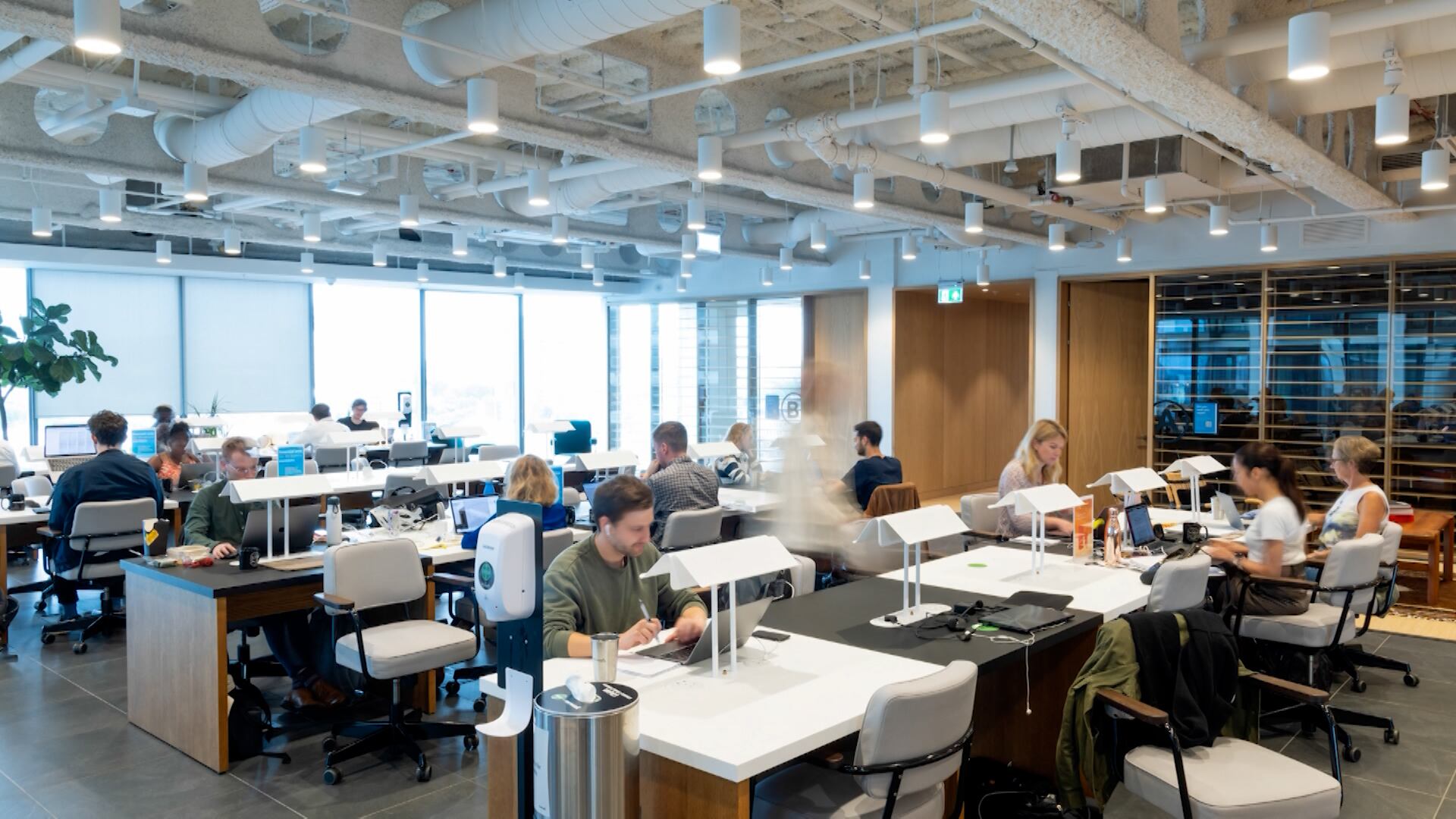
Tech companies such as Google, Apple, and Twitter are the latest to announce back-to-office plans. Google has asked its employees to return starting on April 4th. Heidi Brooks, senior lecturer in organizational behavior at Yale University School of Management, joins Cheddar News to discuss.
Businesses face more challenges for building a positive work environment as offices reopen. Workplace tech platform Envoy's At Work Report showed that hybrid work is currently in vogue, featuring focused work in both the office and at home. Annette Reavis, chief people officer for Envoy, joined Cheddar to discuss how employers can smooth the rough edges for their returning employees. "It is about hybrid though, it's really important for the future that we change our mindset from five days a week," she said. "Those are days of the past to working hybrids. So when you're in the office, you're focused, you're working cross-functionally."
Following the invasion of Ukraine, a multitude of Western companies have paused doing business with Russia. PepsiCo, Coca-Cola, McDonald's, and Starbucks are the most recent companies to temporarily cease operations in Russia. Dean of Miami Herbert Business School at the University of Miami, John Quelch, joined Cheddar News to discuss what message this sends to Russia and the Russian consumer. “I would not underestimate the collective strength of all of these multinational companies, essentially coming together to make their collective statement in support of the political statements that have come out of Washington," he said.
Cristyl Kimbrough, real estate attorney and star of 'Ladies Who List: Atlanta,' joins Cheddar News to discuss her new show on OWN and breaking into Atlanta's luxury real estate space.
Carl Tobias, professor of law at the University of Richmond, joins Cheddar News to talk about how Johnson & Johnson funded experiments on mostly Black men comparing the effects of talc and asbestos on their skin.
Amazon unveiled its new mobile app called Amp as a direct competitor to Clubhouse, allowing people to host live radio shows. Although it is still in beta, users can join the waitlist from the iOS store.