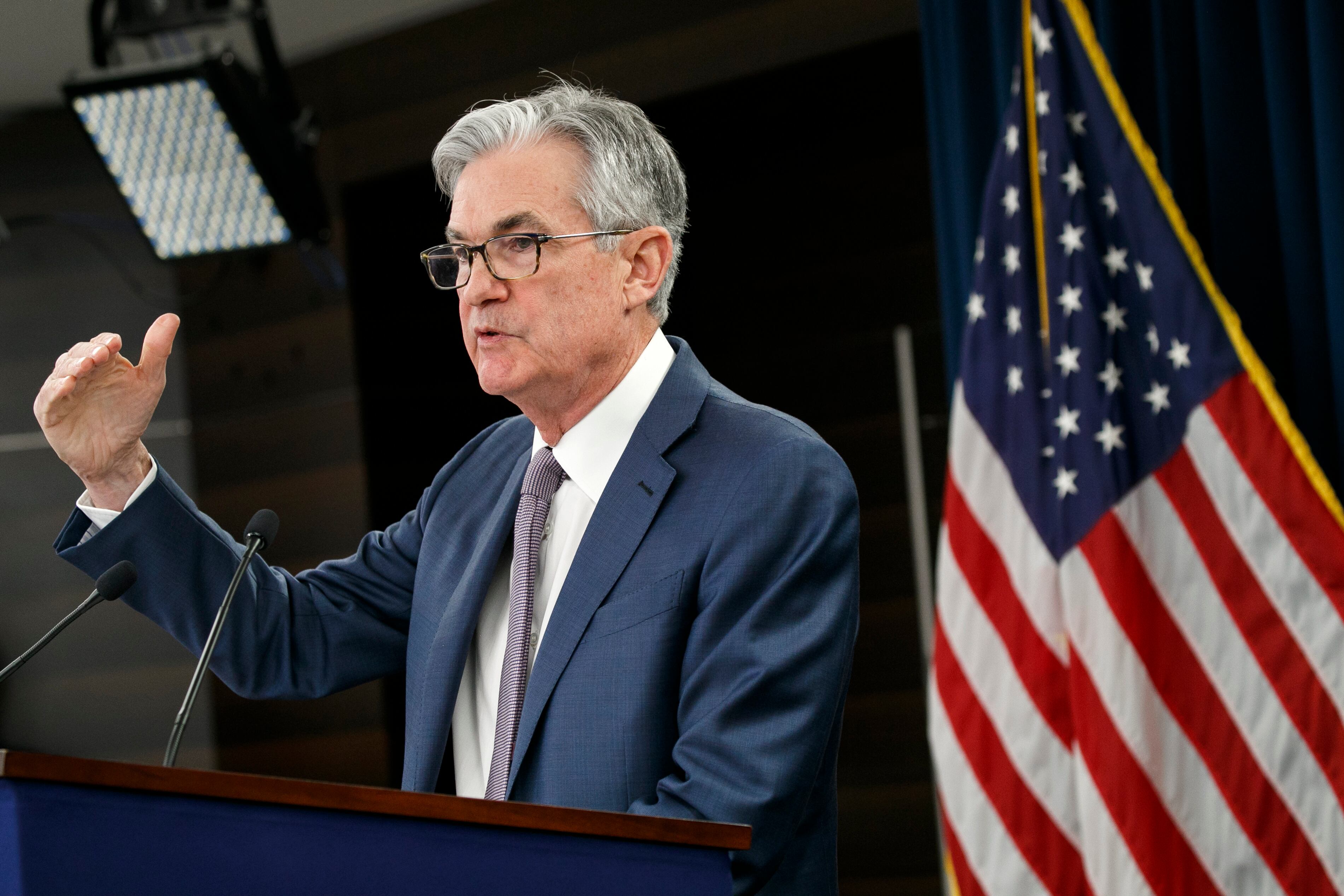
In this March 3, 2020 file photo, Federal Reserve Chair Jerome Powell speaks during a news conference to discuss an announcement from the Federal Open Market Committee, in Washington. (AP Photo/Jacquelyn Martin, File)
By Martin Crutsinger
The Federal Reserve announced a significant change Thursday in how it manages interest rates by saying it plans to keep rates near zero even after inflation has exceeded the Fed’s 2% target level.
The change signifies that the Fed is prepared to tolerate a higher level of inflation than it generally has in the past. And it means that borrowing rates for households and businesses — for everything from auto loans and home mortgages to corporate expansion — will likely remain ultra-low for years to come.
The new goal says that “following periods when inflation has been running persistently below 2%, appropriate monetary policy will likely aim to achieve inflation moderately above 2% for some time.”
The new Fed policy sought to underscore its belief that a low jobless rate was good for the economy by saying it would seek to assess the “shortfalls” in employment from the maximum level.
In a speech detailing the changes, Chairman Jerome Powell made clear that the policy change reflects the reality that high inflation — once the biggest threat to the economy — no longer appears to pose a serious danger, even when unemployment is low and the economy is growing strongly. Rather, Powell said, the economy has evolved in a way that allows the Fed to keep rates much lower than it otherwise would without igniting price pressures.
“The economy is always evolving,” Powell said. “Our revised statement reflects our appreciation for the benefits of a strong labor market, particularly for many in low- and moderate-income communities and that a robust job market can be sustained without causing an unwelcome increase in inflation."
In his speech, Powell said that the Fed's decision to allow unemployment to fall to a 50-year low before the pandemic had played an important role in lifting the fortunes of low-income workers.
Pax Labs, a leading electronic vaporizer company, plans to release its very first cannabis pod venture, of which different strands of cannabis will be available. COO Steven Jung spoke with Cheddar’s Chloe Aiello to talk about the release of the companies own line of 100 percent cannabis pods for use with its vaporizers. "I think this is the direction that most products are going," Jung noted. "If you look at the data, it would actually show you that most consumers are in fact looking for this kind of delivery mechanism in the product itself."
The gaming industry has seen multiple large scales deals this month alone, including Microsoft's megadeal for Activision Blizzard. And, seemingly in response, rival Sony, picked up Bungie for $3.6 billion, a studio once owned by both Microsoft and Activision. The sector is reportedly on track to spend $150 billion on mergers and acquisitions just this year alone, a record-breaking total, according to investment firm Drake Star Partners. Michael Metzger, a partner at the firm specializing in technology, media, and communications, joined Cheddar to discuss the flurry of deals in the gaming space and what might be behind the hot M&A activity.
Ari Redbord, head of legal and government affairs and TRM Labs, joins Cheddar News to discuss why Facebook is ditching its crypto project and what that means for the space.
Natalie Fertig, federal cannabis policy reporter at Politico Pro, joins Cheddar News to discuss a new YouGov poll that looks at how Americans feel about marijuana and politics.
After classic rocker Neil Young demanded removal of his music from Spotify over vaccine misinformation coming from The Joe Rogan Experience podcast, the platform made the decision to take down Young's songs and continue supporting Rogan with whom they have an exclusive contract. The move touched off a firestorm of controversy, leading to responses from both the streaming service and the podcasting host. Evan Nierman, CEO of Red Banyan Crisis PR, joined Cheddar to break down the latest on the fracas. "I think when [Spotify] initially said, we're not going to be commenting on that, that was a silly move because guess what? They did end up commenting about it, and nine times out of 10, when an organization says they're not going to be issuing a comment, they ultimately do," Nierman noted.
Tesla reported record profits for an electric fourth quarter, but investors still have plenty of questions. The EV giant will not be releasing any new vehicles this year and provided no updates on its Cybertruck. Cheddar News was joined by Ed Butowsky, Chapwood Investments Managing Partner to go over Tesla's quarter and analyze its concerns going forward.
Julius De Kempenaer, Senior Technical Analyst at Stockcharts.com, joined Cheddar News to break down what led to Apple's massive quarter, and what the future may hold for the tech giant as competition with Microsoft ramps up.