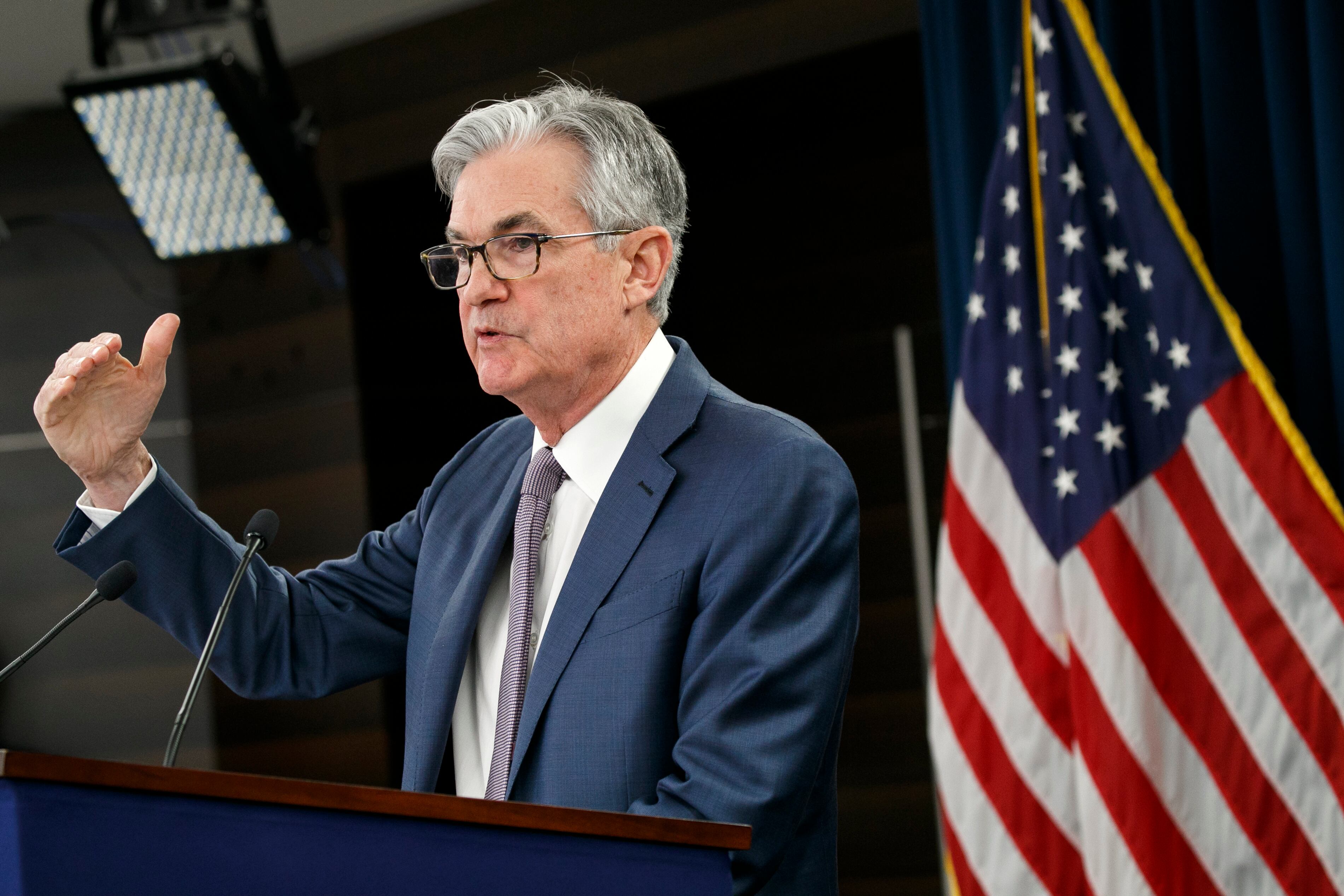
In this March 3, 2020 file photo, Federal Reserve Chair Jerome Powell speaks during a news conference to discuss an announcement from the Federal Open Market Committee, in Washington. (AP Photo/Jacquelyn Martin, File)
By Martin Crutsinger
The Federal Reserve announced a significant change Thursday in how it manages interest rates by saying it plans to keep rates near zero even after inflation has exceeded the Fed’s 2% target level.
The change signifies that the Fed is prepared to tolerate a higher level of inflation than it generally has in the past. And it means that borrowing rates for households and businesses — for everything from auto loans and home mortgages to corporate expansion — will likely remain ultra-low for years to come.
The new goal says that “following periods when inflation has been running persistently below 2%, appropriate monetary policy will likely aim to achieve inflation moderately above 2% for some time.”
The new Fed policy sought to underscore its belief that a low jobless rate was good for the economy by saying it would seek to assess the “shortfalls” in employment from the maximum level.
In a speech detailing the changes, Chairman Jerome Powell made clear that the policy change reflects the reality that high inflation — once the biggest threat to the economy — no longer appears to pose a serious danger, even when unemployment is low and the economy is growing strongly. Rather, Powell said, the economy has evolved in a way that allows the Fed to keep rates much lower than it otherwise would without igniting price pressures.
“The economy is always evolving,” Powell said. “Our revised statement reflects our appreciation for the benefits of a strong labor market, particularly for many in low- and moderate-income communities and that a robust job market can be sustained without causing an unwelcome increase in inflation."
In his speech, Powell said that the Fed's decision to allow unemployment to fall to a 50-year low before the pandemic had played an important role in lifting the fortunes of low-income workers.
Joseph Pallant, Founder and Executive Director for the Blockchain for Climate Foundation, joins Cheddar Climate, where he discusses the among of energy crypto mining consumes and explains how his organization is on a mission to make the crypto industry more environmentally sustainable.
One of the world's largest transport companies is kicking off Black History Month with a new initiative aimed at the next generation of business leaders. Today, FedEx announced the launch of its Student Ambassador Program. Participants selected from eight historically black colleges and universities will receive career guidance from FedEx executives. The program is part of FedEx's ongoing commitment to HBCUs and will also help the company expand its pipeline for diverse talent. Cheddar News welcomes senior vice president at FedEx, Jenny Robertson, and Jerryl Briggs, President of Mississippi Valley State University, to discuss.
Driver assistance monitoring systems are meant to keep the driver's eyes on the road, but according to a report from AAA, different ways of monitoring provide significantly different results. The study found that direct camera-based systems that scanned the driver's eye movements were faster and more reliable than those indirect systems that looked at steering-wheel input. Megan McKernan, the manager of automotive services for the Automobile Club of Southern California, joined Cheddar to discuss the findings. "Triple-A is recommending that automakers include both direct and indirect systems just to really prevent consumers from trying to misuse these systems," she said, noting that neither system on its own is not foolproof.
"Sing 2" has overthrown "Spider-Man: No Way Home" as the number one film at the UK box office. The animated sequel brought in $8.1 million, in just its two first weekends. However, "No Way Home" is still on track to beat "Avatar" as the number one grossing movie of all time.
Pinterest recently added augmented reality to its portfolio. The image sharing and social media platform's new e-commerce tech will allow consumers to interact with retailers and visualize online products inside their homes.
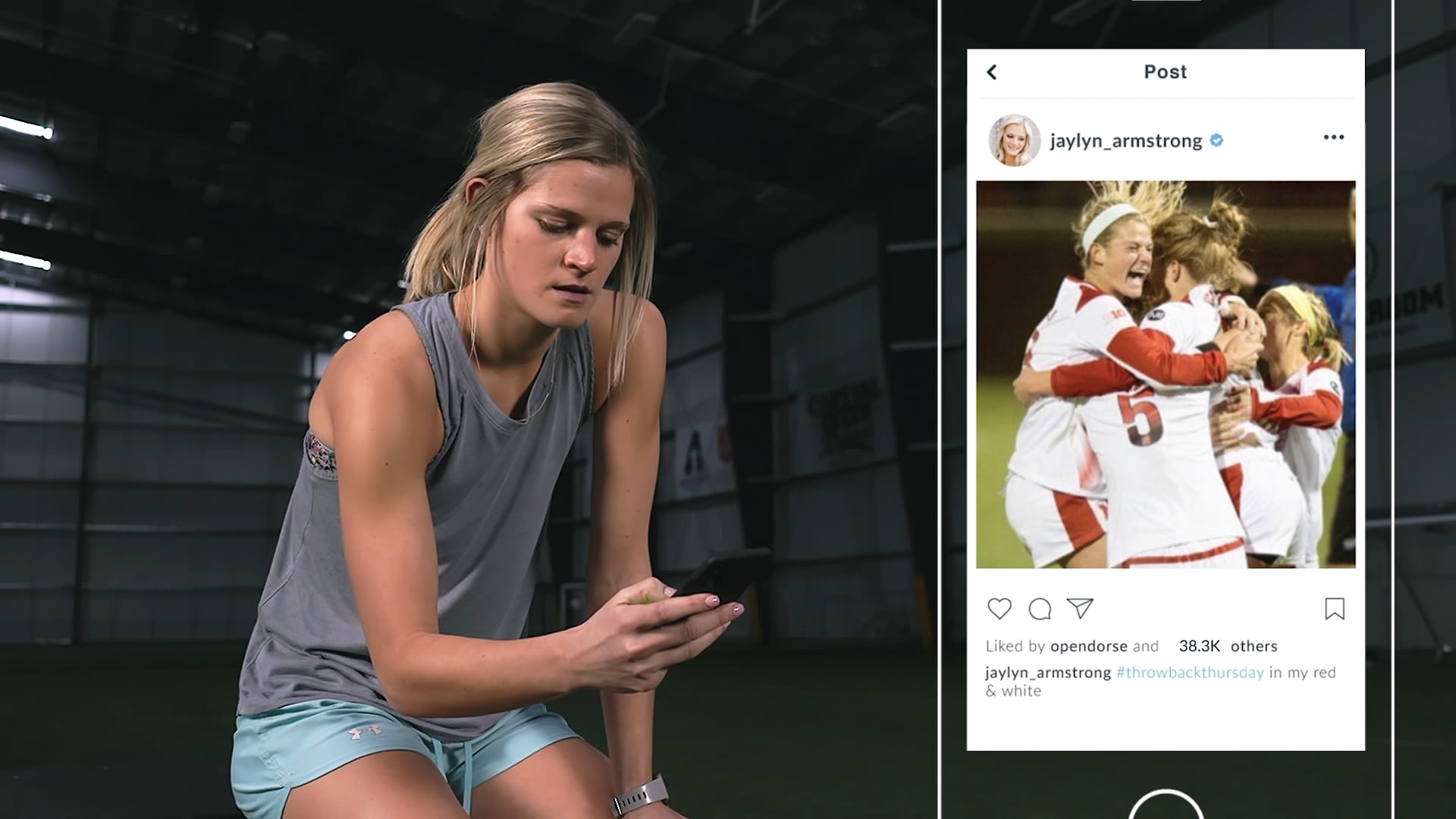
On this episode of Cheddar Reveals, Jim Riordan, Director of the MBA Sport Management program at Florida Atlantic University, breaks down the successes, failures, and chaos of the first seven months of the Name, Image, Likeness policy in college athletics; Adi Kunalic, President of Opendorse, discusses the first-ever association-wide deal in college athletics between Opendorse and the NAIA, and how Opendorse is marketing and educating student-athletes to make the most of their NIL deal potential; Cheddar gets a look at Curiosity Stream's 'Predicting a Pro'.
Jim Riordan, Director of the MBA Sport Management program at Florida Atlantic University, joins Cheddar Reveals to break down the successes, failures, and chaos of the first seven months of the Name, Image, Likeness policy in college athletics.
Adi Kunalic, President of Opendorse, joins Cheddar Reveals to discuss the first-ever association-wide deal in college athletics between Opendorse and the NAIA, and how Opendorse is marketing and educating student-athletes to make the most of their NIL deal potential.
Jason Chinnock, CEO of Ducati North America, discusses ways demand has changed over the last year and what supplying race bikes for the MotoE World Cup series means for Ducati's future.