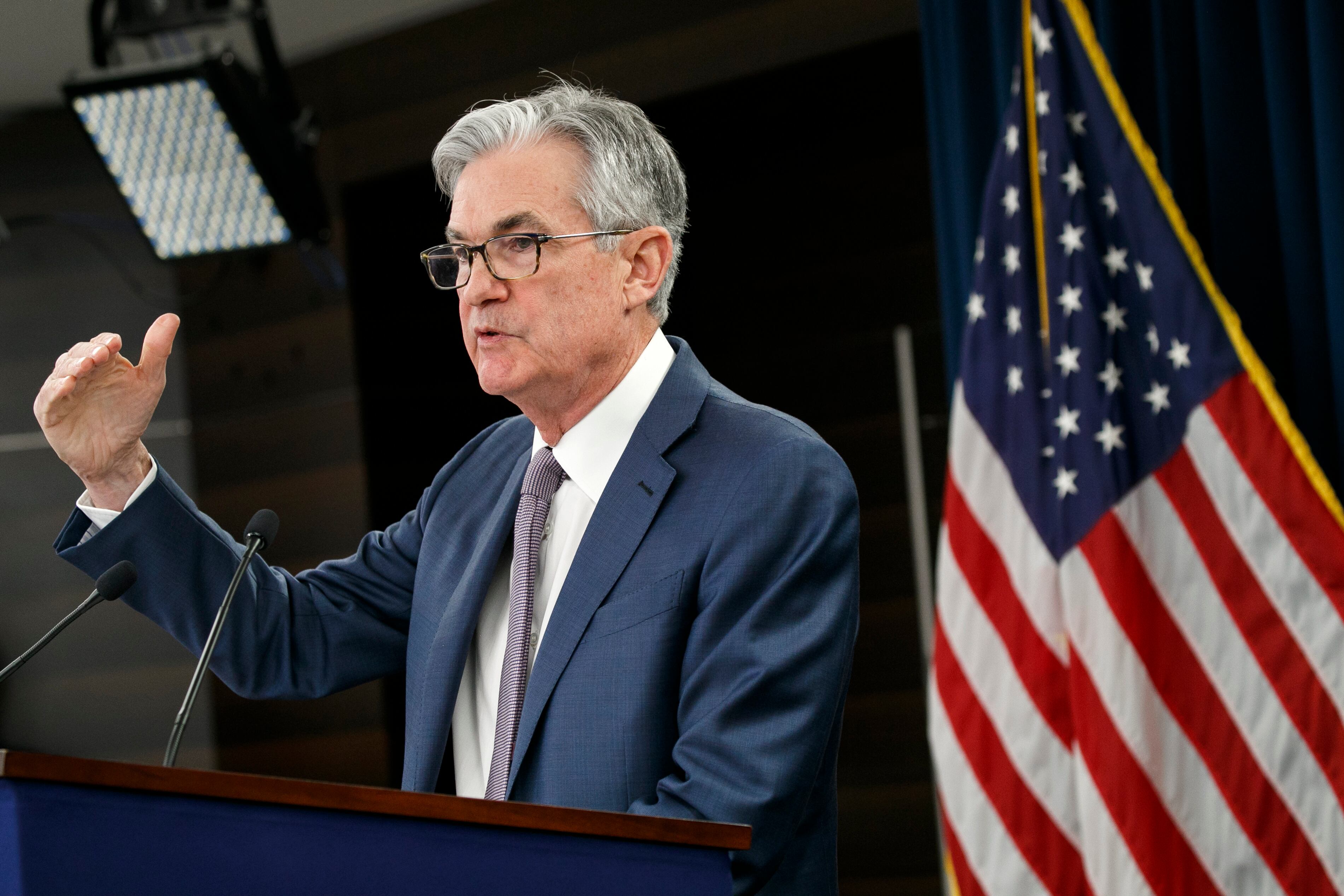
In this March 3, 2020 file photo, Federal Reserve Chair Jerome Powell speaks during a news conference to discuss an announcement from the Federal Open Market Committee, in Washington. (AP Photo/Jacquelyn Martin, File)
By Martin Crutsinger
The Federal Reserve announced a significant change Thursday in how it manages interest rates by saying it plans to keep rates near zero even after inflation has exceeded the Fed’s 2% target level.
The change signifies that the Fed is prepared to tolerate a higher level of inflation than it generally has in the past. And it means that borrowing rates for households and businesses — for everything from auto loans and home mortgages to corporate expansion — will likely remain ultra-low for years to come.
The new goal says that “following periods when inflation has been running persistently below 2%, appropriate monetary policy will likely aim to achieve inflation moderately above 2% for some time.”
The new Fed policy sought to underscore its belief that a low jobless rate was good for the economy by saying it would seek to assess the “shortfalls” in employment from the maximum level.
In a speech detailing the changes, Chairman Jerome Powell made clear that the policy change reflects the reality that high inflation — once the biggest threat to the economy — no longer appears to pose a serious danger, even when unemployment is low and the economy is growing strongly. Rather, Powell said, the economy has evolved in a way that allows the Fed to keep rates much lower than it otherwise would without igniting price pressures.
“The economy is always evolving,” Powell said. “Our revised statement reflects our appreciation for the benefits of a strong labor market, particularly for many in low- and moderate-income communities and that a robust job market can be sustained without causing an unwelcome increase in inflation."
In his speech, Powell said that the Fed's decision to allow unemployment to fall to a 50-year low before the pandemic had played an important role in lifting the fortunes of low-income workers.
At the age of 65, Judy Katz, who ran her own public relations firm for years, was looking for a change. After retirement, she started a brand-new business as an author and ghostwriter of books. Judy Katz joins Jamie Hopkins to discuss finding a new beginning as a ghostwriter and living life to the fullest post-retirement.
Catching you up with today's market check with the mortgage demand plummeting to a 22-year low, Walmart heir Rob Walton getting set to buy the Denver Broncos for $4.56 billion, and talks continuing over Jetblue’s attempted purchase of Spirit headlines.
Meta announced its plans to join the Cannes Lions International Festival of Creativity. This is leaving businesses and customers wondering what the tech giant has in store for the event. Nicola Mendelsohn, the vice president of the global business group at Meta, joined Cheddar News to preview what the tech giant will discuss at this year's festival. "We're going to be showcasing more about reels. We're going to be talking about our commerce solutions, are messaging solutions, and of course, the method of us speaking of new ways to kind of connect with customers," she said.
On today's episode of On The Job: Cheddar gets a look at how the salon and beauty industry has pivoted throughout the pandemic; Mark Brim, President of Aquent's Recruiting Division Vitamin T, breaks down how remote work has transformed hiring and recruiting process across the board;
Julie Bauke, President & Chief Career Strategist at The Bauke Group, breaks down why companies are being 'ghosted' by new hires, and what repercussions can come from this.
Mark Brim, President of Aquent's Recruiting Division Vitamin T, joins On The Job to discuss how remote work has transformed hiring and recruiting process across the board, and the latest trends surrounding remote hiring across the globe.
Julie Bauke, President & Chief Career Strategist, The Bauke Group, joins Cheddar to discuss the phenomenon of new hires accepting jobs and quitting before their first day of work, and how ghosting one company may come back to bite you when you find a job you really want.
Miami's real estate market has boomed since early 2020, thanks to an overall strong housing market, remote work, and no income tax as incentives. The city is preparing to welcome even more residents as people relocate to warmer climates to work from home. Garrett Derderian, director of market intelligence at SERHANT, joined Cheddar to discuss the Magic City's red hot market.