By Kimberlee Kruesi and Michelle L. Price

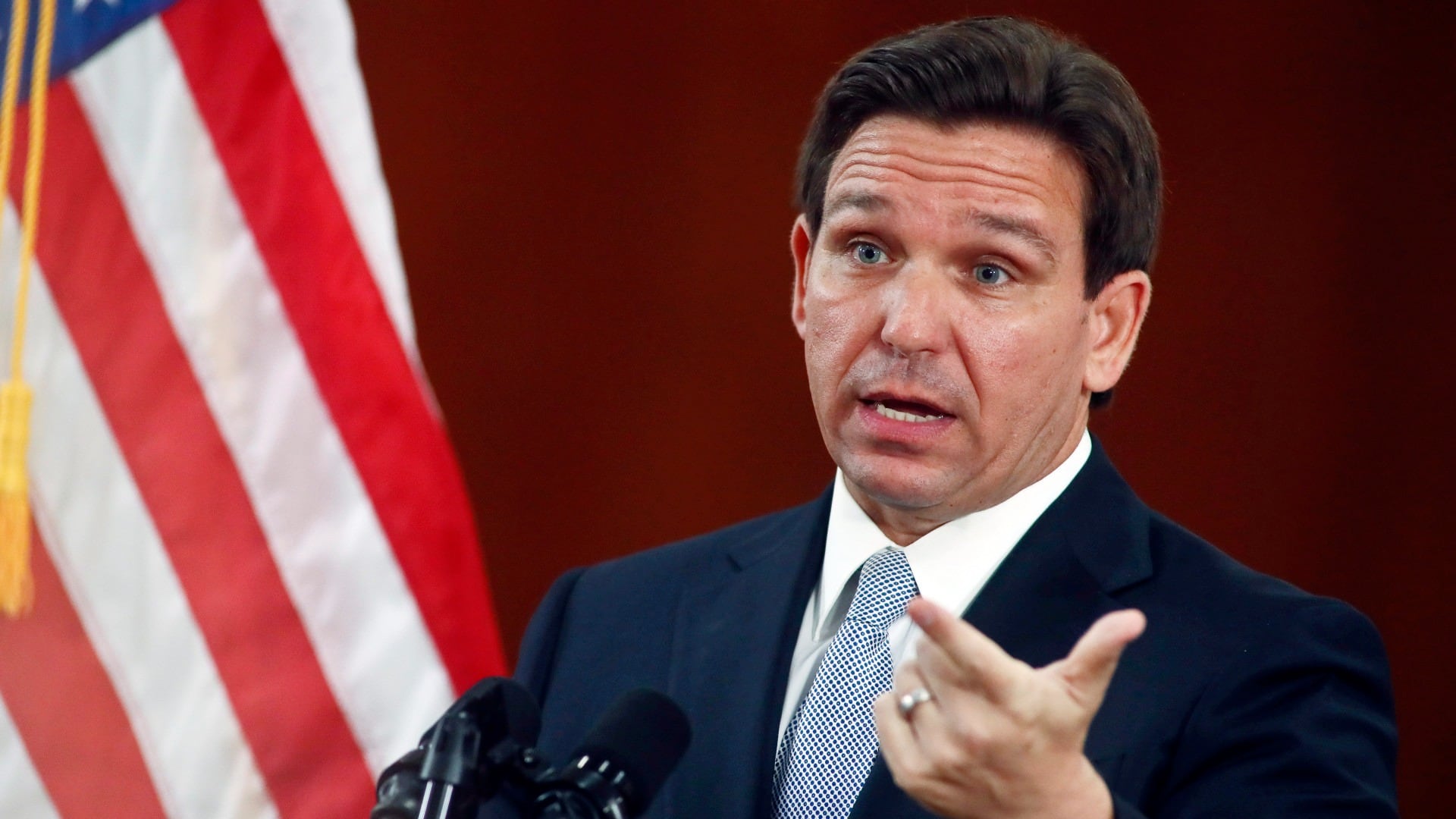
Florida Gov. Ron DeSantis was involved in a multi-car accident on Tuesday in Tennessee but was uninjured as he traveled in a motorcade to a campaign stop for his 2024 presidential bid.

The chain reaction crash happened before 8:15 a.m. when traffic slowed on Interstate 75 in Chattanooga, causing four cars in the motorcade to hit one another, police said. All the vehicles involved in the crash were government vehicles taking DeSantis and his team to his scheduled event, police said.

The Republican White House hopeful was not hurt, police and DeSantis press secretary Bryan Griffin said. A female DeSantis staff member suffered a minor injury and was later treated at the campaign event, police said.

Representatives for DeSantis’ campaign did not answer questions about who was driving the governor or reveal details about the accident. DeSantis was continuing on to his event, spokesperson Andrew Romeo said. A spokesperson for the Florida governor’s office deferred questions about the accident to the campaign.

Florida law says the Florida Department of Law Enforcement must provide security for the governor and his immediate family. It can include uniformed and nonuniformed officers.

DeSantis was scheduled to hold events throughout central and eastern Tennessee as he prioritizes Super Tuesday states in his campaigning. Super Tuesday, held on March 5 next year, is when the largest number of delegates are up for grabs of any day in the primary cycle.

Earlier this month, DeSantis addressed more than 1,800 attendees at a state GOP dinner in Nashville.

The Florida governor, who has trailed front-runner Donald Trump in the GOP presidential contest, was expected to be at a fundraiser at a private home in Chattanooga on Tuesday. Hosts for the fundraiser were to pay $10,000 per couple for the event, while co-hosts were paying $5,000 and other attendees were paying $2,000 each, according to the Chattanooga Times Free Press.

DeSantis was expected to attend additional fundraisers on Tuesday in Knoxville and Franklin.

The Republican candidate has been attending a string of fundraisers lately as his campaign has faced some surprising financial pressures. He was in Utah over the weekend holding fundraisers and in New York last week for an event in the Hamptons.

Just two months after entering the race, DeSantis already has been cutting staff while facing new questions about his aggressive spending, his media strategy and his apparent willingness to brawl with any and all foes except for Trump, the one person he must defeat to claim the GOP’s 2024 presidential nomination.

“The DeSantis campaign is recalibrating. It’s clear it needs to,” said Republican strategist Terry Sullivan, who managed Marco Rubio’s 2016 presidential campaign. “But at the end of the day, they’re still better positioned than any other challenger to Donald Trump, times 10.”

DeSantis’ team has quietly expressed confidence for months that voters would eventually tire of Trump’s escalating legal troubles and personal baggage. But that baggage, playing out in the U.S. legal system just as the GOP primary intensifies, is leaving precious little oxygen for his rivals to break through. And Trump’s standing with Republican primary voters seems to be growing stronger with every new legal challenge.

Still, DeSantis’ team has raised a stunning $150 million for his presidential ambitions so far. The vast majority, $130 million, has gone to a super PAC run by allies who cannot legally coordinate with the campaign.

The DeSantis campaign itself raised more than $20 million in the first six weeks he was in the race, though recently released federal filings revealed that he and his team had burned through more than $8 million in a spending spree that included more than 100 paid staffers, a large security detail and luxury travel.

Price reported from Washington. Associated Press writer Meg Kinnard in Houston contributed to this report.

Share:
More In Politics
U.S. Back to Negotiating Iran Nuclear Deal After Trump Withdrew in 2018
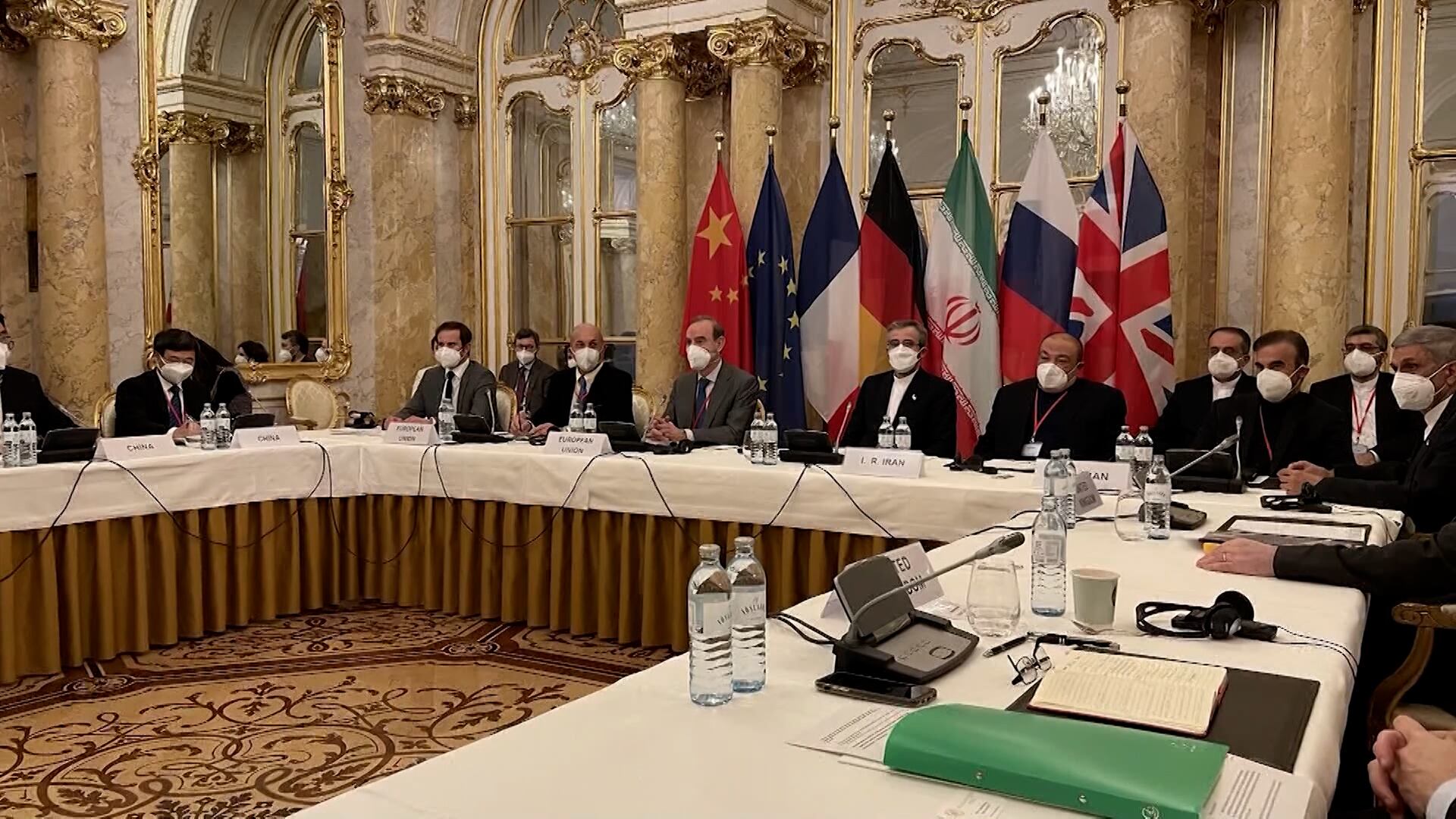
The U.S. is back in negotiations for a nuclear deal with Iran, years after former President Donald Trump withdrew the country from the Joint Comprehensive Plan of Action (JCPOA), which had been meant to curtail the Middle Eastern nation's nuclear ambitions. Former State Department senior advisor to the George W. Bush and Trump administrations, Christian Whiton, joined Cheddar News Wrap to discuss. “It appears to be very similar to the original JCPOA, which does put some constraints on Iran's nuclear program, but also has sunset provisions, including some that in the original plan were expected to take effect in 2025," he said. "And so, if we just reenter that plan, really it just buys perhaps a few years of slowing down, stopping, whatever you want to say, Iran's nuclear program."
Russia Orders Troops Into Two Ukrainian Regions, White House Calls the Conflict an Invasion
The U.S. has announced the first of what could be multiple levels of sanctions against Russia after Moscow recognized two regions of Ukraine as independent. This comes as Britain imposes sanctions on five Russian banks and two oligarchs, and Germany freezes the Nord Stream gas pipeline. Terrell Star, a foreign affairs reporter at The Atlantic Council, joins from Kyiv to discuss.
Price at the Pump Expected to Rise as Fear of Russian Invasion of Ukraine Grows
Growing tensions in Ukraine might soon be impacting consumers in the United States. With Russia on an invasion footing in the region, gas prices are predicted to go up 10 to 15 cents a gallon in the next coming weeks, according to Robert Sinclair, spokesperson for AAA. Sinclair joined Cheddar to break down what could happen even further. "We've been seeing prices go up, and there's been nothing that's happened to affect supplies," he said. "But it's something known as the fear tax where just the talk of something that might interfere with supplies leads to prices going up speculatively."
End of 3G Networks Expected to Impact Millions of Car Owners
The end of 3G is upon us. On Tuesday, AT&T became the first major provider to disable its 3G services, and T-Mobile and Verizon plan to follow suit later this year. The shutdowns are expected to impact millions of vehicles that use 3G networks for updates, remote connection, and certain emergency and convenience features. Lance Ulanoff, the U.S. Editor-in-Chief of TechRadar, joined Cheddar's Closing Bell to discuss the ramifications of the changeover.
Biden Imposes Economic Sanctions On Russia
President Biden unveiled new economic sanctions on Russia for what he called "the beginning of a Russian invasion". This came one day after Putin sent troops into two breakaway regions of eastern Ukraine. Alex Ward, national security reporter for POLITICO, explains what these sanctions might do to the global economy.
Stocks Close Sharply Lower Amid Russia-Ukraine Tensions
U.S. stocks ended today's session sharply lower on the heels of rising geopolitical tensions between Russia and Ukraine. Melissa Brown, Managing Director of Applied Research at Qontigo, joins Cheddar News' Closing Bell to discuss.
U.S. Will Impose Sanctions on Russia After Troops Entered Ukraine for Alleged Peacekeeping
President Joe Biden said Tuesday that the U.S. will begin to impose sanctions on Russia, calling recent troop movement into Ukraine an 'invasion.' Biden and other government officials including from the State Department have begun to classify the Russian troop movement as an invasion after Russian President Vladimir Putin ordered troops to two independent Ukrainian areas in an alleged "peacekeeping" mission — which the West considers an act of aggression. Biden said Russia will continue to pay 'an even steeper price' if it continues sending troops into Ukraine. What happens next? Will Putin find a way around these sanctions? Ariel Cohen, senior fellow at the Atlantic Council, joins Closing Bell to discuss Biden's remarks, how the West will protect Ukraine since it doesn't belong to NATO, and more.
Load More