A woman uses her phone as she passes by the ByteDance headquarters in Beijing, China, on Friday, Aug. 7, 2020. The Chinese government is complicating the U.S.-government-ordered sale of U.S. TikTok assets. China on Friday, Aug. 28, 2020 introduced export restrictions on artificial intelligence technology, seemingly including the type that TikTok uses to choose which videos to spool up to its users. That means TikTok's Chinese owner, ByteDance, would have to obtain a license to export any restricted technologies to a foreign company. (AP Photo/Ng Han Guan)
By Tali Arbel and Zen Soo
The Chinese government is complicating the U.S.-government-ordered sale of U.S. TikTok assets.
China on Friday introduced export restrictions on artificial intelligence technology, seemingly including the type that TikTok uses to choose which videos to spool up to its users. That means TikTok's Chinese owner, ByteDance, would have to obtain a license to export any restricted technologies to a foreign company.
The Trump administration has threatened to ban TikTok by mid-September and ordered ByteDance to sell its U.S. business, claiming national-security risks due to that Chinese ownership. The government worries about user data being funneled to Chinese authorities. TikTok denies it is a national-security risk and is suing to stop the administration from the threatened ban.
Prospective buyers for U.S. TikTok assets include Microsoft and Walmart and, reportedly, Oracle. Oracle has declined to comment.
On Saturday, Chinese state-owned media outlet Xinhua News Agency quoted government trade adviser and professor Cui Fan, who said that Bytedance should consider whether it should halt negotiations to sell TikTok in the U.S.
"As with any cross-border transaction, we will follow the applicable laws, which in this case include those of the U.S. and China," said ByteDance General Counsel Erich Andersen.
The Chinese government's new restrictions may be a "tactic to drive up valuation" of TikTok, said RBC Capital Markets analyst Alex Zukin, who still expects a deal announcement "relatively soon." The Wall Street Journal reported last week that ByteDance is asking for $30 billion for the U.S. operations, but has faced resistance from bidders. The Journal said in a Sunday story that deal talks had "slowed."
Microsoft and Walmart declined to comment on Monday.
White House press secretary Kayleigh McEnany, during a White House briefing, did not directly answer whether the administration would accept a sale of U.S. assets of TikTok if the deal were subject to Chinese government approval. "Negotiations are ongoing on a sale of TikTok so we are not going to get in the way of those negotiations," she said.
—
Associated Press writer Kevin Freking contributed to this report from Washington.
Meta wants creators to make money from the metaverse, but it's going to take a large chunk of the cut. The tech giant is planning to keep nearly 50% of all digital asset sales within Horizon Worlds, the virtual reality platform that's considered an integral part of the company's unfolding metaverse. Rolf Illenberger, Co-founder and Managing Director of VRdirect, joined Cheddar to discuss why Meta is taking heat for this move, and what it could be doing as an alternative to help support creators, small businesses, and consumers.
Grayscale recently launched its Future of Finance ETF ($GFOF) for investors to benefit from innovative businesses that it sees as critical to building the digital economy. CEO Michael Sonnenshein joined Cheddar to discuss the fund, companies making the most impact, and ways in which investors can expand holdings in the digital economy. “When we think about how investors should be building out their portfolios, we felt that there was a really important opportunity to also provide investors with access to the broadly defined digital economy, really, that confluence between technology and finance," he said.
Al Root, Senior Writer at Barron's, discusses possible scenarios if a Twitter buyout deal goes through and what a takeover means for the future of the social media platform.
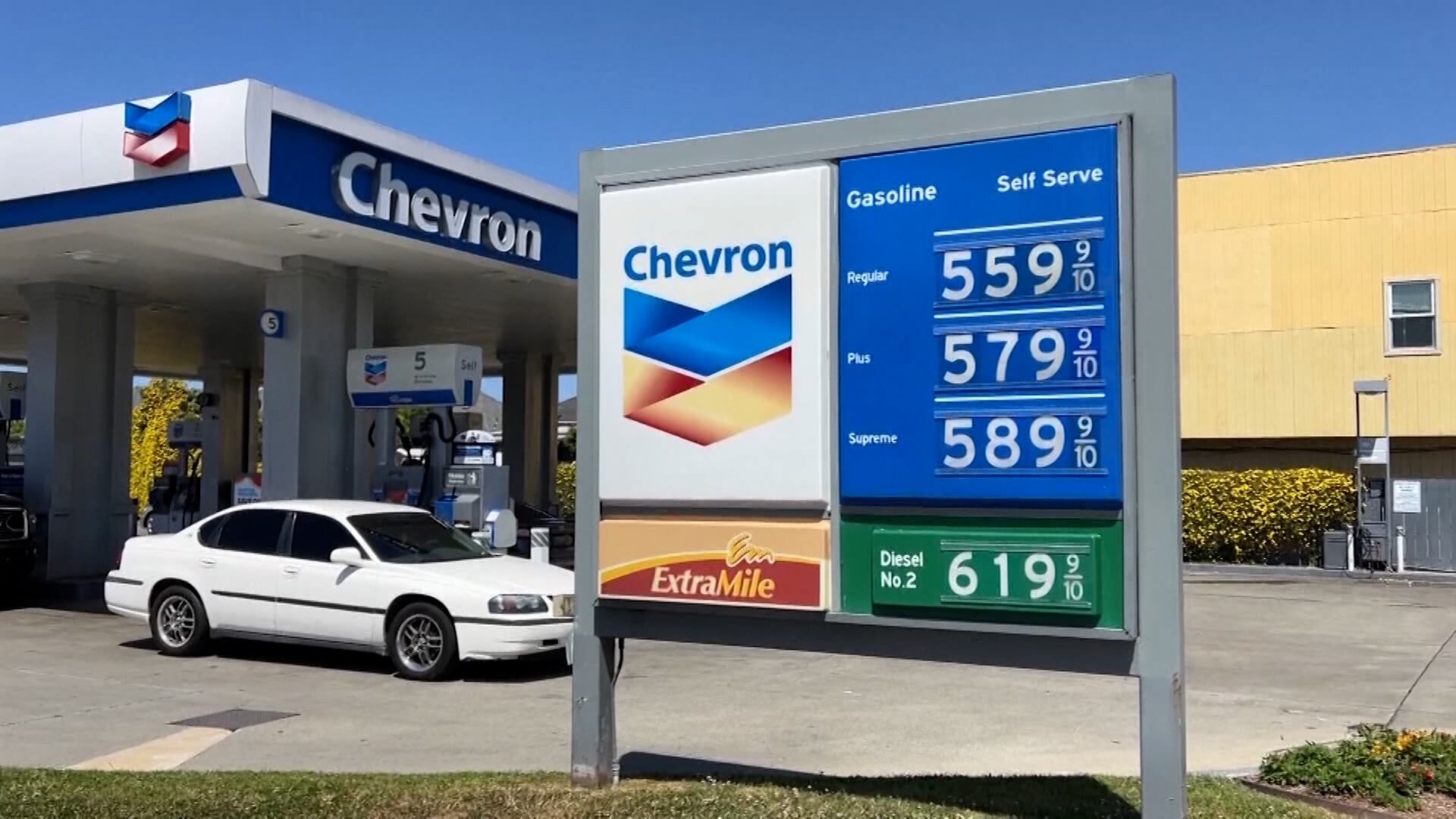
Gas prices took up a big share of consumer spending in March. Retail sales climbed 0.5% from the previous month as Americans are forced to spend more money on food, gasoline, and other necessities. Kayla Bruun, Economic Analyst at Morning Consult, breaks down her outlook on consumer spending as prices continue to rise.
Kristina Hooper, Chief Global Market Strategist at Invesco, discusses the biggest takeaways from Bank of America's earnings and highlights what investors should watch as BigTech reports this week.
Catching you up on what you need to know on April 18, 2022, with Russian missile attacks on the Ukrainian city of Lviv killing seven, mass shootings in South Carolina and Pittsburgh, Lucky Charms cereal under official investigation by the FDA, and more.