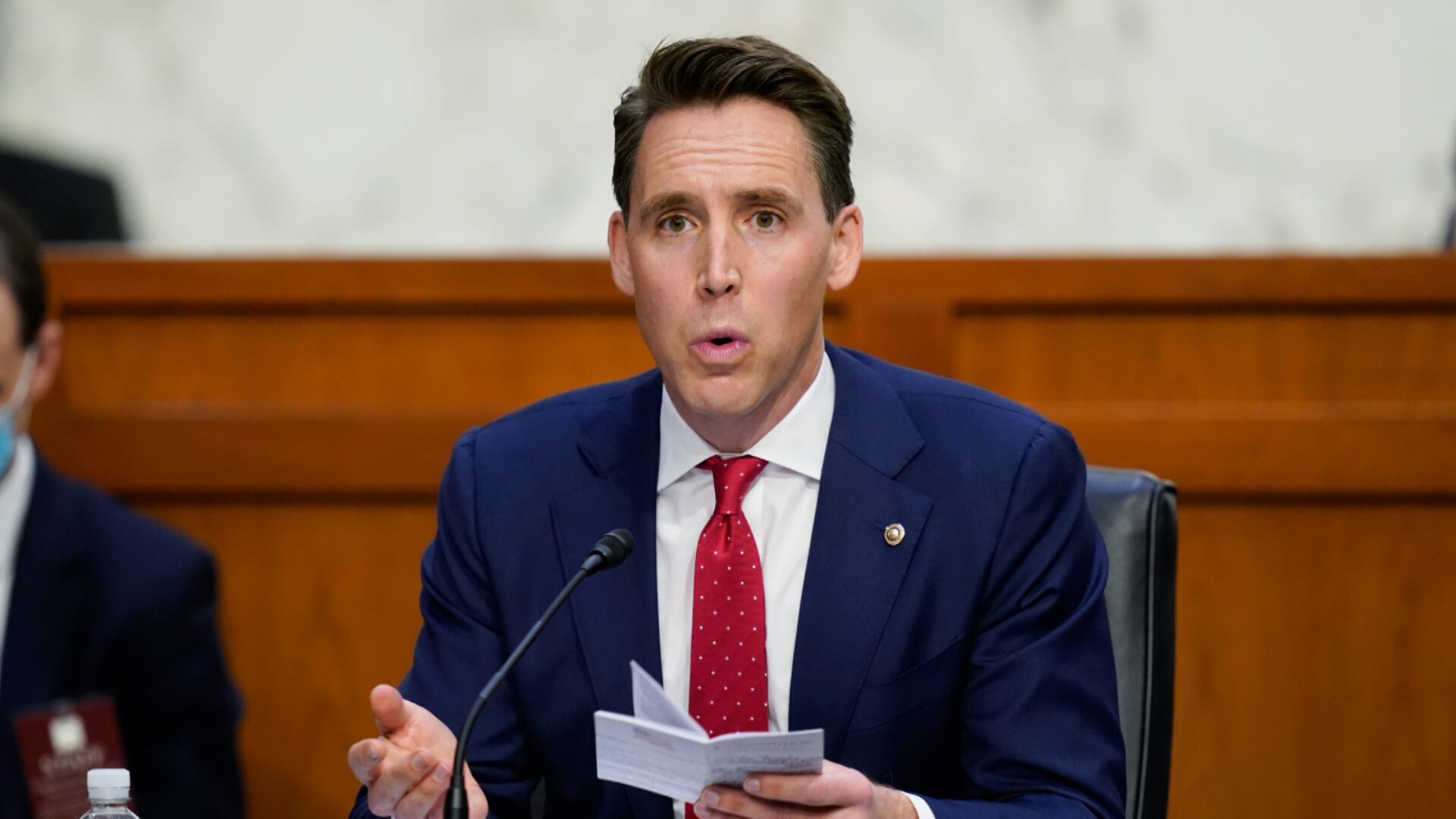
Although the much-anticipated blue wave wasn't the tsunami Democrats had hoped for, the Party still managed to wrestle the House from Republican control and score victories in key gubernatorial races. As expected, Republicans maintained their grip on the Senate. Read below for more on Election Night. **HOUSE** **California’s 48th District:** Democratic challenger **Harley Rouda** is neck and neck with Republican incumbent **Rep. Dana Rohrabacher** in the once-reliably Republican Orange County district that Hillary Clinton took in 2016. Rep. Rohrabacher’s longstanding, Vladimir Putin-friendly views loom large this election season, and Rouda has not shied away from making them a central focus of his campaign. **Florida’s 26th District: (Winner: Democrat Debbie Mucarsel-Powell)** Insurgent Democrat, **Debbie Mucarsel-Powell**, deposed Republican incumbent **Rep. Carlos Curbelo,** in an increasingly blue district that comprises swaths of southern Miami-Dade. The top issues for this heavily-Hispanic district were health care, guns, and climate change. **Iowa’s 4th District (Winner: Republican Steve King):** Incumbent **Rep. Steve King** is hanging on to a slight lead over Democratic challenger **J.D. Scholten.** This is a deep-red district in a deep-red state, but King’s history of racist and anti-Semitic comments has people taking a second look ー especially in the wake of the deadly synagogue shooting in Pittsburgh, Pa. Scholten has outraised King by $1 million. **Iowa’s 3rd District (Winner: Democrat Cindy Axne):** Businesswoman **Cindy Axne** beat Republican incumbent **Rep. David Young** by a margin of roughly 10,000 votes, reclaiming the senatorial seat from a conservative Trump supporter. The district was mixed, encompassing the city of Des Moines and conservative towns to the west. Axne emphasized environmental issues and health care in her first political run. **New York’s 14th District: (Winner: Democrat Alexandria Ocasio-Cortez)** After a stunning primary upset over career politician and incumbent Rep. Joe Crowley, 29-year-old **Alexandria Ocasio-Cortez** became the youngest woman ever elected to the U.S. Congress on Tuesday night. She beat Republican opponent, **Anthony Pappas**, a 72-year-old professor with a minimal and eccentric platform. **New York’s 19th District: (Winner: Antonio Delgado)** Political newcomer **Antonio Delgado** defeated Republican incumbent **Rep. John Faso** and, in so doing, will become the first-ever person of color to represent New York's 19th district. Delgado took an upstate New York district that swung right to President Trump in the 2016 election after two terms of favoring former President Barack Obama. During the campaign, Faso ran attack ads that emphasized Delgado’s brief career as a rap artist over his résumé as a lawyer and graduate of Harvard and Oxford, inviting accusations of racism. **Pennsylvania’s 1st District: (Winner: Republican Brian Fitzpatrick)** In blue-leaning territory, Republican incumbent **Rep. Brian Fitzpatrick** successfully defended his seat against millionaire philanthropist **Scott Wallace.** Pennsylvania was widely considered one of the key battlegrounds in the midterms. **Virginia's 2nd District: (Winner: Democrat Elaine Luria)** After an extremely tight race, Republican incumbent **Rep. Scott Taylor** lost his seat to Democratic challenger **Elaine Luria** in a historically very-red district that includes the Norfolk Naval Base. Luria is part of a group of rising female politicians with military backgrounds. During the campaign, members of Taylor’s staff were accused of forging signatures to put a spoiler candidate on the ballot who could steal votes from Luria. **Virginia 7th District: (Winner: Democrat Abigail Spanberger)** Republican incumbent **Rep. Dave Brat** lost his seat to challenger **Abigail Spanberger** in what should have been a clean victory for Brat. That’s thanks, in part, to concerted efforts to get out the female vote and turn a decades-long red district to blue. The top issues in the district were taxes, health care, and immigration. **SENATE** **Arizona:** Jeff Flake’s seat is the scene of a heated battle between sitting congresswomen in which Donald Trump is on the ballot in all but name only. Democratic **Rep. Kyrsten Sinema** is running as a moderate and eschewing the help of big names in the party. **Rep. Martha McSally**, though, has been fully embraced by Trump. The race is a toss-up, though it will make history: whoever wins will be Arizona’s first female senator. **Florida:** Florida’s own term-limited **Governor Rick Scott** is challenging Democratic incumbent **Rep. Bill Nelson** in one of the election’s most expensive and bitter races. A governor in his second term, Scott was once a GOP favorite, but has since changed his stance on key issues, including gun control and immigration. Florida represents another key battleground for the midterm election, and the race is very tight with most polls showing Nelson slightly ahead of Scott. **Indiana: (Winner: Republican Mike Braun)** Incumbent **Sen. Joe Donnelly** surrendered his seat to challenger **Mike Braun.** A Washington neophyte, Braun won over voters in a territory President Trump claimed by a landslide in the 2016 election. His relative inexperience presented a contrast to Donnelly, a Washington insider. **Missouri: (Winner: Josh Hawley)** A mostly rural state, Missouri has drifted further to the right over the years, culminating in Trump's 2016 victory in the state ー **Josh Hawley's** victory seems to confirm the shift. A Yale-educated conservative Republican, Hawley took on **Sen. Claire McCaskill,** the Democratic incumbent, and won by a fair margin. **New Jersey (Winner: Democrat Bob Menendez):** **Sen. Bob Menendez** was re-elected for a third term on Tuesday night, defeating challenger **Bob Hugin,** despite a 2017 corruption trial that shadowed him throughout his campaign. Hugin, a former pharmaceutical executive, spent $30 million on ads reminding voters of the indictment. Menendez’s campaign successfully spent its efforts and dollars connecting Hugin to President Trump. **North Dakota (Winner: Republican Kevin Cramer):** **Sen. Heidi Heitkamp** is considered one of the most endangered Democratic Senate incumbents as she mounts a defense against challenger **Kevin Cramer.** A staunch Trump ally, Cramer has repeatedly made headlines throughout his campaign for harsh remarks, particularly concerning Judge Brett Kavanaugh’s hearings and the #MeToo movement. He has framed Heitkamp as a liberal who is out of touch with North Dakota’s mostly red voters, and maintains a lead over his opponent in early polling. **Tennessee: (Winner: Republican Marsha Blackburn)** Despite an Instagram endorsement by superstar Taylor Swift, Democratic challenger **Phil Bredesen** lost to **Rep. Marsha Blackburn** in reliably-Republican Tennessee. Blackburn tied herself firmly to Trump, while the former Tennessee governor and Nashville mayor embraced a moderate, pro-business platform. **Texas: (Winner: Republican Ted Cruz)** **Sen. Ted Cruz** successfully defended his seat against the popular Democratic upstart **Beto O’Rourke**. Despite vocal ill-will toward Trump in the 2016 presidential election, **Sen. Cruz** aligned himself closely with the president in his latest campaign. O'Rourke touted a progressive platform that veered more left than most Democrats in the state, and lost to Cruz by a slim margin ー shocking for a state that hasn't seen a Democrat take a statewide election since 1994. **GOVERNOR** **Florida (Winner: Republican Ron DeSantis):** Backed by the Trump seal of approval, former **Rep. Ron DeSantis** won out over Democratic challenger **Andrew Gillum** for the state's gubernatorial seat. The Tallahassee Mayor conceded the hard-fought election on Tuesday night after a racially-charged race that saw DeSantis accused of veiled racism in various comments he made about Gillum, who is African American. In an August appearance on Fox News, DeSantis urged Florida voters not to "monkey this up" by voting for his opponent. **Georgia:** Passions are high in Georgia, where Democrat **Stacey Abrams** is taking on secretary of state and Republican nominee **Brian Kemp** to become the first ever black, female governor in U.S. history. With Kemp polling slightly ahead, the race has grown heated in its final stretch. Kemp has been accused of trying to suppress minority votes by purging voter registrations and enforcing overly burdensome voting requirements. And just two days prior to the primaries, Kemp announced his intention to investigate Democrats for voter registration hacking. **Wisconsin (Winner: Democrat Tony Evers):** Republican **Gov. Scott Walker** famously survived a recall campaign in 2012, but his race for a third term against Democrat **Tony Evers** is proving to be his toughest fight yet. After eight years in office, Walker has struggled to build enthusiasm for his campaign. And, like other Republicans, he is being weighed down by President Trump’s unpopularity. *-Chloe Aiello*