In 1999, with the release of its “clamshell” design iBook, Apple showed the world that laptop computers could be colorful, have character, and even be, you know, fun. In 2001, the company transformed how we listen to music through a new device called the iPod. And in 2007, Steve Jobs stood on a stage in San Francisco and introduced the world to the iPhone, a new mobile phone that would—surprise!—change how such devices were designed and viewed forever. Now, if Apple has its way once more, it will change the world yet again, with the Vision Pro, a new wearable headset computer.
The Solar System of Spatial Computing
The Vision Pro headset is Apple’s first entry into what it calls “spatial computing”—that is, having apps running around you all the time, augmenting your reality. Augmented reality devices are nothing new, but Apple isn’t trying to be first to market—it aims to be the best. And Vision Pro has an advantage over those other devices: iOS. As soon as it arrives in the hands of users, the Vision Pro will be able to interact with Macs, iPads, and iPhones, with Apple hoping that relationship, and customers’ familiarity with its operating system, will cement it as another must-have piece of hardware in its ecosystem.
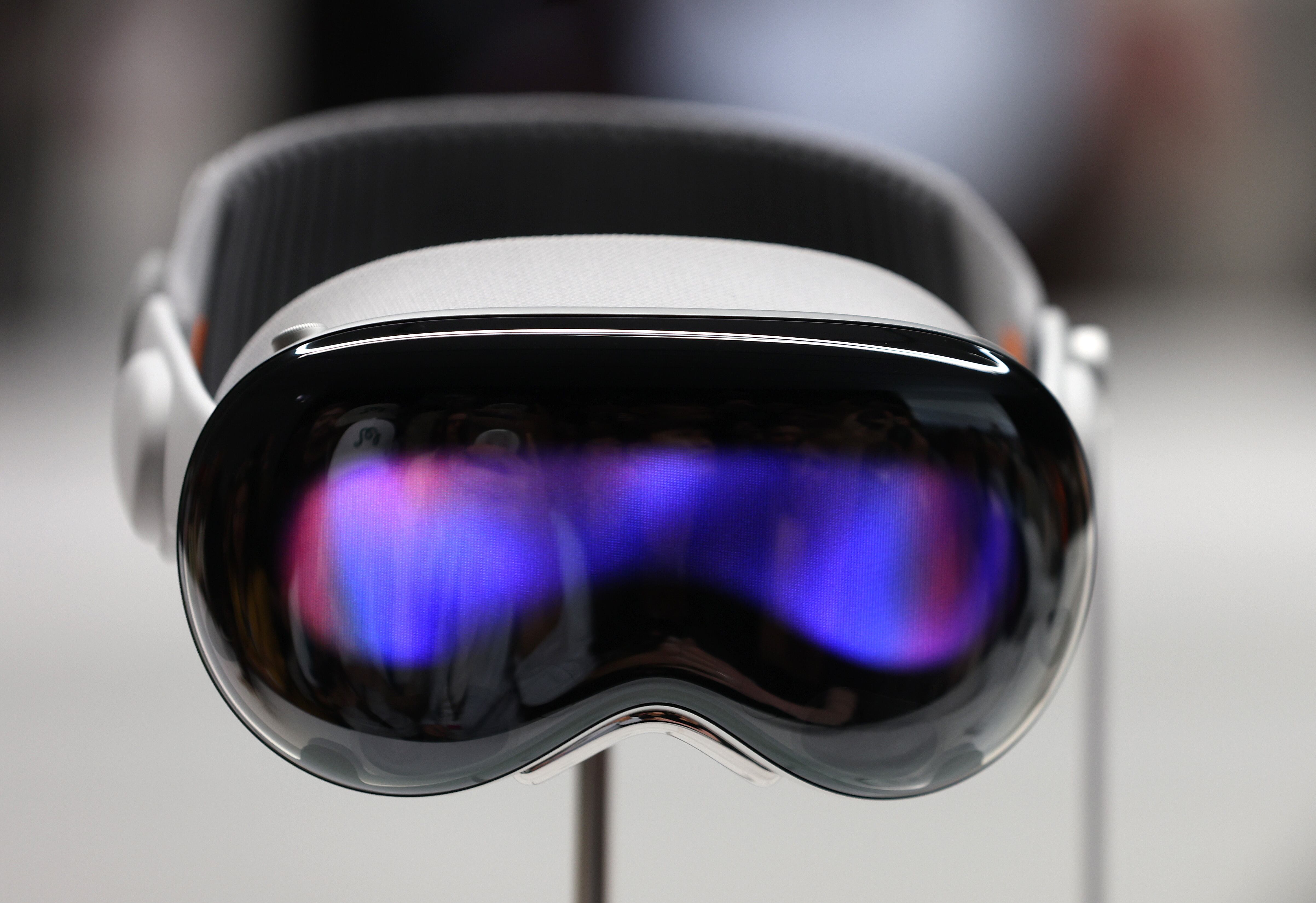
By all accounts, the Vision Pro is impressive. Unlike many other headsets, which are clunky, and made of plastic, Apple, as always, did not skimp on style, using aluminum and carbon fiber. It’s much sleeker than every other VR headset, making users feel like they’re wearing, say, 25th-century snowboard goggles instead of putting a garbage can on their heads. Its 4K display is crisp and clear, and its depth mapping and spatial awareness are handled automatically, meaning users don’t have to set safety boundaries to avoid tripping over chairs or walking into walls. (This is no small thing—your shins and elbows will thank you.) At launch, users will be able to play the popular Apple Arcade game Lego Builder’s Journey, identify constellations with Sky Guide, chat with coworkers on Zoom, or watch 3D movies on Disney+ (but not Netflix, which along with Spotify and Youtube will not be offering a dedicated app when the Vision Pro debuts). To put it simply, expert consensus is that the Vision Pro is a major leap forward in headset computing.
While the Vision Pro might be technically superior to every other augmented-reality product on the market, it is also much, much more expensive, with a price tag of $3,499. By comparison, Meta’s Oculus Quest 3 starts at $499.99, and tops out at $649.99. Such a hefty price means it will never land in the hands of most consumers, and Apple is aware of that. The company is reportedly only producing around half a million headsets at launch. However, that doesn’t mean the product doesn’t have an audience. According to MacRumors.com, Apple has already sold 200,000 Vision Pros in 10 days of preorders. Remember, the original iPhone only sold 270,000 units in its first week, and there were concerns it would never take off in Europe.
Is the Vision Pro for you?
Sure, if you have $4,000 burning a hole in your pocket. More likely however, this first-generation version will be for app developers and the truly tech-obsessed, as Apple works out glitches and bugs. If you’re desperate to try it, you can always check one out at an Apple store, or wait for the more affordable version, which, according to reports from both Bloomberg and The Information is currently in the works and will retail for somewhere between $1,500 and $2,000. Still pricey, but half as expensive as its older sibling. Then again, if Apple has its way, and it usually does, we’ll all be walking around with Vision Pro headsets on our faces in a few short years.