As industries begin to shift away from fossil fuels, Ampaire is banking on its line of hybrid-electric airplanes to revolutionize air travel. The company recently announced its historic first flight of an existing airline route in Hawaii.
Kevin Noertker, Ampaire CEO, said not only would the environment reap the biggest benefits from a reduction of emissions, but the airline industry could also soar to new heights.
"For the airlines, the biggest impact is reduced cost of operation. Airlines care about the total cost of ownership and operation for their planes. By switching to a hybrid plane, you could reduce that fuel burn by up to 50 percent," Noertker told Cheddar.
The CEO also noted that a fully electric plane would reduce emissions by more than 90 percent.
After launching in 2016 and constructing an aircraft for the last two years, paid flights for the company are on the horizon. "We're looking at about a three-year timeline before we get certification to deploy these planes in that commercial operation," Noertker said.
While the company gears up for commercial flights, it has already been conducting demonstrations under the FAA's experimental market survey, which allows passengers and potential Ampaire customers to fly.
Last month, the company became the first to ever demonstrate a hybrid-electric flight in Maui, which went from Kahului to Hana in about 20 minutes. Like other industries, Ampaire's ability to continue developing and moving forward with test flights, particularly in Hawaii, was impacted by pandemic-related restrictions.
The hybrid-electric planes, according to Noertker, while capable of long-distance flights, are optimal for relatively short-distances. Over the next five to 10 years, however, there are plans to produce an aircraft that can hold up to 20 passengers and will fly "routes between 50 and 500 miles."
"The reality is most routes that airlines like to fly are about 100 miles," Noertker said.
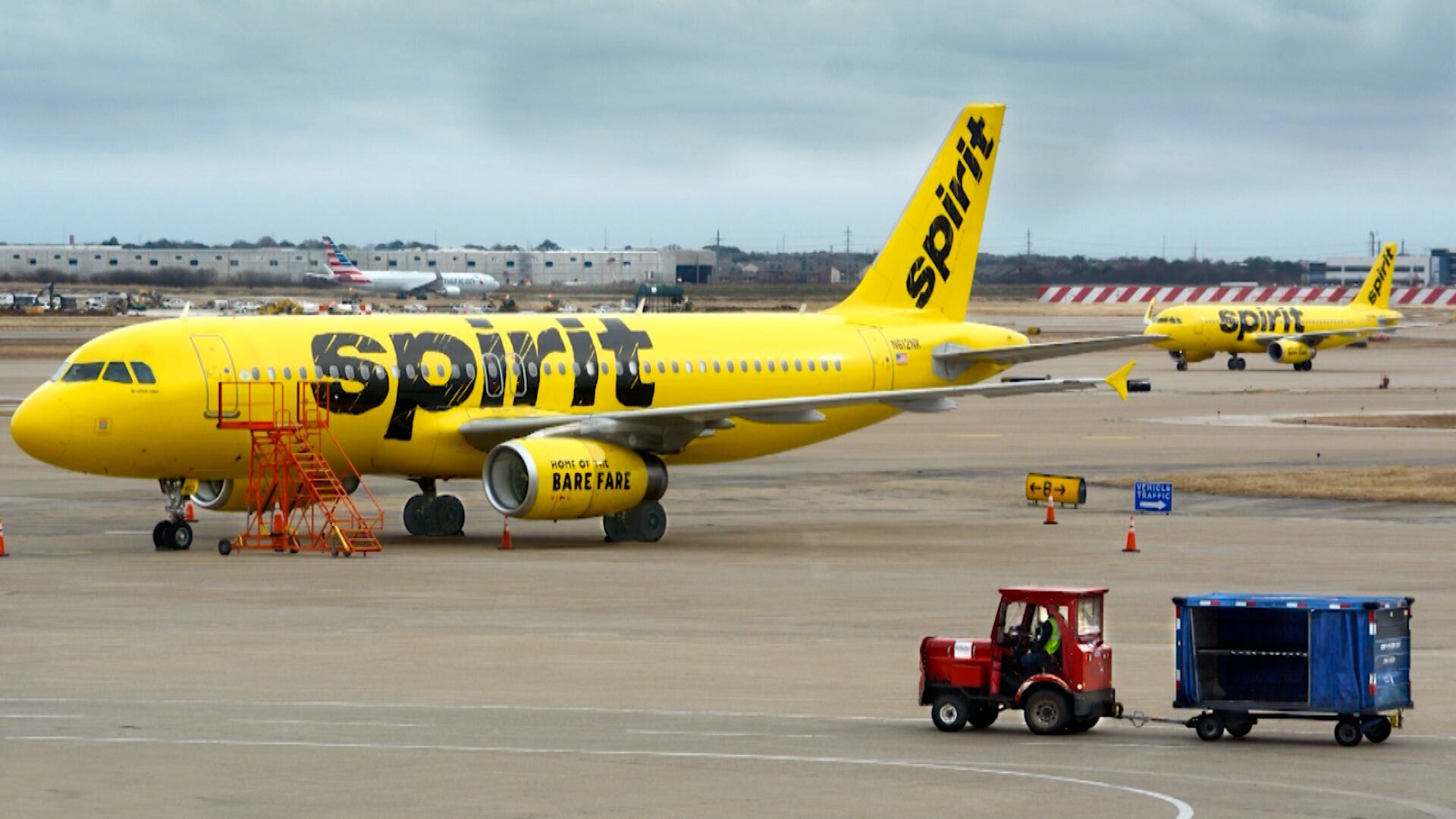
The airline industry is seeing a major consolidation as Frontier and Spirit Airlines have agreed to merge in a deal valued at $6.6 billion dollars. Frontier will control just over 51% of the company, and Spirit will control the other 48%, creating what would become the fifth-largest airline in the U.S. The deal was approved over the weekend, with Spirit CEO Ted Christie saying that the merger aims to create an aggressive, low-fare competitor focused on consumer-friendly pricing. John Grant, Senior Analyst at OAG explains the gravity of the merger, and the wider impact it could have on competition and the airline industry as a whole.
Cheeze, Inc. is a media platform that hopes to help photographers to tell stories through the use of NFT’s. Simon Hudson, founder and CEO of Cheeze, Inc. joined Cheddar News to explain the process as well as teasing its "Women of Authenticity" display for Women’s History Month. "We've made it very simple and focused very hard on reducing all of the friction to bring their items to the blockchain." Hudson explained. He also addressed reports that cloud software giant Salesforce could be getting into the NFT marketplace.
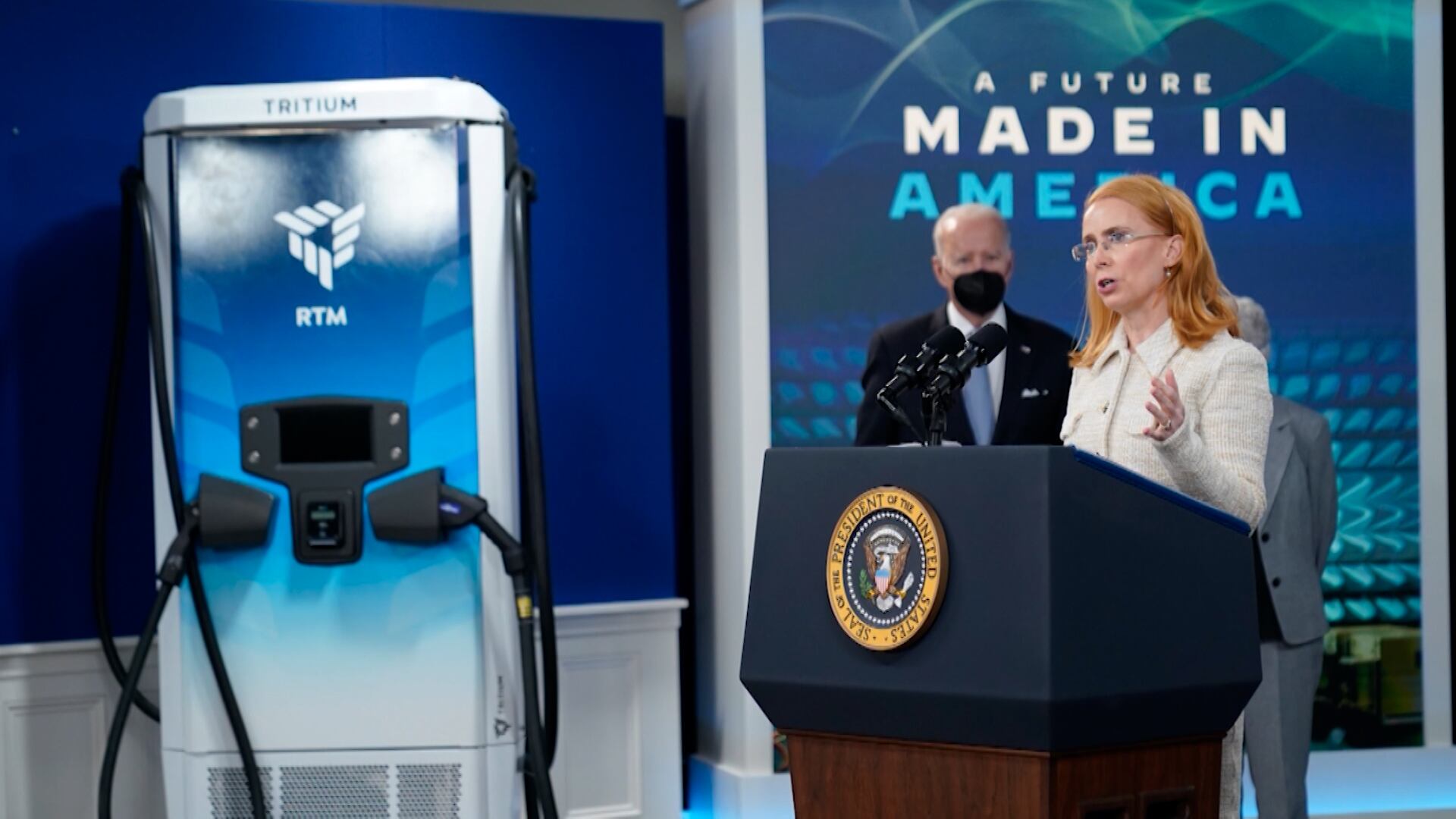
President Biden's push for electric vehicles is doing more than trying to hold off climate change as it also hopes to revive American manufacturing jobs. The latest company to open an EV charging production plant in the U.S. is Australia-based Tritium, looking to open its new Lebanon, Tennessee, facility in the fall of 2022. It's expected to create at least 500 jobs in the region and reach a production capacity of 10,000 charging units per year. Jane Hunter, CEO and executive director of Tritium, joined Closing Bell to discuss the plant, production capacity, and working with the Biden administration. "The policies that they put in place have directly driven demand for our fast charging products," she said. "Discussions that we have are just incredibly positive because this administration wants to have an electric superhighway that runs all across the country so that it's open equitably for all people to drive electric vehicles."
Samsung unveiled its latest product lineup, including a new family of Galaxy S22 smartphones featuring the S22 Ultra with a larger screen, more powerful camera, and the Samsung S Pen stylus. The company also revealed its latest tablet, the Tab S8 Ultra, featuring a 14.6" screen, expanded storage, and 4K video capability. Cheddar News was able to showcase each device as Allison Johnson, reviews writer at The Verge, joined Closing Bell to discuss the new releases, the standout features, and more.
Shares of Canadian cannabis giant Canopy Growth surged after the company reported Q3 earnings Wednesday morning, with shares up more than 15 percent at the close of the day's trading session. Despite net revenue declining year-over-year, Canopy beat analyst expectations and has ramped up efforts to develop a "THC ecosystem' in the U.S. Canopy Growth's CEO, David Klein, joined Cheddar News' Closing Bell to discuss the report. He noted that its brands Storz & Bickel vaporizers and BioSteel beverages showed record growth.
Commercial property ownership platform withco recently raised $32 million across a seed and Series A funding round. The company purchases properties and then rents them back to small business owners and works to transition them into full ownership. Founder and CEO Kevin Song says withco was inspired by his family's experience of operating a Brooklyn grocery store for two decades and being forced to shutter the business due to a doubling in rent by a new landlord. Now, Song says his mission is to help small business owners become commercial property owners, in a way that's simple and affordable. Song joined Cheddar News' Closing Bell to discuss.