By Tom Murphy and Haleluya Hadero
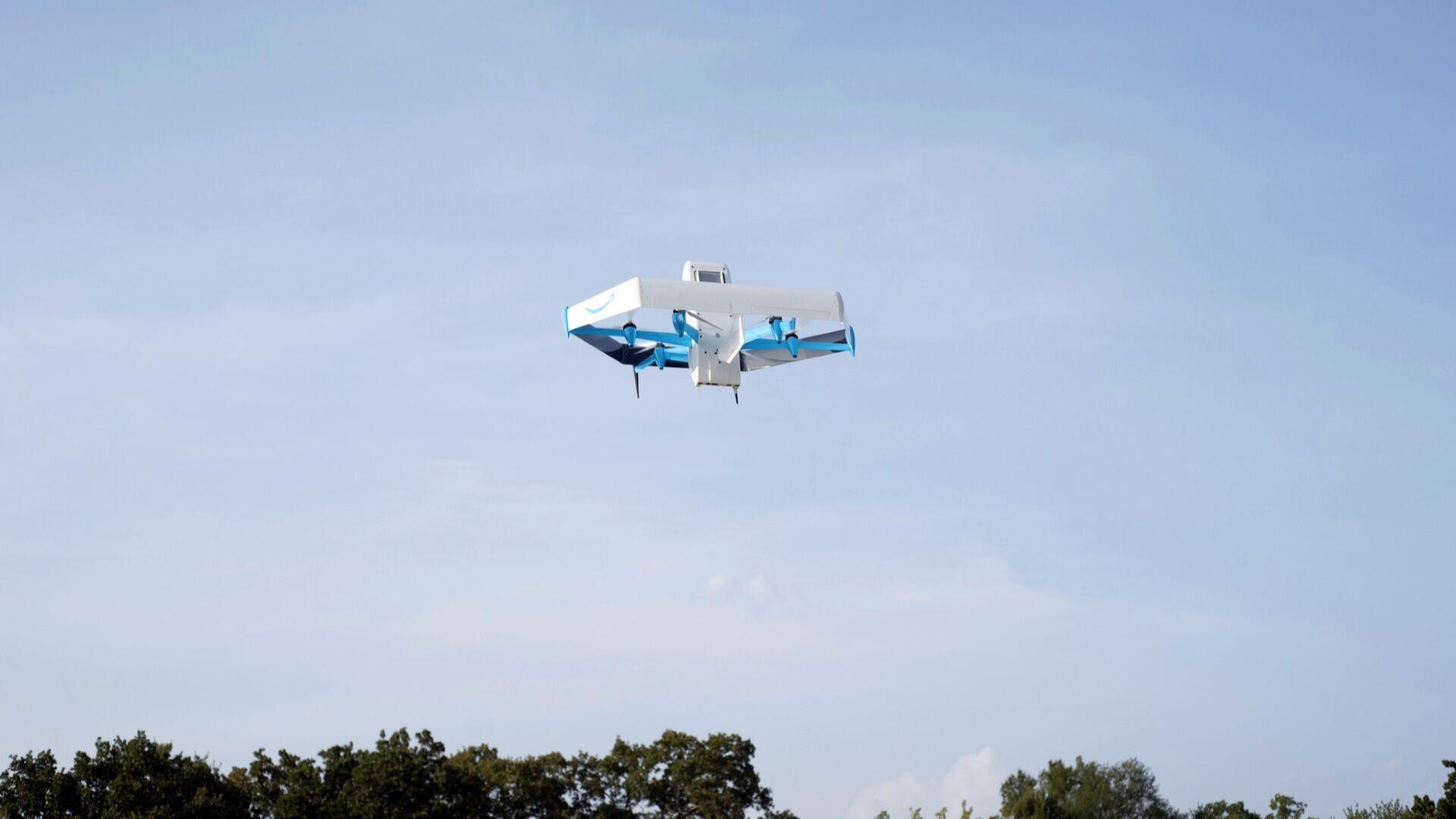
Amazon will soon make prescription drugs fall from the sky when the e-commerce giant becomes the latest company to test drone deliveries for medications.
The company said Wednesday that customers in College Station, Texas, can now get prescriptions delivered by a drone within an hour of placing their order.
The drone, programmed to fly from a delivery center with a secure pharmacy, will travel to the customer’s address, descend to a height of about four meters — or 13 feet — and drop a padded package.
Amazon says customers will be able to choose from more than 500 medications, a list that includes common treatments for conditions like the flu or pneumonia, but not controlled substances.
The company's Prime Air division began testing drone deliveries of common household items last December in College Station and Lockeford, California. Amazon spokesperson Jessica Bardoulas said the company has made thousands of deliveries since launching the service and is expanding it to include prescriptions based in part on customer requests.
Amazon Prime already delivers some medications from the company’s pharmacy inside of two days. But pharmacy Vice President John Love said that doesn’t help someone with an acute illness like the flu.
“What we’re trying to do is figure out how can we bend the curve on speed,” he said.
Amazon Pharmacy Chief Medical Officer Dr. Vin Gupta says the U.S. health care system generally struggles with diagnosing and treating patients quickly for acute illnesses, something that was apparent throughout the COVID-19 pandemic.
Narrowing the window between diagnosis and treatment makes many treatments more effective, he said.
Amazon is not the first company to explore prescription deliveries by drone. The drugstore chain CVS Health worked with UPS to test deliveries in 2019 in North Carolina but that program has ended, a CVS spokesman said.
Intermountain Health started providing drone deliveries of prescriptions in 2021 in the Salt Lake City area and has been expanding the program, according to Daniel Duersch, supply chain director for the health care system. Intermountain is partnering with the logistics company Zipline to use drones that drop packages by parachute.
Companies seeking to use drones for commercial purposes have faced hurdles from regulators who want to make sure things are operating safely. Amazon founder Jeff Bezos had predicted a decade ago that drones would be making deliveries by 2018. Even now, the e-commerce giant is only using the technology in two markets.
Lisa Ellman, the executive director of the Commercial Drone Alliance, an industry group that counts Amazon as one of its members, said to date, regulatory approvals have been limited to specific geographic areas and “in terms of their scope and usefulness to companies.”
That said, she noted regulators have also been issuing more approvals. Last month, the FAA gave the OK for Zipline and UPS to fly longer-range drones.
Walmart has also been working to expand its own drone deliveries.
Amazon says its drones will fly as high as 120 meters, or nearly 400 feet, before slowly descending when they reach the customer’s home. The drone will check to make sure the delivery zone is clear of pets, children or any other obstructions before dropping the package on a delivery marker.
The company said it hopes to expand the program to other markets, but it has no time frame for that.
Amazon has been growing its presence in health care for a few years now.
Aside from adding a pharmacy, it also spent nearly $4 billion to buy primary care provider One Medical. In August, the company added video telemedicine visits in all 50 states.