An Amazon company logo marks the facade of a building in Schoenefeld near Berlin, March 18, 2022. (AP Photo/Michael Sohn, File)
Amazon is taking another shot at becoming a regular health care source for customers with the launch of a service centered on virtual care.
The e-commerce giant says its Prime customers can now get quick access to a health care provider through a program that costs $9 a month or $99 annually.
The company has made a number of attempts to incorporate healthcare into its platform and has started building momentum after some initial setbacks.
The company announced in August that it was adding video telemedicine visits in all 50 states to a virtual clinic it launched last year.
Yet Amazon shut down a virtual health care service last year that it spent years developing, and it was part of a high-profile but failed push to address health care costs in a partnership with two other major companies, Berkshire Hathaway and JPMorgan.
Through the new service, patients will be able to connect virtually around the clock with care providers through its Prime One Medical membership program. The service includes video chats and an option to make in-person visits if there are One Medical locations near by.
The company said Wednesday that its membership fee covers the cost for the virtual visits. But customers would have to pay for any visits they make to the company’s One Medical primary care offices. They can use insurance for that.
Virtual care grew popular during the COVID-19 pandemic, and many health care providers have since expanded their telemedicine offerings. It has remained popular as a convenient way to check in with a doctor or deal with relatively minor health issues like pink eye.
While virtual visits can improve access to help, some doctors worry that they also lead to care fragmentation and can make it harder to track a patient’s overall health. That could happen if a patient has a regular doctor who doesn’t learn about the virtual visit from another provider.
Updated November 9, 2023 at 4:46 p.m. ET to add missing word in the seventh paragraph and correct "last summer" to "last year" in sixth paragraph.
Plant-based hair extension company Rebundle recently raised $1.4 million in a pre-seed round led by M25. The company based in St. Louis says it is revolutionizing hair extensions with more comfort and less waste. Rebundle's braiding hair is made from a non-toxic, biodegradable plant, which the company says is better for the scalp and the environment. Rebundle Co-Founder and CEO Ciara Imani May and Co-Founder and CMO Danielle Washington joined Cheddar News' Closing Bell to discuss.
Soildus Labs, a market compliance and surveillance technology provider for crypto firms, has spearheaded the launch of the Crypto Market Integrity Coalition, a pledge committing to a safe and sensibly-regulated crypto industry. Kathy Kraninger, VP of Regulatory Affairs at Solidus Labs, discusses on Cheddar News' Closing Bell the biggest problems in the digital asset space that this new initiative plans to solve.
Stocks closed mixed Monday as a broader tech sell-off continued, leading the Nasdaq to close down 0.58%. Investors are keeping an eye on earnings, and also looking ahead to Thursday's CPI data, which will give an idea of how hot inflation could still be running. Steve Sosnick, Chief Strategist at Interactive Brokers, joins Closing Bell to discuss today's close, the Federal Reserve's plans to raise interest rates and taper asset purchasing, his 2022 market outlook, and more.
The global chip shortage continues to weigh on the automotive industry. For example, Ford says it is suspending or cutting production at eight of its factories in North America through next week due to the shortage. Balu Balakrishnan, President and CEO of Power Integrations, joins Cheddar News' Closing Bell, where he elaborates on why the chip shortage has dragged into 2022.
Peloton has weathered a seemingly never-ending storm the past few months: PR blunders, sinking customer demand, and in recent weeks, reported cost-cutting and potential layoffs. Now, several companies are said to be in the mix as potential buyers: Amazon, Netflix, Disney, and Apple. How likely is it that one of these companies pursues a deal — and how likely is it that it will be Apple who buys Peloton? Dan Ives, Managing Director of Equity Research at Wedbush Securities, joins Closing Bell to discuss his thoughts about Apple pursuing a Peloton takeover,
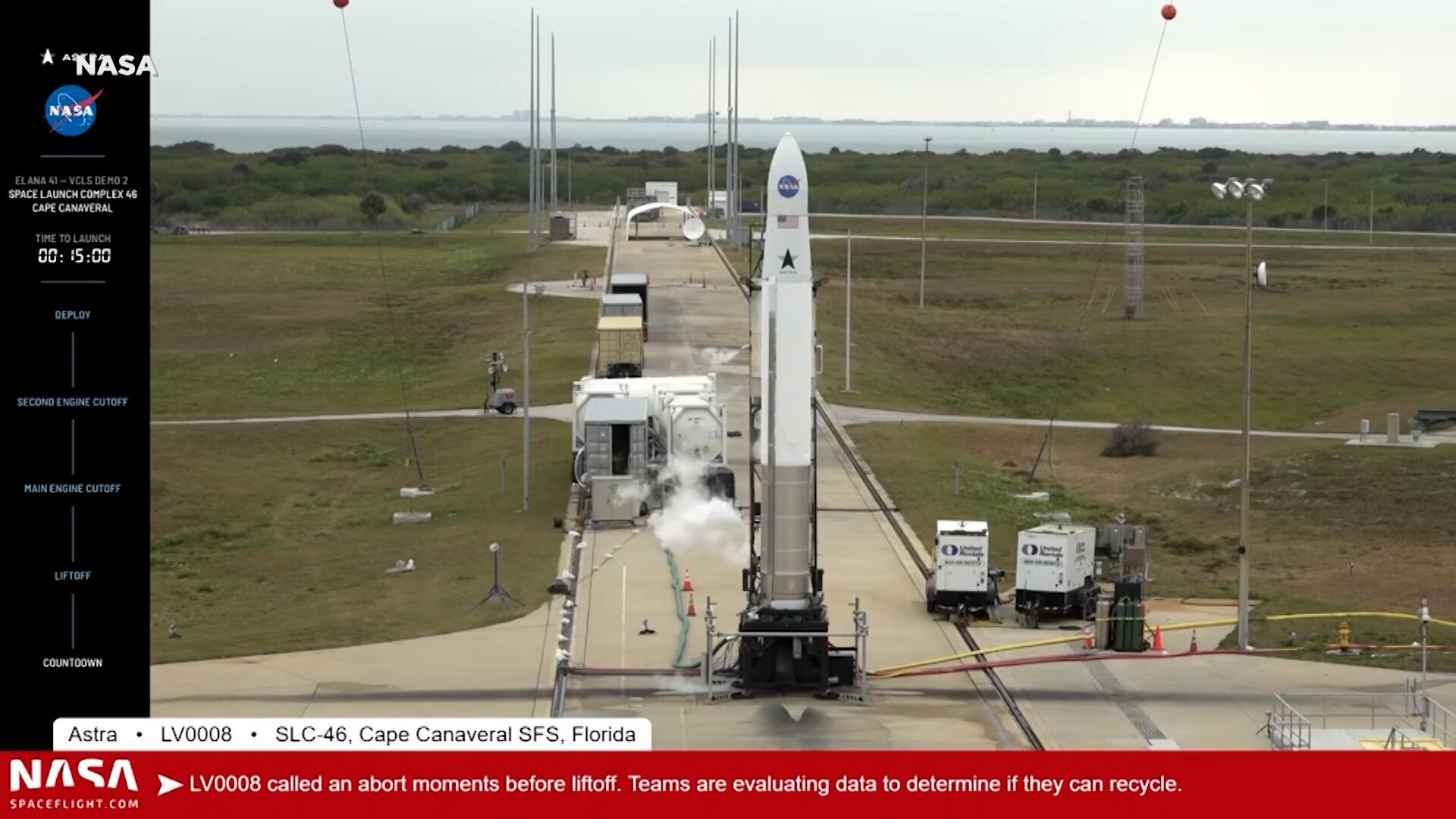
Astra aborted the launch for NASA ELaNa 41 Mission out of Cape Canaveral on Monday due to what was described as a minor issue, but the company's stock fell nearly 14 percent following the news. Jim Cantrell, CEO and co-founder of Phantom Space, which builds and launches spacecraft of its own, joined Cheddar to discuss the scrubbed mission. “The last thing you want is for this to go wrong, you're better to err on the side of safety expectations,” Cantrell explained, noting that the mission delay was a normal event.