Airbnb sued New York City on Thursday over an ordinance that the company says imposes arbitrary restrictions that would greatly reduce the local supply of short-term rentals.
The 2022 ordinance, which the city plans to begin enforcing next month, would require owners to register with the mayor’s office, disclose who else lives in the property, and promise to comply with zoning, construction and maintenance ordinances.
Airbnb said called the restrictions “extreme and oppressive” and a de facto ban against short-term rentals that left the company no choice but to sue.
“Taken together, these features of the registration scheme appear intended to drive the short-term rental trade out of New York City once and for all,” Airbnb said. The company said the mayor’s Office of Special Enforcement “failed to consider reasonable alternatives.”
A spokesman for Mayor Eric Adams said city hall will review the lawsuit.
“This administration is committed to protecting safety and community livability for residents, preserving permanent housing stock, and ensuring our hospitality sector can continue to recover and thrive," said the spokesman, Jonah Allon. “The rules governing short-term rentals ... have been clear for years,” and the 2022 registration law was properly adopted by the city council, he added.
San Francisco-based Airbnb filed the lawsuit in state court in Manhattan. Three Airbnb hosts filed a companion lawsuit against the city.
Airbnb sued New York state in 2016 over a ban on advertising short-term rentals. It dropped that lawsuit when the city promised not to enforce it. In 2020, Airbnb settled a lawsuit against the city over monthly reporting requirements for its listings. Airbnb said the 2022 ordinance violates both settlements.
The New York restrictions are among many efforts by local communities to regulate short-term rentals without banning them. New Orleans is among cities taking on the rental giant, after a court struck down a previous law.
In some places, opponents have raised concerns about noise and safety. Critics also say the growth of short-term rentals pioneered by Airbnb has contributed to a shortage of affordable housing for residents, particularly in vacation towns. Those complaints extend far beyond U.S. borders.
On Thursday in Italy, the popular tourist destination of Florence announced an immediate ban on new vacation rentals in the city’s historic center.
Apple became the first publicly traded U.S. company to hit the $3 trillion valuation mark after its stock price jumped to $182.86 in morning trading before slipping back just under the mark. The tech giant has tripled its worth since 2018.
Several Silicon Valley insiders are being accused of contorting a 1990s-era tax break to avoid taxes on millions of dollars of investment profits. The tax break is known as the qualified small business stock exemption, and it allows early investors in certain companies to avoid half of the taxes on up to $10 million in capital gains. A piece recently published in the New York Times says venture capital firms like Andreessen Horowitz replicated the tax exemption by giving shares of companies to friends and family, who would otherwise face a 23.8% capital gains bill. The CEO of Roblox is also accused of replicating the tax break for his family members at least 12 times. Although the loophole known as 'stacking' is considered to be legal, the Times piece implies that the exemption has been manipulated for the ultra-wealthy to become more wealthy. Greycroft co-founder and Chairman Emeritus Alan Patricof joins Cheddar News' Closing Bell to discuss.
There is a new player in the mobile app stock trading space.
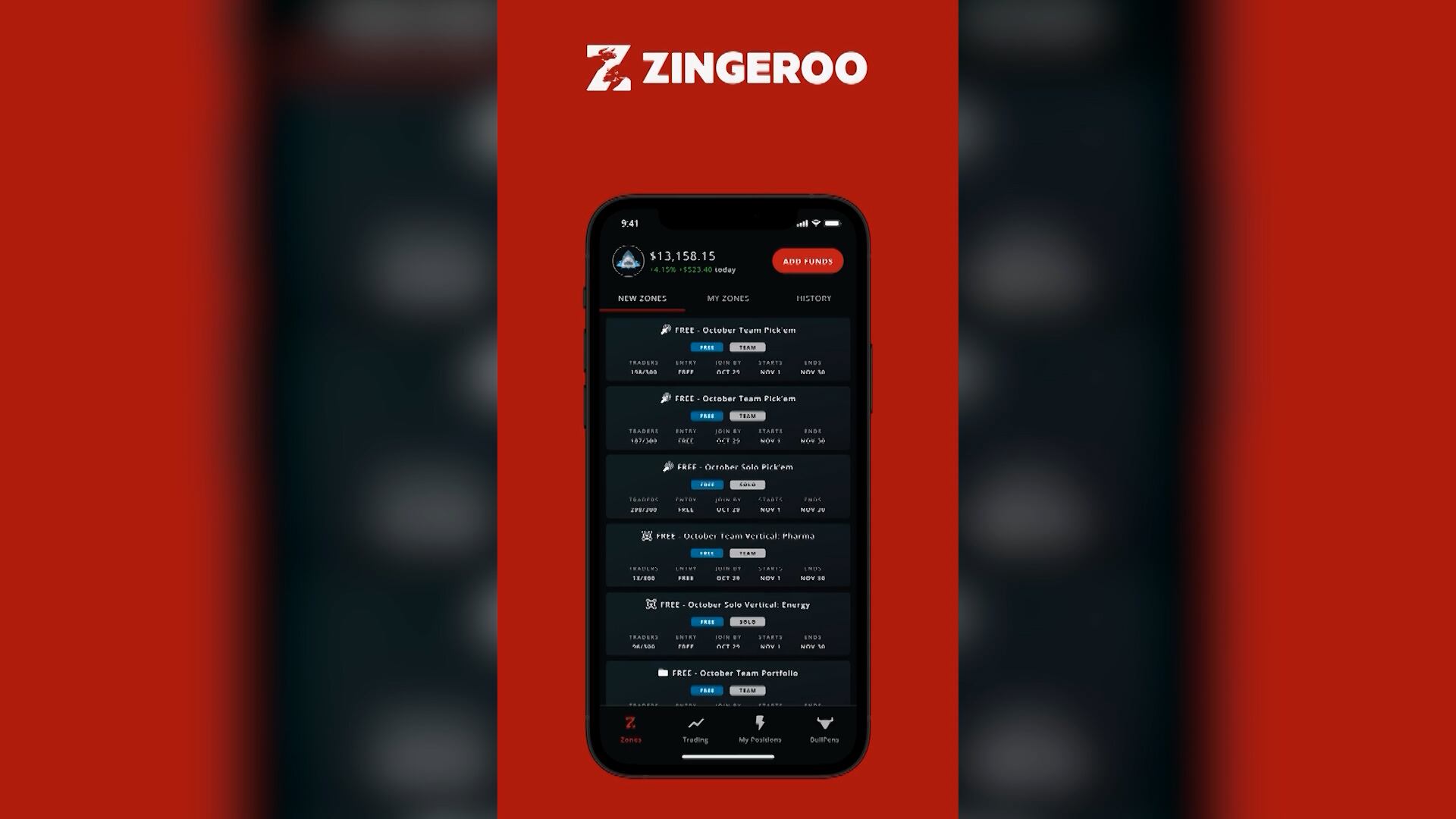
Zingeroo recently announced a funding round of $8.5 million. The company says it aims to bring 'friendly competition' to stock trading, by literally breaking trading down into daily and weekly competitions between friends. Zingeroo also says it hopes its new approach can make trading more accessible, educational, and social than ever before. Zingeroo co-founder and CEO Zoe Barry joins Cheddar News' Closing Bell for more.
Stocks closed higher on the first trading day of 2022, with both the Dow and the S&P 500 hitting record closes. Apple and Tesla created momentum, with the tech giant hitting a $3 trillion market cap, and the EV maker reporting over 300,000 deliveries in the fourth quarter of 2021. Investors are taking an optimistic approach to start the year even as COVID-19 continues to linger and omicron cases soar. Rebecca Walser, President at Walser Wealth Management, joins Cheddar News' Closing Bell to discuss today's market movement, her broad predictions for the year, and more.
As cell carriers AT&T and Verizon planned to roll out nationwide 5G service this week, the FAA and U.S. DOT are asking the companies to pause their plans so more research can be done on the impact 5G has on aircraft technology. The companies are refusing, citing French regulations that limit wireless signals around airports while allowing research to continue. This week's launch wasn't the first time concerns have delayed 5G — last year, Airbus and Boeing express concerns, pushing the deadline into November, December, and then into this year. So what happens now — and what happens next? Will 5G roll out this year as expected? Jon Swartz, Senior Reporter at MarketWatch, joins Cheddar News' Closing Bell to discuss the state of the planned 5G rollout, why the FAA and U.S. Department of Transportation are asking carriers to stall the launch, and more.
Tyrone Ross, CEO of Onramp Invest, joins Cheddar News' Closing Bell, where he explains why he believes the current crypto slump is expected to persist and says that investors should be focusing more on Bitcoin's hashrate when it comes to metrics.