Airbnb sued New York City on Thursday over an ordinance that the company says imposes arbitrary restrictions that would greatly reduce the local supply of short-term rentals.
The 2022 ordinance, which the city plans to begin enforcing next month, would require owners to register with the mayor’s office, disclose who else lives in the property, and promise to comply with zoning, construction and maintenance ordinances.
Airbnb said called the restrictions “extreme and oppressive” and a de facto ban against short-term rentals that left the company no choice but to sue.
“Taken together, these features of the registration scheme appear intended to drive the short-term rental trade out of New York City once and for all,” Airbnb said. The company said the mayor’s Office of Special Enforcement “failed to consider reasonable alternatives.”
A spokesman for Mayor Eric Adams said city hall will review the lawsuit.
“This administration is committed to protecting safety and community livability for residents, preserving permanent housing stock, and ensuring our hospitality sector can continue to recover and thrive," said the spokesman, Jonah Allon. “The rules governing short-term rentals ... have been clear for years,” and the 2022 registration law was properly adopted by the city council, he added.
San Francisco-based Airbnb filed the lawsuit in state court in Manhattan. Three Airbnb hosts filed a companion lawsuit against the city.
Airbnb sued New York state in 2016 over a ban on advertising short-term rentals. It dropped that lawsuit when the city promised not to enforce it. In 2020, Airbnb settled a lawsuit against the city over monthly reporting requirements for its listings. Airbnb said the 2022 ordinance violates both settlements.
The New York restrictions are among many efforts by local communities to regulate short-term rentals without banning them. New Orleans is among cities taking on the rental giant, after a court struck down a previous law.
In some places, opponents have raised concerns about noise and safety. Critics also say the growth of short-term rentals pioneered by Airbnb has contributed to a shortage of affordable housing for residents, particularly in vacation towns. Those complaints extend far beyond U.S. borders.
On Thursday in Italy, the popular tourist destination of Florence announced an immediate ban on new vacation rentals in the city’s historic center.
Breakthrough Energy Catalyst, a private-public fund backed by Bill Gates, is planning to invest up to $15 billion in clean technology initiatives across the U.S., UK, and European Union. It will target four key areas and help fund large projects that otherwise would not be financially possible. Bobby Hollis, Director of Breakthrough Energy Catalyst, joins Cheddar News' Closing Bell to discuss.
Student loan collection company Navient agreed to cancel $1.7 billion in debt and paid more than $140 million in other penalties to settle a lawsuit over abusive lending practices. Josh Shapiro, the attorney general of Pennsylvania who led negotiations in the settlement, joined Cheddar to go over the details of the company's predatory lending. "What Navient would do is charge [borrowers] these exorbitantly high rates, even though they knew people couldn't pay them or they would likely default on them," he explained.
An economic development agency, the Northwest Arkansas Council, is looking to draw technology professionals to their region of the Southern state with incentives like $10,000 worth of Bitcoin and a new bicycle. Nelson Peacock, president and CEO of the private nonprofit made up of companies like Walmart and Tyson Foods, joined Cheddar to talk about the program to further power his local economy. "By offering the payment in Bitcoin, we're looking to identify those people with interest and expertise in the underlying technologies, the blockchain technologies," he said.
Stocks closed mixed Friday with big bank stocks dragging on the Dow after a few lackluster earnings reports. Both the Nasdaq and the S&P 500 gained, but overall, stocks notched a second losing week in a row to start 2022. Tom Kozlik, Head of Research and Analytics at Hilltop Securities, joins Cheddar News' Closing Bell to discuss today's close, expectations for 2022 earnings reports, whether or not the COVID-19 omicron variant is being properly priced into markets, and more.
After months of investors turning to crypto as a hedge against inflation, instead of the traditional hedge of gold, one crypto exchange is working with a token creator to launch a digital coin backed by a physical asset. GCOIN gives customers a digital title of ownership to 99.99% pure physical gold which is stored in a secured vault. Brent de Jong, GCoin's founder and Kristin Boggiano, Co-Founder and President of CrossTower, a cryptocurrency exchange, join Cheddar News' Closing Bell to discuss the GCOIN rollout, customer interest, why crypto is used as an inflation hedge, and more.
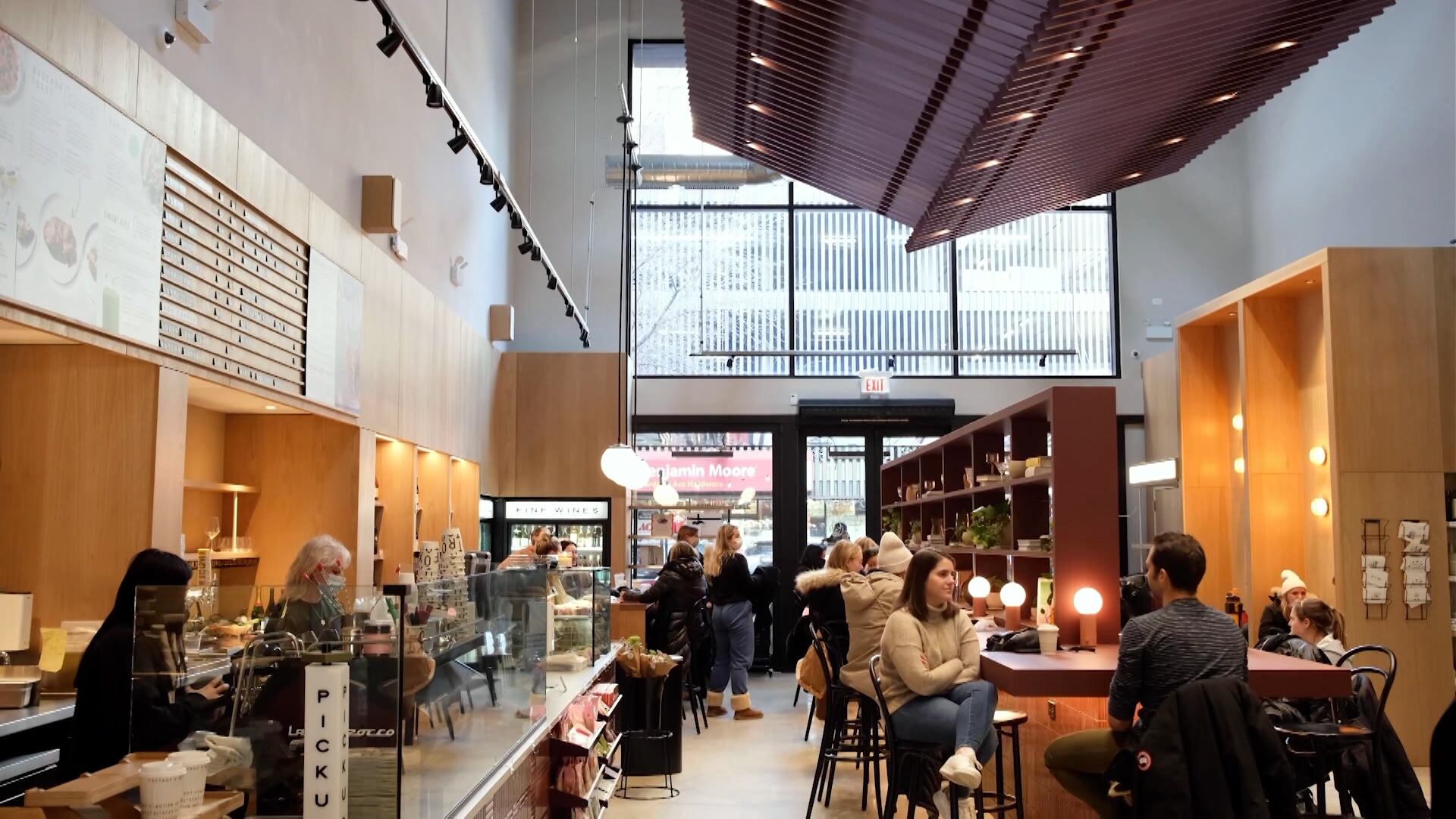
Retail platform operator and delivery company, Foxtrot,
raised $100 million in a Series C round led by D1 Capital Partners. Foxtrot bills itself as the modern convenience store that combines what it calls in-store curated discovery with 30-minute delivery and 5-minute pickup. Since launching first as a digital-only delivery service, the company has since grown into a popular local retailer, opening 16 brick and mortar locations across Chicago, Dallas, and Washington, DC. Foxtrot co-founder and CEO Michael LaVitola joined Cheddar News' Closing Bell to discuss.