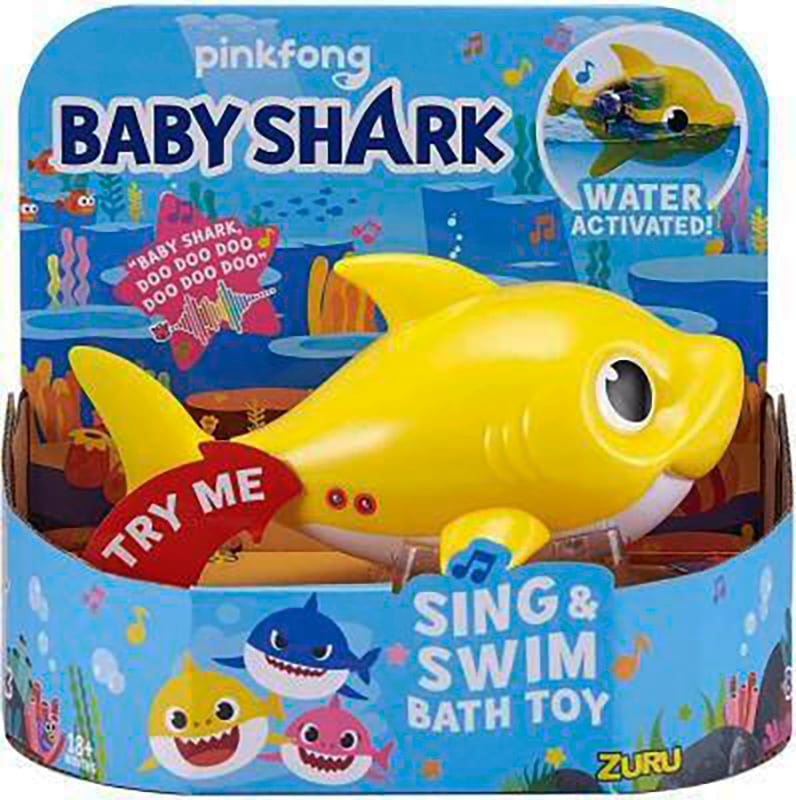
This image provided by Consumer Product Safety Commission shows Zuru’s full-sized Robo Alive Junior Baby Shark Sing & Swim Bath Toys. About 7.5 million “Baby Shark” bath toys are being recalled, Friday, June 23, 2023, after multiple impalements, lacerations and puncture wounds were reported in children playing with them. Toymaker Zuru said it’s recalling both full-size and mini versions of its robotic baby shark toys that have hard plastic top fins. (Consumer Product Safety Commission via AP)
About 7.5 million singing and swimming “Baby Shark” bath toys are being recalled after multiple lacerations and puncture wounds were reported in children playing with them.
Zuru, an El Segundo, California-based toymaker, said it's recalling both full-size and mini versions of its robotic baby shark toys that have hard plastic top fins, which pose the injury risks.
Twelve injuries have already been reported with Zuru's full-sized Robo Alive Junior Baby Shark Sing & Swim Bath Toys — after children sat or fell on the now-recalled products. Nine of these cases required stitches or medical attention, according to a Thursday release from the U.S. Consumer Product Safety Commission.
While injuries have only been reported with these full-sized toys so far, Zuru is also recalling Robo Alive Junior Mini Baby Shark Swimming Bath Toys “out of an abundance of caution."
Consumers in possession of the recalled toys are instructed to stop using them immediately and contact Zuru for a full refund. To get the refund, customers are asked to cut off or bend the tail fin, write “recalled” and a registration code on the body of the baby shark and upload a photo on a site dedicated to the recall.
The recalled products can be identified by model numbers and date codes. Zuru's Robo Alive Junior Baby Shark Sing & Swim Bath Toys and Robo Alive Junior Mini Baby Shark Swimming Bath Toys were sold in-person and online at chains including Walmart, Target, CVS, Walgreens and TJX Companies from May 2019 through March 2023.
In a company announcement, Zuru noted that that the recall only impacts the versions of the baby shark toys with a hard plastic fin. The newest toys, which have a silicone fin, are not part of the recall, Zuru said.
“We want to assure our customers that we are committed to the highest levels of safety and quality of all our products, and we have implemented measures to prevent future incidents by working to promptly remove these products from retail and replace them with a newly designed product,” Zuru wrote.
Meta wants creators to make money from the metaverse, but it's going to take a large chunk of the cut. The tech giant is planning to keep nearly 50% of all digital asset sales within Horizon Worlds, the virtual reality platform that's considered an integral part of the company's unfolding metaverse. Rolf Illenberger, Co-founder and Managing Director of VRdirect, joined Cheddar to discuss why Meta is taking heat for this move, and what it could be doing as an alternative to help support creators, small businesses, and consumers.
Grayscale recently launched its Future of Finance ETF ($GFOF) for investors to benefit from innovative businesses that it sees as critical to building the digital economy. CEO Michael Sonnenshein joined Cheddar to discuss the fund, companies making the most impact, and ways in which investors can expand holdings in the digital economy. “When we think about how investors should be building out their portfolios, we felt that there was a really important opportunity to also provide investors with access to the broadly defined digital economy, really, that confluence between technology and finance," he said.
Al Root, Senior Writer at Barron's, discusses possible scenarios if a Twitter buyout deal goes through and what a takeover means for the future of the social media platform.
Gas prices took up a big share of consumer spending in March. Retail sales climbed 0.5% from the previous month as Americans are forced to spend more money on food, gasoline, and other necessities. Kayla Bruun, Economic Analyst at Morning Consult, breaks down her outlook on consumer spending as prices continue to rise.
Kristina Hooper, Chief Global Market Strategist at Invesco, discusses the biggest takeaways from Bank of America's earnings and highlights what investors should watch as BigTech reports this week.
Catching you up on what you need to know on April 18, 2022, with Russian missile attacks on the Ukrainian city of Lviv killing seven, mass shootings in South Carolina and Pittsburgh, Lucky Charms cereal under official investigation by the FDA, and more.