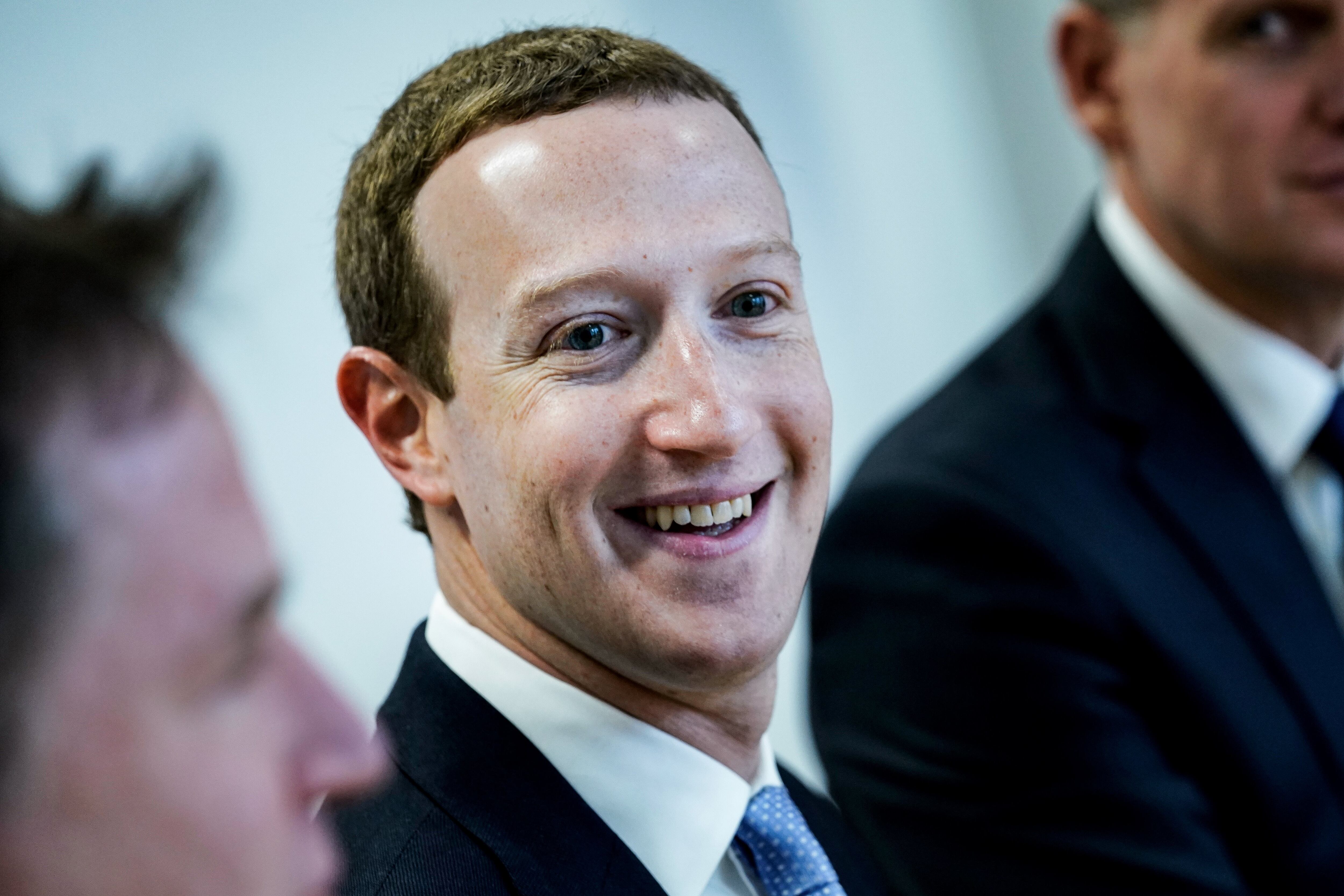
Founder and CEO of US online social media and social networking service Facebook Mark Zuckerberg. Photo by KENZO TRIBOUILLARD/AFP via Getty Images/FILE)
Mark Zuckerberg and his wife Priscilla Chan have donated $25 million through their foundation to a philanthropic effort organized by Bill Gates to explore new coronavirus treatments.
The Gates Foundation donated $50 million last week to what it’s calling the “COVID-19 Therapeutics Accelerator.” The initiative brings together life sciences companies to collaborate on the development of new vaccines, diagnostics, and treatments for COVID-19.
“The Therapeutics Accelerator will enable researchers to quickly determine whether or not existing drugs have a potential benefit against COVID-19,” Chan and Zuckerberg said in a press release. “We hope these coordinated efforts will help stop the spread of COVID-19 as well as provide shared, reusable strategies to respond to future pandemics.”
The two donations are the largest from tech billionaires since the coronavirus outbreak. Wellcome and Mastercard are supporting the effort as well.
The goal of the initiative is to either develop a new drug or adapt an existing treatment that it could help distribute alongside partnering pharmaceutical companies.
The 15 companies participating in the project kicked off the effort by sharing their proprietary libraries of molecular compounds that have some history of being tested with COVID-19.
The lineup includes big names in biotech such as Johnson & Johnson, Merck, Pfizer, Sanofi, and Bristol-Myers Squibb.
Technology-driven sustainable waste management platform, RoadRunner Recycling, recently raised a $70 million Series D round from BeyondNetZero, the climate investing venture of General Atlantic. RoadRunner says it creates and manages end-to-end waste and recycling solutions for businesses of all sizes and that its proprietary technology can boost cost savings and improve recycling rates for companies, which in turn drives sustainability for the waste industry and our world. RoadRunner Recycling founder and CEO Graham Rihn joined Cheddar News' Closing Bell to discuss.
Tech giant Microsoft is rolling out a platform designed specifically to help retailers manage their logistics on the cloud, amid some very trying times. Shelley Bransten, Microsoft CVP for global retail and consumer goods, joined Cheddar to explain how the cloud-based solution is meant to support retailers, workers, and the supply chain. "It's never been more important with all the challenges that we're seeing with the global supply chain that demand and supply come together," Bransten said. "And we use AI technology to help better predict that old adage of getting the right product to the right place to the customer at the right time."
Apple TV+ is in serious talks for the rights to stream MLB games next season, the first foray into sports content for the platform, according to the New York Post. Lee Berke, president and CEO of LHB Sports, sat down with Cheddar to discuss how such a deal might impact the tech giant and the sports content industry. "Quite often with new media platforms one of the quickest ways to create and implement a programming strategy — and actually one of the most expensive ways — is to offer up sports content," Berke noted. "So, with this package available, it puts Apple literally in the game and gives them an opportunity to demonstrate their skills in offering up a major league sport."
A.I.-enabled fintech company Qraft Technologies recently closed a $146 million investment from SoftBank Group Corp.
The companies say they are entering a partnership to accelerate artificial intelligence in the asset management industry. Qraft has already developed A.I. solutions that have been used by major financial institutions and says its new approach to asset management maximizes investment efficiency. Qraft Technologies U.S. CEO Robert Nestor joined Cheddar News' Closing Bell to discuss.
A decade ago, long before streaming services, the amount of binge-watching viewers could take part in was slim. Now, streaming services have established binge-watching as a viewing norm. However, how can viewers know when they've crossed the line from innocent entertainment to harmful addiction? Judy Grisel, professor of psychology at Bucknell University, joins Cheddar News to discuss a new study that identifies psychological predictors of problematic binge-watching.
Glassdoor has officially revealed its list of the best places to work in the year 2022. The top 10 on the list include tech companies and just one retail company. Senior economist at Glassdoor, Daniel Zhao, joined Cheddar to discuss more.