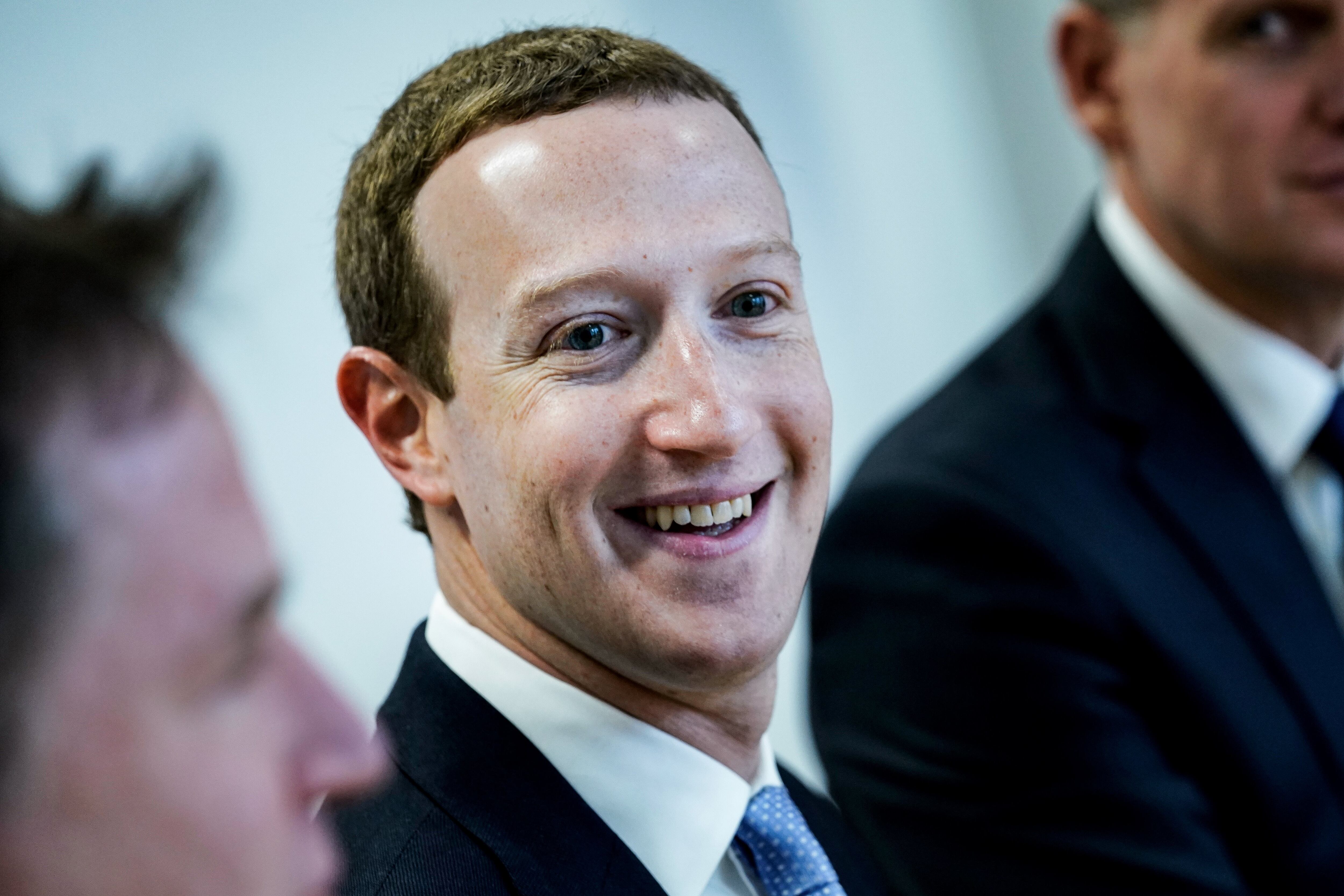
Founder and CEO of US online social media and social networking service Facebook Mark Zuckerberg. Photo by KENZO TRIBOUILLARD/AFP via Getty Images/FILE)
Mark Zuckerberg and his wife Priscilla Chan have donated $25 million through their foundation to a philanthropic effort organized by Bill Gates to explore new coronavirus treatments.
The Gates Foundation donated $50 million last week to what it’s calling the “COVID-19 Therapeutics Accelerator.” The initiative brings together life sciences companies to collaborate on the development of new vaccines, diagnostics, and treatments for COVID-19.
“The Therapeutics Accelerator will enable researchers to quickly determine whether or not existing drugs have a potential benefit against COVID-19,” Chan and Zuckerberg said in a press release. “We hope these coordinated efforts will help stop the spread of COVID-19 as well as provide shared, reusable strategies to respond to future pandemics.”
The two donations are the largest from tech billionaires since the coronavirus outbreak. Wellcome and Mastercard are supporting the effort as well.
The goal of the initiative is to either develop a new drug or adapt an existing treatment that it could help distribute alongside partnering pharmaceutical companies.
The 15 companies participating in the project kicked off the effort by sharing their proprietary libraries of molecular compounds that have some history of being tested with COVID-19.
The lineup includes big names in biotech such as Johnson & Johnson, Merck, Pfizer, Sanofi, and Bristol-Myers Squibb.
U.S. regulators are sounding the alarms about the meme stock mania fueled by retail investors. FINRA, the regulator for all brokerage firms and exchanges in the U.S. is warning that retail traders could easily get in over their heads due to their lack of knowledge about complex investments like options, ETF's and structured notes. Thomas Gorman, Attorney, Dorsey Whitney & former Securities Exchange Commission Regulator joined Cheddar's Opening Bell to discuss how regulators and trading platforms can crack down on retail investors.
Gas prices are driving up demand for electric vehicles, but many potential buyers are having trouble finding them.
Thanks to a perfect storm of consumer demand and supply issues, EVs and hybrids are becoming increasingly hard to come by. Jesse Toprak, Chief Analyst for Autonomy, breaks down the factors contributing to this EV crunch.
The DOJ has endorsed an antitrust bill targeting tech giants like Apple, Amazon, Meta, and Google. The legislation would ban the companies from favoring their own products and services over their competitor's, making it more difficult them to dominate the marketplace. Greg Day, Assistant Professor of Legal Studies at the University of Georgia, breaks down the bill and its potential impact on anti-competition in the tech sector.
Sony is leveling up its subscription service, PlayStation Plus this week, a combination of its earlier options into a tiered plan offering options to play streaming and mostly older titles instead of day-and-date new games like those offered by rival Microsoft on its Gamepass service. Colette Bennett, a senior reporter at TheStreet and the host of the podcast "Colette & Matt Have Entered the Chat," joined Cheddar News to talk about the backlash from gamers. I would say maybe like it's like a six. I'm happy to see older, stony games and have access to them, but I really would have preferred to be able to stream brand-new games. "Gamers are pretty upset that Sony is kind of repackaging the stuff that's been around more or less for years and trying to make it look new," she said. "You know, the Netflix subscription-like model is so appealing."