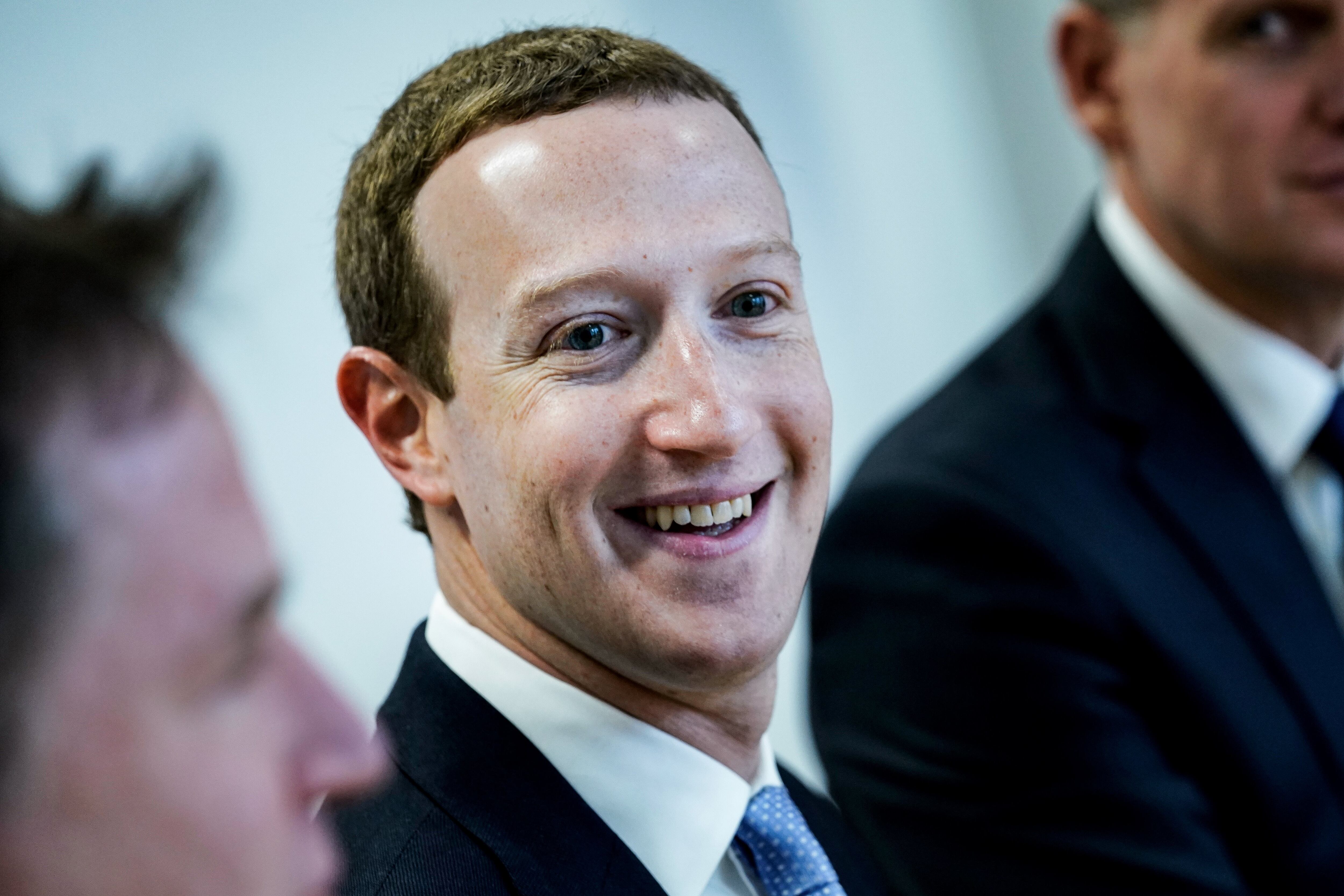
Founder and CEO of US online social media and social networking service Facebook Mark Zuckerberg. Photo by KENZO TRIBOUILLARD/AFP via Getty Images/FILE)
Mark Zuckerberg and his wife Priscilla Chan have donated $25 million through their foundation to a philanthropic effort organized by Bill Gates to explore new coronavirus treatments.
The Gates Foundation donated $50 million last week to what it’s calling the “COVID-19 Therapeutics Accelerator.” The initiative brings together life sciences companies to collaborate on the development of new vaccines, diagnostics, and treatments for COVID-19.
“The Therapeutics Accelerator will enable researchers to quickly determine whether or not existing drugs have a potential benefit against COVID-19,” Chan and Zuckerberg said in a press release. “We hope these coordinated efforts will help stop the spread of COVID-19 as well as provide shared, reusable strategies to respond to future pandemics.”
The two donations are the largest from tech billionaires since the coronavirus outbreak. Wellcome and Mastercard are supporting the effort as well.
The goal of the initiative is to either develop a new drug or adapt an existing treatment that it could help distribute alongside partnering pharmaceutical companies.
The 15 companies participating in the project kicked off the effort by sharing their proprietary libraries of molecular compounds that have some history of being tested with COVID-19.
The lineup includes big names in biotech such as Johnson & Johnson, Merck, Pfizer, Sanofi, and Bristol-Myers Squibb.
On today's Biz Breakdown: Elon Musk ups his offer to buy Twitter, Pfizer drops vaccine cost for some lower income countries, and Oreo & Ritz team up to create a cracker-cookie Sandwich
Catching you up on today's top stories with Elon Musk raising his own commitment to purchasing Twitter with $33.5 billion, Apple plans to produce 220 million iPhones this year, and the company also is raising its hourly retail wage to $22 per hour amid ongoing unionization efforts at its stores.
Everyone is searching for that social media moment, whether it’s filming a viral dance for TikTok or snapping a selfie for your Instagram Story. Cheddar News explores the activities made for the online world, including streaming companies creating real-life experiences to entice you to stay subscribed, TikTok taking the stage with its first theatrical production, and how one immersive experience made out of candy encourages you to revisit your childhood.
It's not a scene from a movie: an asteroid the size of Mount Everest is headed toward earth. It's bigger than 99% of the asteroids in our solar system. But Cheddar anchor Shannon Lanier says fear not. The giant rock will miss us by more than 2 million miles.
Join Cheddar News as we break down the top headlines for Thursday, May 26 including updates on the Texas school shooting, President Joe Biden's executive order on police reform, and a recount in the Pennsylvania GOP Senate primary.
Apple warned of a potential $8 billion future sales hit due to supply issues, but Dan Ives, the managing director of equity research at Wedbush Securities, noted that the record quarterly report the tech giant posted shows demand remains high for Apple products and services. Ives joined Cheddar to explain why investors should look past the warning. "In these types of markets where many are yelling fire in a crowded theater, you look at the demand trends because that continues to be the focus for Apple," he said "I think you combine that with the services. I view it as a defensive name. It's a Rock of Gibraltar stock in a Category 5 storm as well as also an offensive play as I believe we start to move out of some of these just brutal headwinds that we've been seeing in the market once the Fed rips the band-aid off."
Catching you up on what you need to know on April 29, 2022, with President Biden asking Congress for a $33 billion aid package for Ukraine, a shrinking GDP potentially leading to a recession, Beijing banning weddings and funerals while closings schools amid COVID, and more.