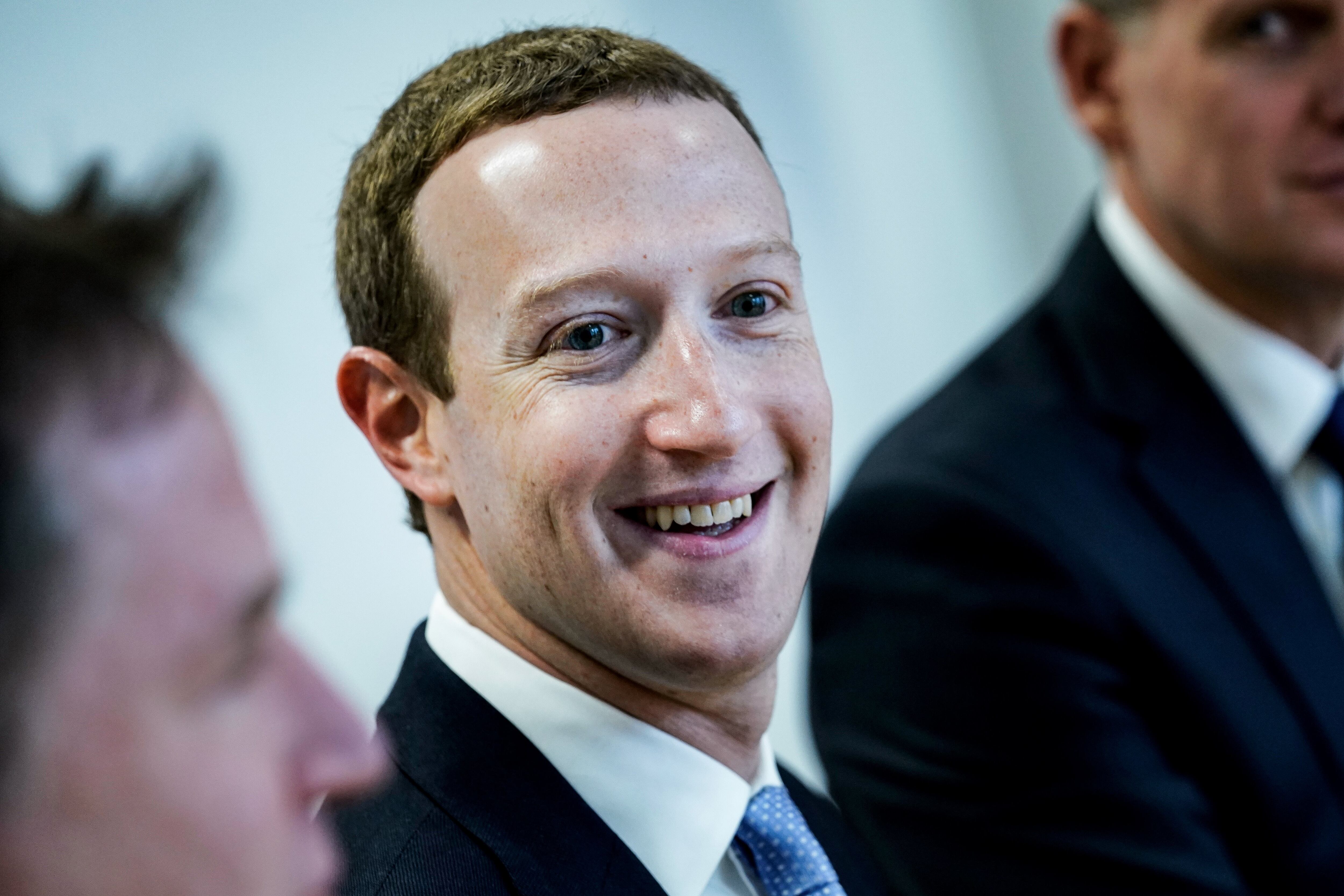
Founder and CEO of US online social media and social networking service Facebook Mark Zuckerberg. Photo by KENZO TRIBOUILLARD/AFP via Getty Images/FILE)
Mark Zuckerberg and his wife Priscilla Chan have donated $25 million through their foundation to a philanthropic effort organized by Bill Gates to explore new coronavirus treatments.
The Gates Foundation donated $50 million last week to what it’s calling the “COVID-19 Therapeutics Accelerator.” The initiative brings together life sciences companies to collaborate on the development of new vaccines, diagnostics, and treatments for COVID-19.
“The Therapeutics Accelerator will enable researchers to quickly determine whether or not existing drugs have a potential benefit against COVID-19,” Chan and Zuckerberg said in a press release. “We hope these coordinated efforts will help stop the spread of COVID-19 as well as provide shared, reusable strategies to respond to future pandemics.”
The two donations are the largest from tech billionaires since the coronavirus outbreak. Wellcome and Mastercard are supporting the effort as well.
The goal of the initiative is to either develop a new drug or adapt an existing treatment that it could help distribute alongside partnering pharmaceutical companies.
The 15 companies participating in the project kicked off the effort by sharing their proprietary libraries of molecular compounds that have some history of being tested with COVID-19.
The lineup includes big names in biotech such as Johnson & Johnson, Merck, Pfizer, Sanofi, and Bristol-Myers Squibb.
Google’s philanthropy arm, Google.org, recently announced a $10 million grant for the AARP Foundation to aid in teaching digital skills to low income older workers. As the implementation of hybrid work expands, a greater emphasis is being placed on helping workers 50 years old and up — especially among women and people of color — to be digitally literate in order to keep the workplace generationally diverse. Lisa Marsh Ryerson, president of the AARP Foundation, joined Cheddar News to talk about the curriculum of the partnership. "Those of us who are 50 and older are not digital natives, so we do have a learning curve that we have to address," she noted.
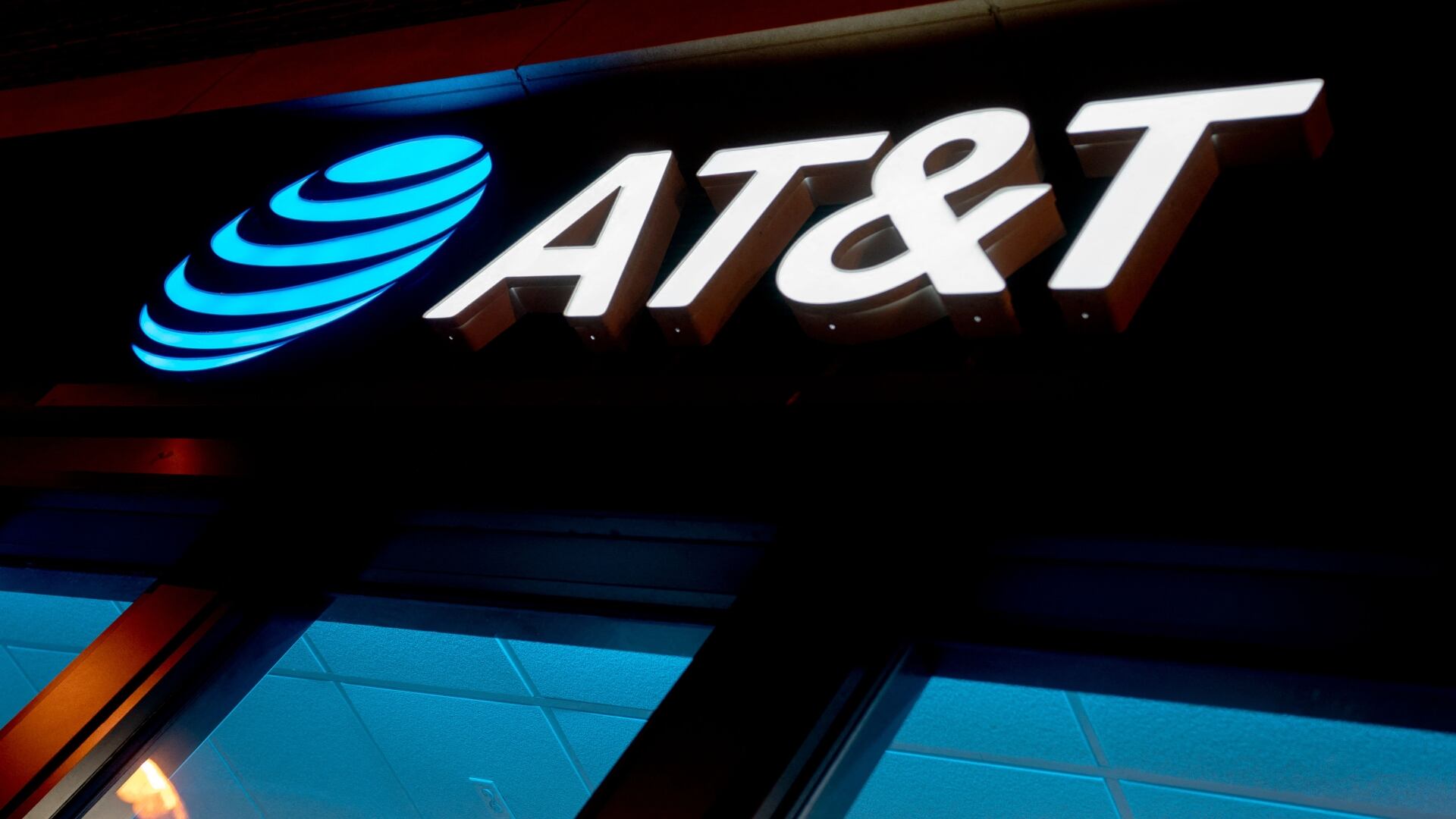
AT&T announced earlier today it is spinning off its media properties in WarnerMedia in a merger with Discovery in a $43 billion deal.Scott Rostan, founder and CEO at Training The Street, joined Cheddar to talk about what the unwinding of the telecom giant's Time Warner media properties means for investors. "I think the investor sentiment is they're digesting the new information, and they're looking into the dividend, especially the reduction of the dividend," said Rostan, noting the transaction allows AT&T to focus on its core telecommunications business.
A 2021 report from UK Research and Innovation found that the shipping industry makes up at least 2.5 percent of the world's total CO2 emissions. It's a problem that energy solutions company, Leclanché, is trying to solve. Founded in 1909, the company has been developing and producing batteries for more than 100 years. Today, Leclanché's lithium-ion battery is used to electrify not just ships, but also railroad locomotives, trucks, and specialty vehicles. Cheddar News spoke with Pierre Blanc, chief technology and industrial officer of Leclanché, to discuss.
Amazon is betting that ammonia could be the fuel of the future, participating in a Series A round for the Brooklyn-based company Amogy in December. Amogy aims to de-carbonize transportation with a clean energy system that uses ammonia as a renewable fuel. Amogy is partnering with Amazon on its first commercial product - an ammonia-powered cargo-shipping vessel. Amogy CEO Seonghoon Woo joins Cheddar Climate to discuss.
Joseph Pallant, Founder and Executive Director for the Blockchain for Climate Foundation, joins Cheddar Climate, where he discusses the among of energy crypto mining consumes and explains how his organization is on a mission to make the crypto industry more environmentally sustainable.
One of the world's largest transport companies is kicking off Black History Month with a new initiative aimed at the next generation of business leaders. Today, FedEx announced the launch of its Student Ambassador Program. Participants selected from eight historically black colleges and universities will receive career guidance from FedEx executives. The program is part of FedEx's ongoing commitment to HBCUs and will also help the company expand its pipeline for diverse talent. Cheddar News welcomes senior vice president at FedEx, Jenny Robertson, and Jerryl Briggs, President of Mississippi Valley State University, to discuss.
Driver assistance monitoring systems are meant to keep the driver's eyes on the road, but according to a report from AAA, different ways of monitoring provide significantly different results. The study found that direct camera-based systems that scanned the driver's eye movements were faster and more reliable than those indirect systems that looked at steering-wheel input. Megan McKernan, the manager of automotive services for the Automobile Club of Southern California, joined Cheddar to discuss the findings. "Triple-A is recommending that automakers include both direct and indirect systems just to really prevent consumers from trying to misuse these systems," she said, noting that neither system on its own is not foolproof.