YouTube Launches Premium Music Service, Challenging Spotify and Apple
*By Alisha Haridasani*
After a series of stops and starts, YouTube will launch a music streaming service later this month to compete directly with Spotify and Apple Music.
The ad-supported YouTube Music will be available to users for free, and an ad-free version, YouTube Music Premium, will cost about $10 a month. There will be a mobile app and a desktop player designed to stream pre-programmed playlists, personalized music suggestions, live performances, and music videos, according to a [statement](https://youtube.googleblog.com/2018/05/youtube-music-new-music-streaming.html) from YouTube.
To consolidate its various video and music products, Google will include access to YouTube Music Premium for Google Play Music subscribers at no additional cost.
In addition to the standalone music product, YouTube is re-branding its music and video YouTube Red service as YouTube Premium. The ad-free subscription service will go from $10 to $12 a month, but it includes the new ad-free premium music service.
YouTubes official entry into the premium music streaming business has been a long time coming: More than 1 billion users a month already use YouTube to “discover new music.” A [study](http://www.ifpi.org/downloads/Music-Consumer-Insight-Report-2017.pdf) published in 2017 estimates that YouTube accounts for 46 percent of time spent online listening to on-demand music.
The leading premium music streaming service, Spotify, has 75 million paid subscribers and is expected to hit 96 million by the end of the year. Rival Apple Music [reportedly](https://www.hollywoodreporter.com/news/apple-music-hits-50-million-subscribers-1112018) has 50 million paid and free users.
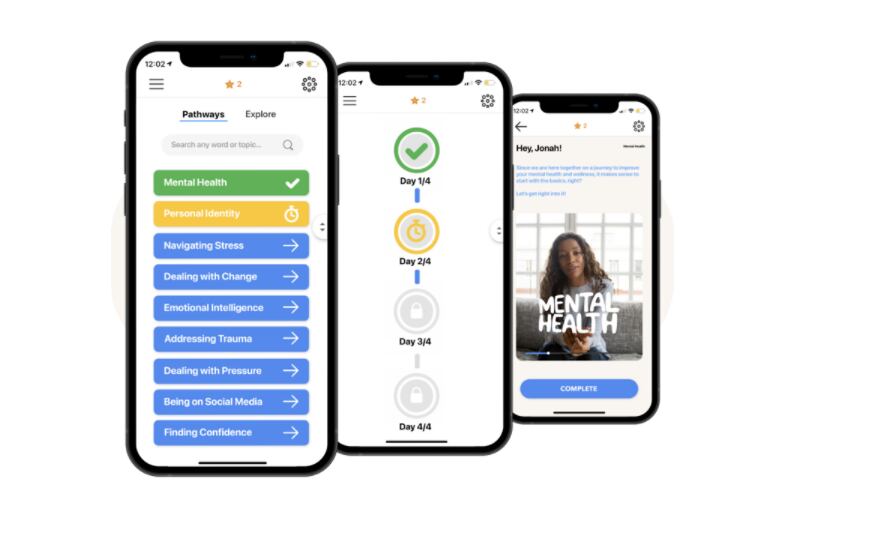
Two friends have joined forces to come up with an app dedicated to making mental health more approachable and to provide users with the tools needed to improve their mental health and overall well-being. Co-Founders of the Dial App Jonah Salita and Marcel Johnson, joined Cheddar to discuss more.
On this International Women’s Day, Deb Cupp, president of Microsoft U.S., joined Cheddar News to talk about the implementation of her pillars to extend the company's culture, such as acting with care and putting the team first. "What I like about the pillars is they're very simple, so it's easy for us to think about how they show up every day in our lives," Cupp said.
The growth of the metaverse is bringing new challenges to managing safe, diverse communities. Helping Cheddar kick off Women's History Month, Tiffany Xingyu Wang, chief marketing officer for AI-powered content moderation company Spectrum Labs, joined Cheddar's Opening Bell to discuss how platforms can help create safer, more inclusive online communities in the metaverse and about her own experience as a woman in technology. "Trust is really the new digital transformation, and it should not be a siloed task solely belonging to chief security officers, to privacy officers, or the people who were given the task of trust and safety," she said. "It should be a priority for all the C suite and a whole company to rally around."
On this episode of Cheddar Innovates: Vision Marine Technologies CEO discusses how e-boats will play a role in the fight against the climate crisis; Lasso CEO breaks down how the design behind these compression socks can prevent injuries and improve performance; Cheddar gets a look at Curiosity Stream's 'The Tombs Of Egypt.'
Catriona Campbell, CTIO, UK and Ireland, EY, joins Cheddar News to discuss how business leaders can bridge the gap between their technology investments and their aspirations, and breaks down the human aspects of A.I.