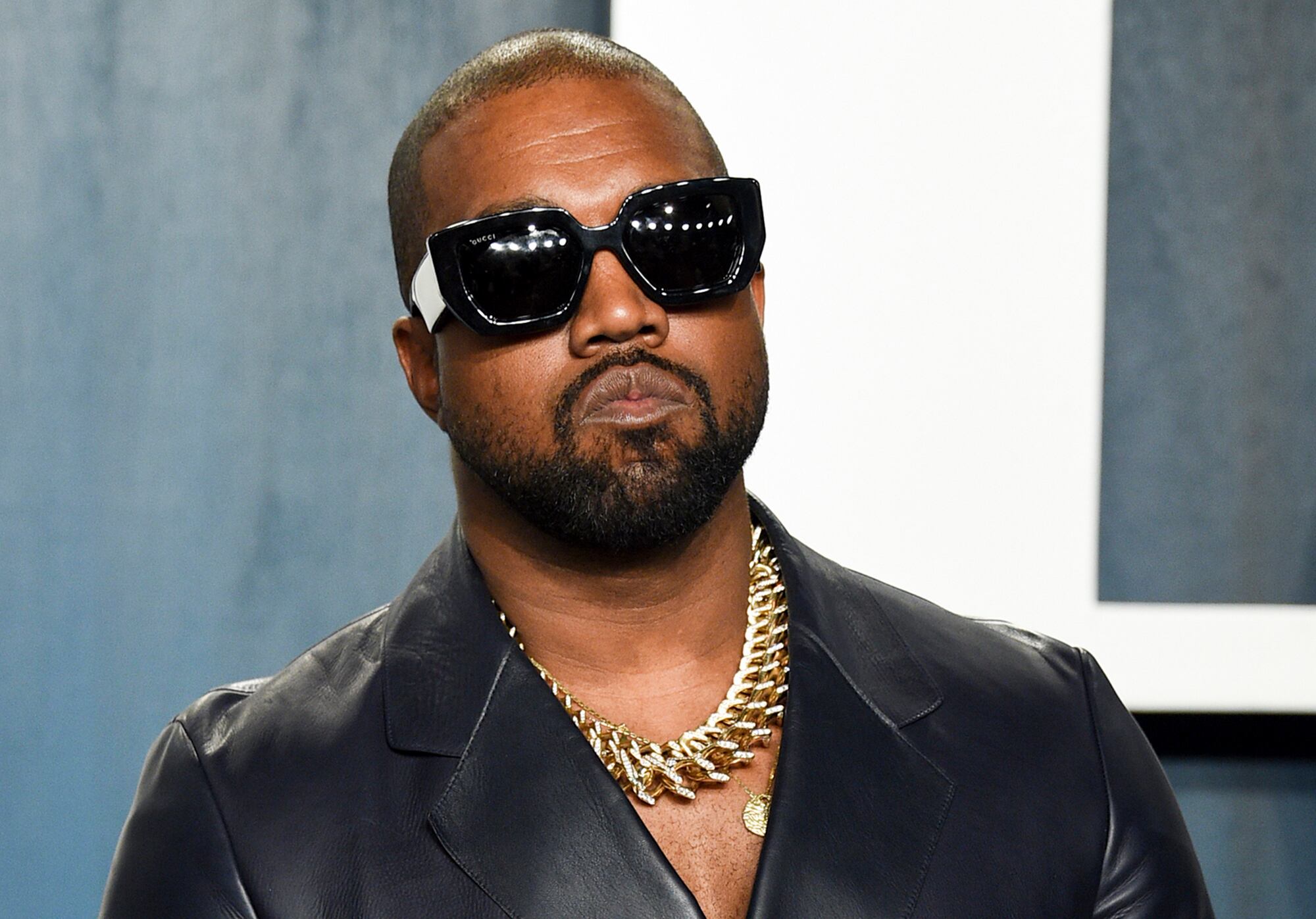
In this Feb. 9, 2020, file photo, Kanye West arrives at the Vanity Fair Oscar Party in Beverly Hills, Calif. Rapper and fashion mogul Ye’s high-end clothing company Yeezy has agreed to pay $950,000 to settle a lawsuit over slow shipping to customers. (Photo by Evan Agostini/Invision/AP, File)
Rapper and fashion mogul Ye's high-end clothing company Yeezy agreed Monday to pay $950,000 to settle a lawsuit brought by four California district attorneys over slow shipping to customers.
The suit brought last month by the district attorneys of Los Angeles, Sonoma, Napa and Alameda counties alleged that Yeezy had engaged in false advertising about its shipping and had violated state law by failing to send online orders within 30 days.
He designs and sells sneakers under the Yeezy brand in collaboration with Adidas. The company also makes and sells clothes. Adidas was not named as a defendant in the lawsuit.
An email sent seeking comment from Yeezy was not immediately returned.
The settlement includes $800,000 in civil penalties to the district attorneys offices, $50,000 in restitution to a state consumer protection fund, and $100,000 in investigative costs.
Voyager, Nanoracks, and Lockheed Martin are all teaming up to develop the first-ever free-flying commercial space station with room for a crew of four astronauts. The private companies are joining forces as part of NASA’s greater mission to retire the International Space Station by the year 2030. The low-earth orbit space station will be called "Starlab," and is planned to achieve operational capability by 2027. Lisa Callahan, Vice President and General Manager of Commercial Civil Space at Lockheed Martin, and Matthew J. Kuta, President and Chief Operating Officer of Voyager Space, joined Cheddar’s Opening Bell.
Jill and Carlo cover the latest developments in the Alec Baldwin prop gun shooting, when vaccines for kids as young as 5 should be approved, new reporting on Facebook and more.
A Glassdoor report found mentions of "burnout" in online job reviews have increased by 100 percent over the course of the pandemic. Daniel Zhao, the senior economist for the company, talked to Cheddar about the underlying reasons workers have been expressing themselves about the state of their mental health. "That's really a reflection of the fact that the COVID-19 pandemic has been going on for almost 2 years now, and it's really dragged on," he said. "So workers are increasingly feeling like the lines between their work life and their home life are blurred, and they don't feel like they can get that same balance that they might have been able to get before the pandemic."