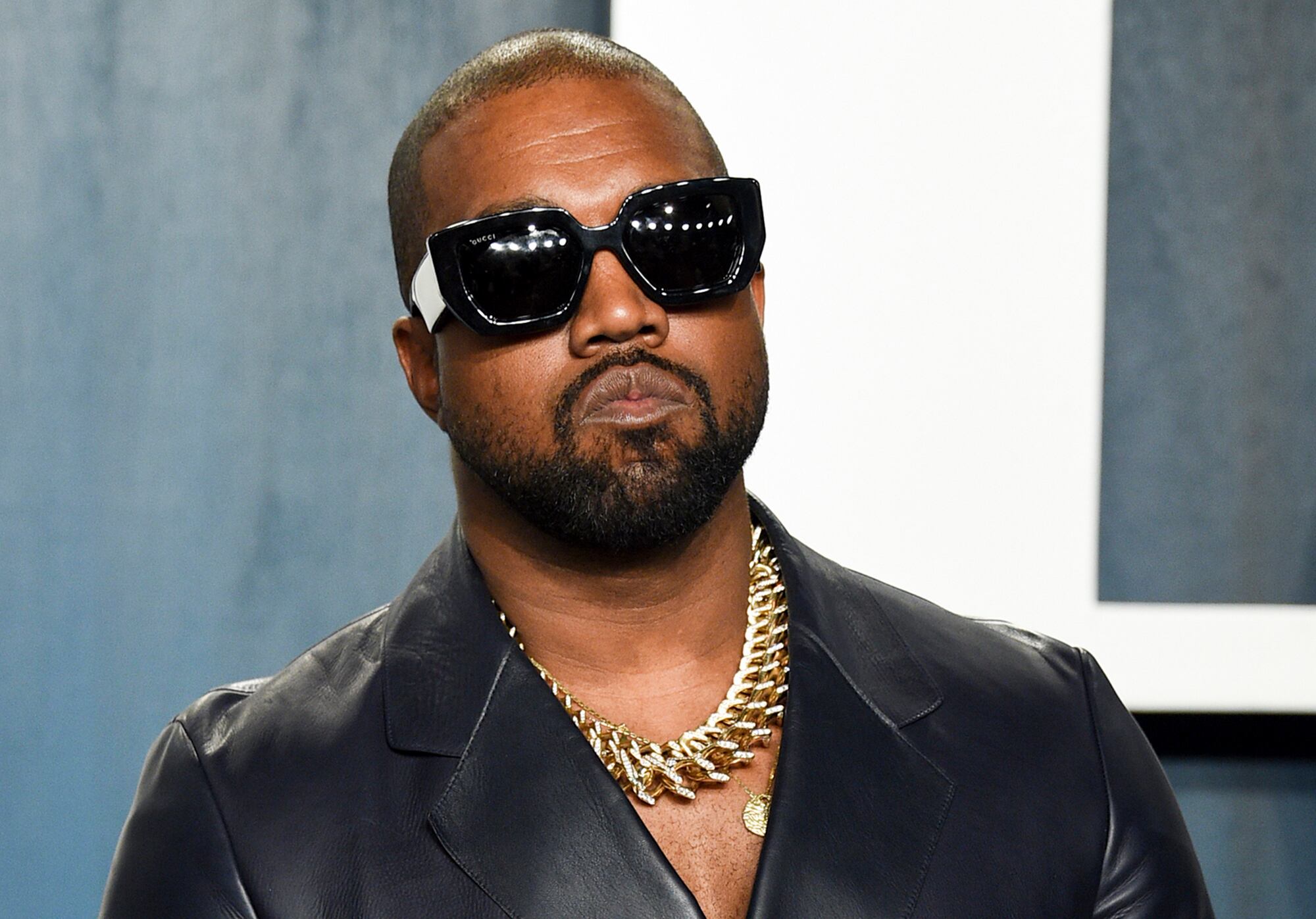
In this Feb. 9, 2020, file photo, Kanye West arrives at the Vanity Fair Oscar Party in Beverly Hills, Calif. Rapper and fashion mogul Ye’s high-end clothing company Yeezy has agreed to pay $950,000 to settle a lawsuit over slow shipping to customers. (Photo by Evan Agostini/Invision/AP, File)
Rapper and fashion mogul Ye's high-end clothing company Yeezy agreed Monday to pay $950,000 to settle a lawsuit brought by four California district attorneys over slow shipping to customers.
The suit brought last month by the district attorneys of Los Angeles, Sonoma, Napa and Alameda counties alleged that Yeezy had engaged in false advertising about its shipping and had violated state law by failing to send online orders within 30 days.
He designs and sells sneakers under the Yeezy brand in collaboration with Adidas. The company also makes and sells clothes. Adidas was not named as a defendant in the lawsuit.
An email sent seeking comment from Yeezy was not immediately returned.
The settlement includes $800,000 in civil penalties to the district attorneys offices, $50,000 in restitution to a state consumer protection fund, and $100,000 in investigative costs.
Kyndryl isn't wasting any time as an independent company. Just over a week after spinning off from IBM, the IT infrastructure services provider has announced its first global strategic partner in Microsoft. The two tech giants are coming together to form a new kind of power duo, creating multi-billion dollar revenue opportunities between the companies. Stephen Leonard, global alliances & partnerships leader for Kyndryl, told Cheddar more about the partnership and what it aims to achieve.
Eric Diton, President & Managing Director of The Wealth Alliance, discusses why inflation remains a long-term headwind for the market and what it means for consumer spending for the rest of the year.
Francis Oh, APAC CEO at Qraft Technologies, discusses how inflationary pressures could impact corporate earnings, and why the electric vehicle market is one to watch as ESG investing picks up.
Bitcoin has successfully activated Taproot, the cryptocurrency's first major upgrade since 2017 and a highly anticipated change to the blockchain. Taproot will introduce what's known as Schnorr signatures, which will help transactions become more private, efficient and perhaps even less expensive. Robert Hackett, a cryptocurrency expert and journalist, breaks down the new upgrade and what it means for bitcoin users.
Jharonne Martis, director of consumer spending at Refinitiv, joined Wake Up With Cheddar's Brad Smith to break down positive earnings results from Home Depot and Walmart. Martis also discussed what October's retail sales data means for the upcoming holiday season.
The housing market is hot right now - so hot it was too much for Zillow to handle. While the pandemic is playing a major part in that, now it has reached a point where houses on average are only on the market for about a week before being sold. Cheddar News was joined by Tushar Garg, CEO and Co-Founder of Flyhomes to talk about how this came to be and what comes next.
Markets were pointing to a higher open to kick off the third trading week in November. It comes as stocks come off a losing week in reaction to October's consumer price index--which showed inflation at its highest point in over 30 years.
Ryan Detrick, Chief Market Strategist for LPL Financial joined Wake Up with Cheddar to discuss.
Harvard Business School Professor Ranjay Gulati joined Wake Up With Cheddar to break down the massive challenge the Biden Administration faces in ensuring projects in the $1.2 trillion infrastructure bill are completed on time and on budget.
Jill is joined by Baker Machado to talk all things infrastructure: where will the money go and who’s in charge? Plus, Sesame Street has its first Asian-American muppet. And a trailer for the trailer for Spiderman. Huh?
New York has always been home to some of the world’s tallest towers, but in the last 10 years the city has seen an influx of super skinny buildings towering over Central Park, built exclusively for the ultra-rich. With demand for luxury high-rise vistas being higher than ever, building developers are using every zoning opportunity they can to push height limits – and there’s one loophole that’s helping make that happen.