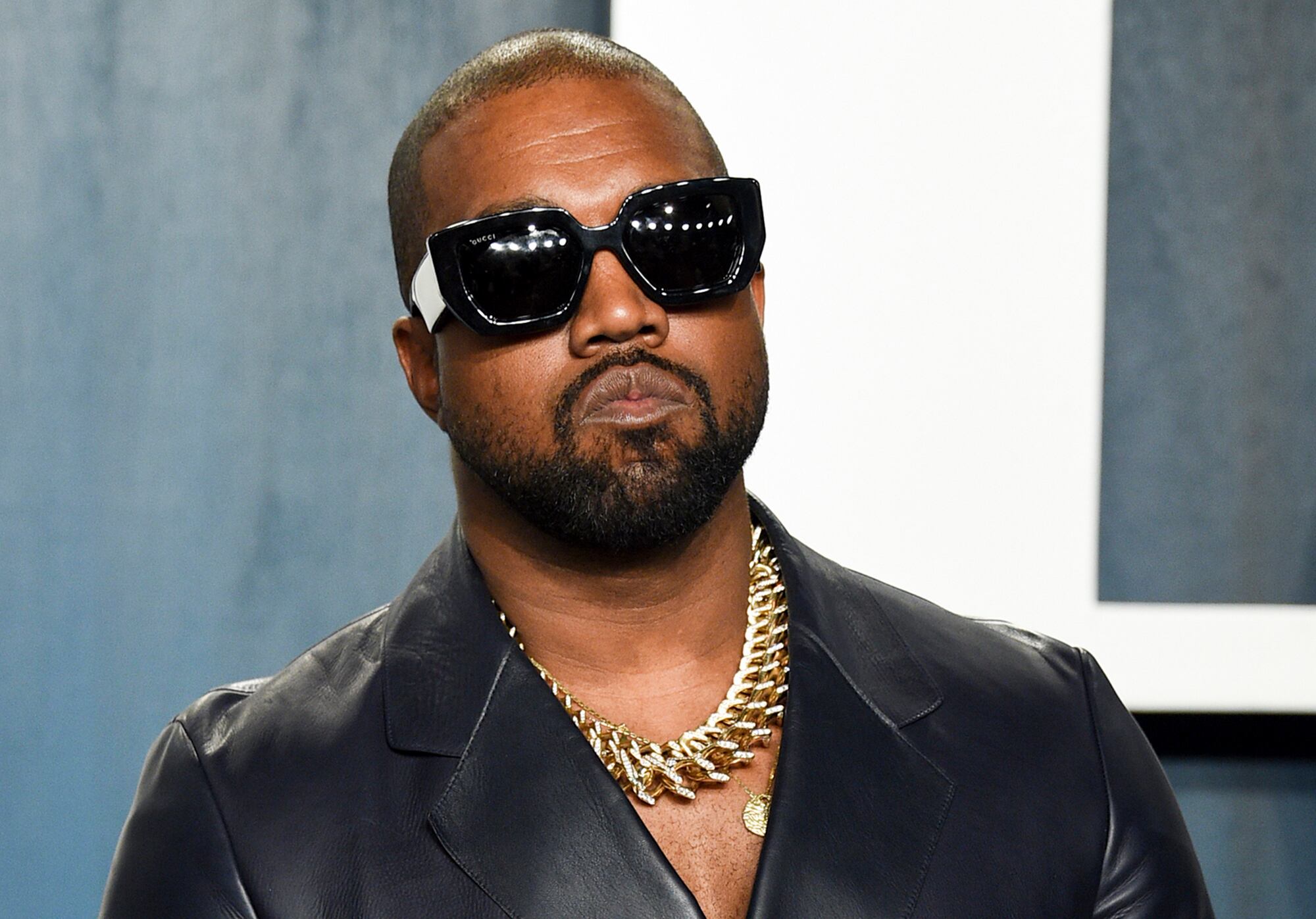
In this Feb. 9, 2020, file photo, Kanye West arrives at the Vanity Fair Oscar Party in Beverly Hills, Calif. Rapper and fashion mogul Ye’s high-end clothing company Yeezy has agreed to pay $950,000 to settle a lawsuit over slow shipping to customers. (Photo by Evan Agostini/Invision/AP, File)
Rapper and fashion mogul Ye's high-end clothing company Yeezy agreed Monday to pay $950,000 to settle a lawsuit brought by four California district attorneys over slow shipping to customers.
The suit brought last month by the district attorneys of Los Angeles, Sonoma, Napa and Alameda counties alleged that Yeezy had engaged in false advertising about its shipping and had violated state law by failing to send online orders within 30 days.
He designs and sells sneakers under the Yeezy brand in collaboration with Adidas. The company also makes and sells clothes. Adidas was not named as a defendant in the lawsuit.
An email sent seeking comment from Yeezy was not immediately returned.
The settlement includes $800,000 in civil penalties to the district attorneys offices, $50,000 in restitution to a state consumer protection fund, and $100,000 in investigative costs.
According to data from Dealogic, the Nasdaq is on track to beat the NYSE in IPOs this year, raising $191 billion so far, compared with the NYSE's $109 billion. Louis Cordone, senior president of Data Strategy at AST, discusses why 2021 was so successful for IPOs, and what differentiates the two exchanges.
Jeffrey Small, President of Arbor Financial, breaks down the Omicron variants' impact on markets going forward and where investors should pay attention to for growth potential.
Rich Weiss, Multi-Asset Strategies CIO at American Century Investments, talks about economic growth amid COVID-19 concerns and how retail spending is being impacted by inflation.
Markets opened higher as investors shrugged off weaker-than-expected job growth and Omicron fears. George Seay, CEO, Annandale Capital joined Cheddar's Opening Bell to discuss.
Michele Schneider, Partner and Director of Trading Research & Education for MarketGauge, breaks down the major risks to the markets and discusses why tech and Agriculture are the best sectors to hedge inflation concerns.
Bitcoin took a nosedive over the weekend, falling to its lowest price level in nearly two months. According to data from Coindesk, the crypto dropped more than 20% to $42,000 on Saturday before rebounding some. Prices of Ether, Dogecoin and Shiba Inu dropped as well, with Ether tumbling by more than 15%at one point. Lance Ippolito, head trader at the Future of Wealth, joined Cheddar to discuss why crypto plummeted and what to expect next.
Less than six months after making its public debut on the NYSE, Chinese ride-hailing giant Didi says it will delist in the U.S. and pivot to Hong Kong instead. Chinese regulators are citing cybersecurity and data concerns. Shehzad Qazi, Managing Director, China Beige Book International joined Cheddar's Opening Bell to discuss.
As offices shifted to remote schedules, and people were forced into a new way of work, many began to re-think their career path and their purpose in the workforce, leading to what many are calling 'The Great Resignation.' During the last year, Americans quit their jobs in unprecedented numbers, seeking more flexibility, better benefits, a higher salary, and ultimately greater independence. Danielle Neal, CEO of Digital with Danielle, is just one of the millions who quit their job during the pandemic, and she joined Cheddar's Opening Bell to tell her story.
As Americans quit their jobs in record numbers this year, companies have been scrambling to try and fill those gaps. Gad Levanon, head of the labor market institute at The Conference Board, says companies need to focus more on salary if they want to better retain their employees. Levanon joined Cheddar to discuss the labor shortage, the "Great Resignation," and what companies can learn from it going into 2022.