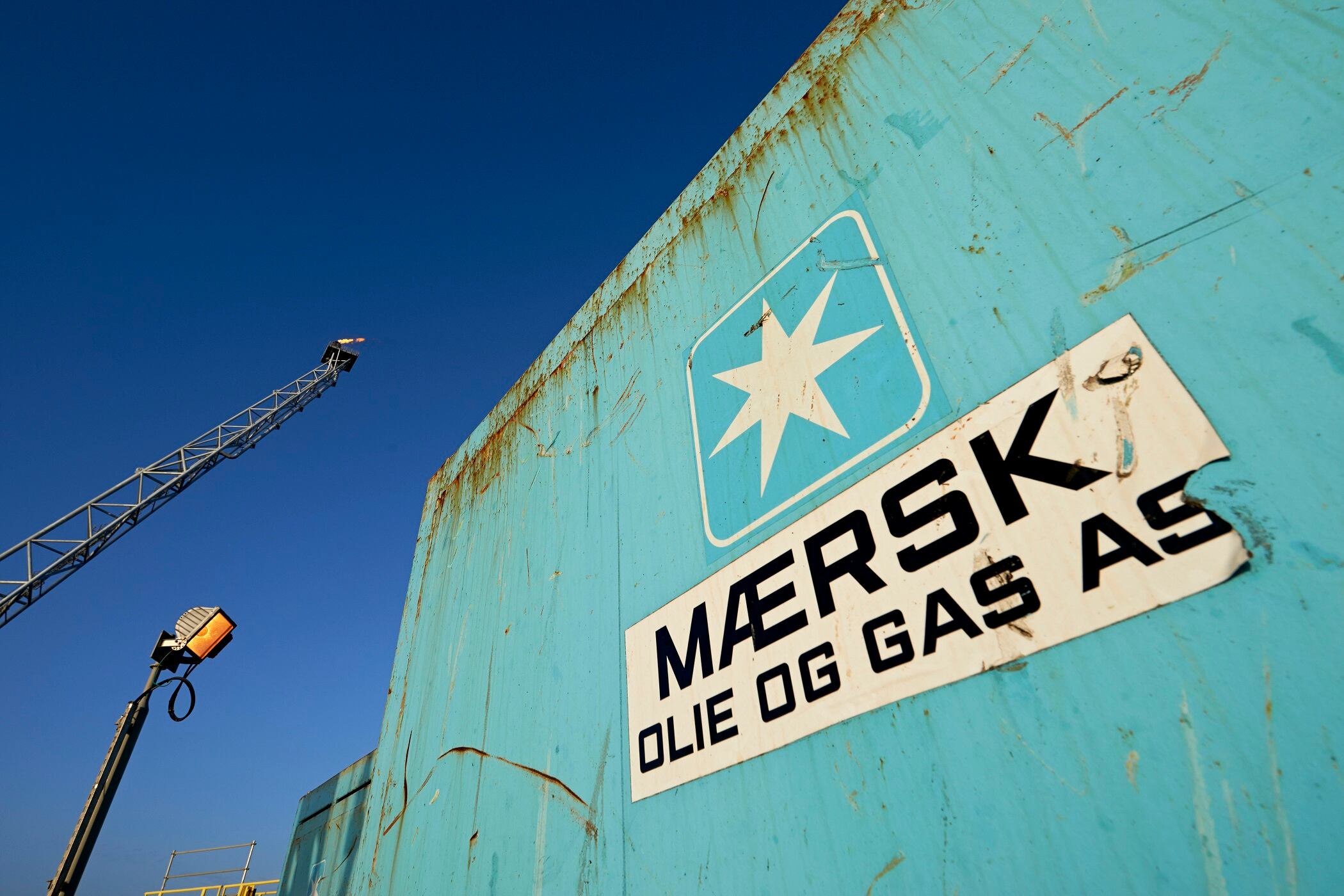
An A.P. Moller-Maersk's oil rig in the North Sea named Halfdan, on Oct. 23, 2013. The world’s biggest shipping company, Denmark’s A.P. Moller-Maersk, has reported a sharp rise in earnings amid strong worldwide demand for shipments of goods. (Claus Bonnerup/Polfoto File via AP)
The world’s biggest shipping company, Denmark’s A.P. Moeller-Maersk, reported Tuesday a sharp rise in earnings amid strong worldwide demand for shipments of goods as the economy bounces back from the coronavirus pandemic.
The Copenhagen-based company said revenue grew nearly 68% in the third quarter, to a record-high $16.6 billion, up from $9.9 billion in the same three-month period last year. It reported profits of $5.5 billion, up from $947 million in the same period last year.
“In the ongoing exceptional market situation, with high demand in the U.S. and global disruptions to the supply chains, we continued to increase capacity and expand our offerings to keep cargo moving for our customers,” CEO Soren Skou said.
The urgent need for more shipping capacity comes amid soaring consumer demand for everything from cars to furniture and labor shortages in the rebounding economy, leading to major backups at ports and higher prices. The supply chain issues have caused a shortage of key equipment: shipping containers.
In a statement, Maersk said its key ocean business is now “expected to grow below the global container demand" amid uncertainty around the supply chain logjams.
The company also announced its intention to acquire Senator International, a global freight forwarding company with strong air freight offerings. And to expand its own air network, Maersk is adding aircraft to its operations: three leased cargo planes to be operational from 2022 and two Boeing aircraft to be deployed by 2024.

The social video platform's future remains in doubt, as players scramble to profit from the chaos. Plus: Big oil gets bigger, DOGE downsizes, and tariffs!
Ty Young, CEO of Ty J. Young Wealth Management, joins Cheddar to discuss Trump's moves as he returns to Washington D.C. and how it may affect the U.S. economy.
Starbucks’ decision to restrict its restrooms to paying customers has flushed out a wider problem: a patchwork of restroom use policies that varies by state and city. Starbucks announced last week a new code of conduct that says people need to make a purchase if they want to hang out or use the restroom. The coffee chain's policy change for bathroom privileges has left Americans confused and divided over who gets to go and when. The American Restroom Association, a public toilet advocacy group, was among the critics. Rules about restroom access in restaurants vary by state, city and county. The National Retail Federation says private businesses have a right to limit restroom use.
President Donald Trump is talking up a joint venture investing up to $500 billion for infrastructure tied to artificial intelligence by a new partnership formed by OpenAI, Oracle and SoftBank. The new entity, Stargate, will start building out data centers and the electricity generation needed for the further development of the fast-evolving AI in Texas, according to the White House. The initial investment is expected to be $100 billion and could reach five times that sum. While Trump has seized on similar announcements to show that his presidency is boosting the economy, there were already expectations of a massive buildout of data centers and electricity plants needed for the development of AI.
Chris Ruder, Spikeball Founder and CEO, explains how he and his friends put roundnet on the global map, plus, how Spikeball helps people "find their circle."
J.W. Roth, CEO of Venu Holding Corporation, discusses the company's IPO and plans to redefine live music entertainment with their fan founded, fan-owned model.