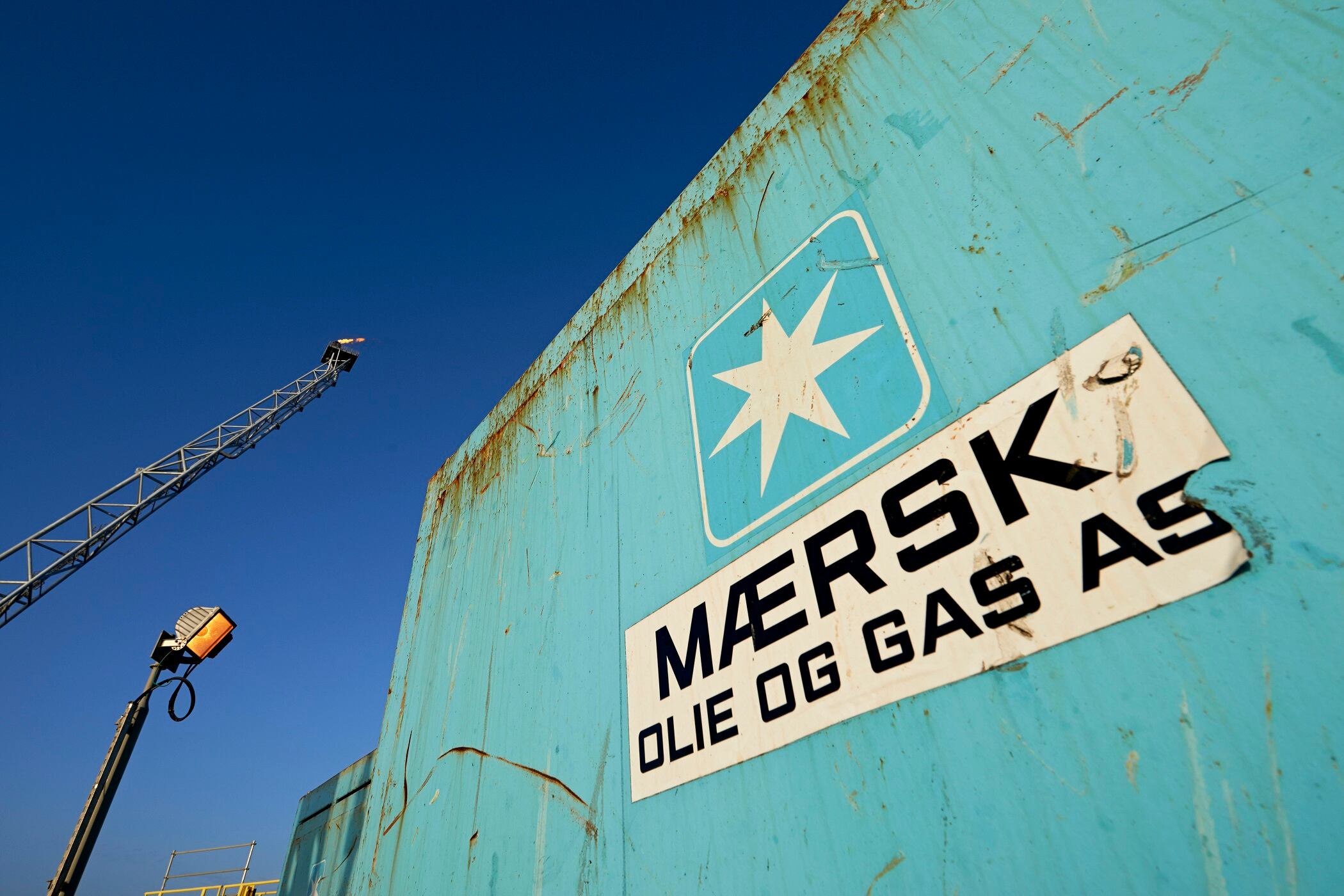
An A.P. Moller-Maersk's oil rig in the North Sea named Halfdan, on Oct. 23, 2013. The world’s biggest shipping company, Denmark’s A.P. Moller-Maersk, has reported a sharp rise in earnings amid strong worldwide demand for shipments of goods. (Claus Bonnerup/Polfoto File via AP)
The world’s biggest shipping company, Denmark’s A.P. Moeller-Maersk, reported Tuesday a sharp rise in earnings amid strong worldwide demand for shipments of goods as the economy bounces back from the coronavirus pandemic.
The Copenhagen-based company said revenue grew nearly 68% in the third quarter, to a record-high $16.6 billion, up from $9.9 billion in the same three-month period last year. It reported profits of $5.5 billion, up from $947 million in the same period last year.
“In the ongoing exceptional market situation, with high demand in the U.S. and global disruptions to the supply chains, we continued to increase capacity and expand our offerings to keep cargo moving for our customers,” CEO Soren Skou said.
The urgent need for more shipping capacity comes amid soaring consumer demand for everything from cars to furniture and labor shortages in the rebounding economy, leading to major backups at ports and higher prices. The supply chain issues have caused a shortage of key equipment: shipping containers.
In a statement, Maersk said its key ocean business is now “expected to grow below the global container demand" amid uncertainty around the supply chain logjams.
The company also announced its intention to acquire Senator International, a global freight forwarding company with strong air freight offerings. And to expand its own air network, Maersk is adding aircraft to its operations: three leased cargo planes to be operational from 2022 and two Boeing aircraft to be deployed by 2024.
Geoff Freeman, president and CEO of the U.S. Travel association, explains why other nations are outcompeting the U.S., and the innovations that would put American back on top.
Tony Drake, founder of Drake & Associates, breaks down the latest CPI report, why ‘inflation is still trending down,’ and why the Fed doesn’t want to cut rates too soon.
Make sure your love don't cost a thing this Valentine's Day to any scammers. Note: we're not talking about your partner that didn't do the dishes after saying they would.
Landing founder and CEO Bill Smith shares how the company’s new Nomad pass and partnership with Frontier Airlines allows subscribers unlimited airfare and accommodations.
The pandemic yielded government financial support and (eventually) a surprisingly strong job market — but racial wealth disparities grew. Why is it so difficult to close the wealth gap?
Plenty of retailers and suppliers are reducing the variety of their offerings to focus instead on what they think will sell best. Many businesses have decided less is better, justifying their limited selection by asserting shoppers don’t want so much choice.
Joe Pompliano, author of the Huddle Up newsletter, breaks down the biggest moments from Super Bowl LVIII, from potentially record-breaking viewership to Taylor Swift’s highly anticipated appearance.
David Wright, President and owner of Wright Financial Group, shares his thoughts on why the Federal Reserve seems hesitant to cut rates, and why regional bank stocks could help move the needle.