By Matthew Brown
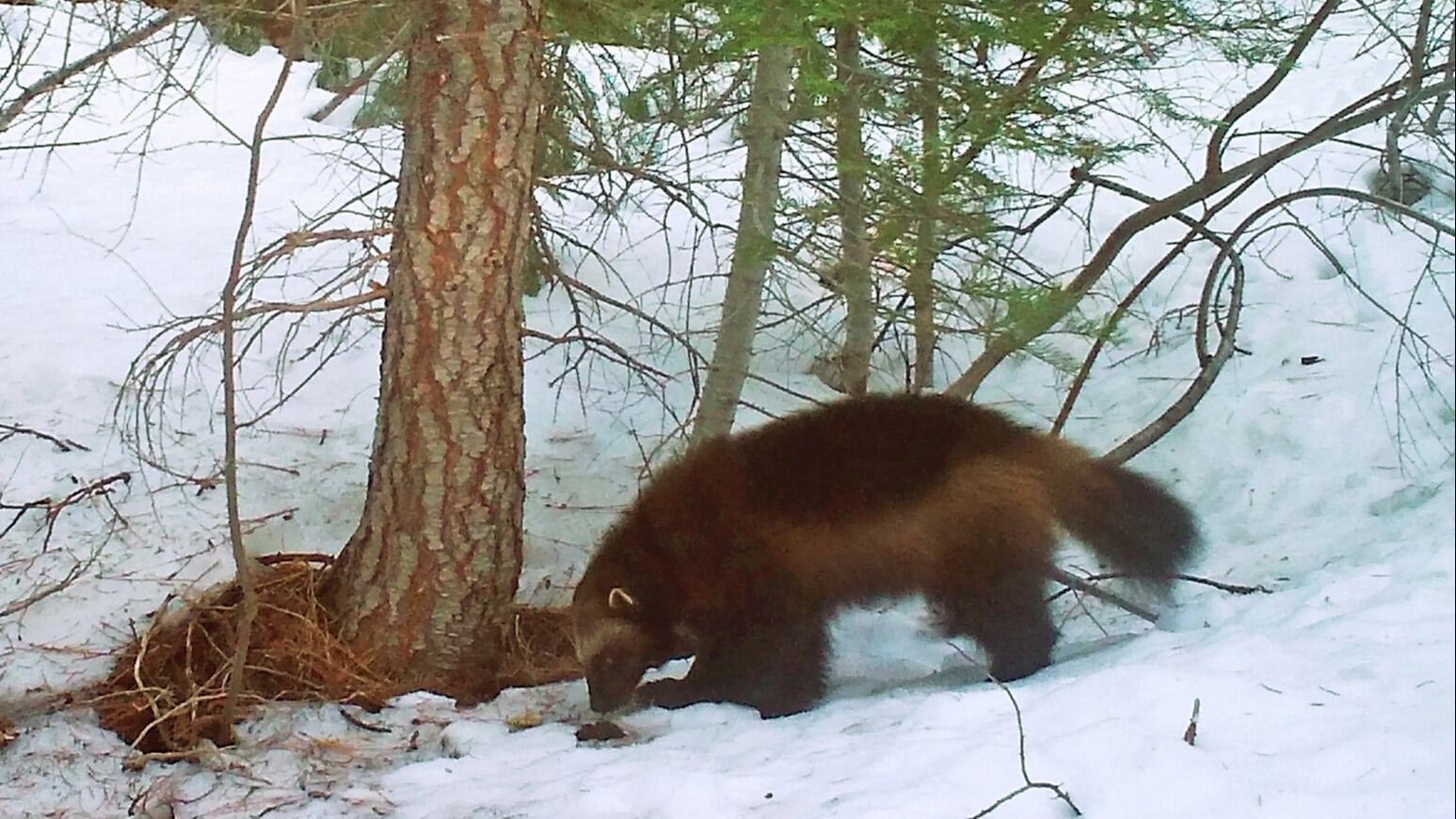
The North American wolverine will receive long-delayed federal protections under a Biden administration proposal released Wednesday in response to scientists warning that climate change will likely melt away the rare species’ snowy mountain refuges.
Across most of the U.S., wolverines were wiped out by the early 1900s from unregulated trapping and poisoning campaigns. About 300 surviving animals in the contiguous U.S. live in fragmented, isolated groups at high elevations in the northern Rocky Mountains.
In the coming decades, warming temperatures are expected to shrink the mountain snowpack wolverines rely on to dig dens where they birth and raise their young. The
The decision Wednesday by the U.S. Fish and Wildlife Service follows more than two decades of disputes over the risks of climate change, and threats to the long-term survival of the elusive species. Officials wrote in the proposal that protections under the Endangered Species Act were needed “due primarily to the ongoing and increasing impacts of climate change and associated habitat degradation and fragmentation.”
The animals resemble small bears and are the world’s largest species of terrestrial weasels. Sometimes called “mountain devils,” they thrive in harsh alpine environments.
Protections were rejected under former President Donald Trump. A federal judge in 2022 ordered the administration of President Joe Biden to make a final decision this week on whether to seek protections.
In Montana, Republican lawmakers urged the Biden administration to delay its decision, claiming the scientists’ estimates were inaccurate to make a fair call about the dangers faced by wolverines. The lawmakers, led by hard-right conservative Rep. Matt Rosendale, warned that protections could lead to future restrictions on activities allowed in wolverine habitats, including snowmobiling and skiing.
In September, government scientists conceded some uncertainty about how quickly mountain snowpacks could melt in areas with wolverines. But they said habitat loss due to climate change — combined with other problems such as increased development such as houses and roads — will likely harm wolverine populations in decades to come.
“The best available information suggests that habitat loss as a result of climate change and other stressors are likely to impact the viability of wolverines in the contiguous U.S. through the remainder of this century,” they concluded.
The scientists added that some of those losses could be offset if wolverines are able to recolonize areas such as California’s Sierra Nevada and Colorado’s Rocky Mountains.
Environmentalists argued in a 2020 lawsuit against the Fish and Wildlife Service that wolverines face localized extinction from climate change, habitat fragmentation and low genetic diversity.
Wolverine populations that are still breeding live in remote areas of Montana, Wyoming, Idaho and Washington state. In recent years, individual animals have been documented in California, Utah, Colorado and Oregon.
“These occurrences outside of the known breeding distribution are encouraging, but there is no evidence of breeding population expansion into California, Colorado, Oregon, and Utah,” officials wrote in Wednesday's proposal.
The wildlife service received a petition to protect wolverines in 2000 and the agency recommended protections in 2010. The Obama administration proposed protections and later sought to withdraw them but was blocked by a federal judge who said in 2016 that the snow-dependent animals were “squarely in the path of climate change.”
Protections were rejected in 2020 under Trump, based on research suggesting the animals’ prevalence was expanding, not contracting. Federal wildlife officials at the time predicted that despite warming temperatures, enough snow would persist at high elevations for wolverines to den in mountain snowfields each spring.
They reversed course in a revised analysis published in September that said wolverines were “less secure than we described.”
The animals need immense expanses of wildland to survive, with home ranges for adult male wolverines covering as much as 610 square miles (1,580 square kilometers), according to a study in central Idaho.
They also need protection from trapping, according to scientists. Wolverine populations in southwestern Canada plummeted by more than 40% over the past two decades due to overharvesting by trappers, which could have effects across the U.S. border, scientists said.
Wolverine trapping was once legal in states including Montana. They are still sometimes caught inadvertently by trappers targeting other fur-bearing animals.
At least 10 wolverines have been accidentally captured in Montana since trapping was restricted in 2012. Three were killed and the others released unharmed. In Idaho, trappers have accidentally captured 11 wolverines since 1995 including three that were killed.