The House of Representatives overwhelmingly passed the $2.2 trillion coronavirus aid package Friday afternoon, but what was expected to be a smooth confirmation process devolved into a mad dash in the Capitol after one of the House’s own threatened to derail the vote with a procedural objection.
Rep. Thomas Massie (R-Ky. 4th Dist.) announced he would call for a recorded vote, which requires quorum — 216 members — to pass the relief bill. Lawmakers who had left Washington rushed back to make sure there were enough representatives to make a quorum, many of them furious about the health risk of traveling and meeting in a large group.
When Massie stood up to request the recorded vote during Friday’s session, he was the only member to do so. With quorum met, the bill was permitted to pass by voice vote, which it did to cheers from the socially-distanced House members. The bill will now go to the president’s desk for his signature.
In the absence of remote voting, House Speaker Nancy Pelosi had tried to give members the option to stay home by calling for a voice vote. That plan would have allowed most members, many in the high-risk category for coronavirus complications, to stay home while still providing a forum for members who wanted to speak on the floor. C-SPAN had even agreed to provide air time for members to broadcast short video statements if they did not wish to return to Washington D.C.
House members, instead, debated while staying as far from each other as possible, with members standing in doorways, stairwells and even on the upper floor.
Two RollColl reporters compiled a spreadsheet to keep track of which members had returned, and how they arrived in D.C. As of 1 pm ET Friday, it had been noted that at least 11 members had driven, some of whom said they had been on the road all night.
One of those members, Rep. Haley Stevens (D-Mich.11th Dist.) made a nearly nine-hour drive overnight and said “I rise for every American who is scared now,” raising her voice on the floor as a gavel signaled her time was over. Stevens, showing the latex gloves on her hands, said she wore them “not for personal attention, but to encourage you to take this disease seriously.” Her district is just outside Detroit, one of the regions dealing with an outbreak.
“You will see darkness. You will be pushed. And our society needs you to stand together at this time,” she said.
Massie did seem to bring together politicians across the aisle in their anger. President Trump called Massie a “third rate Grandstander” and former Secretary of State John Kerry said “congressman Massie has tested positive for being an asshole.”
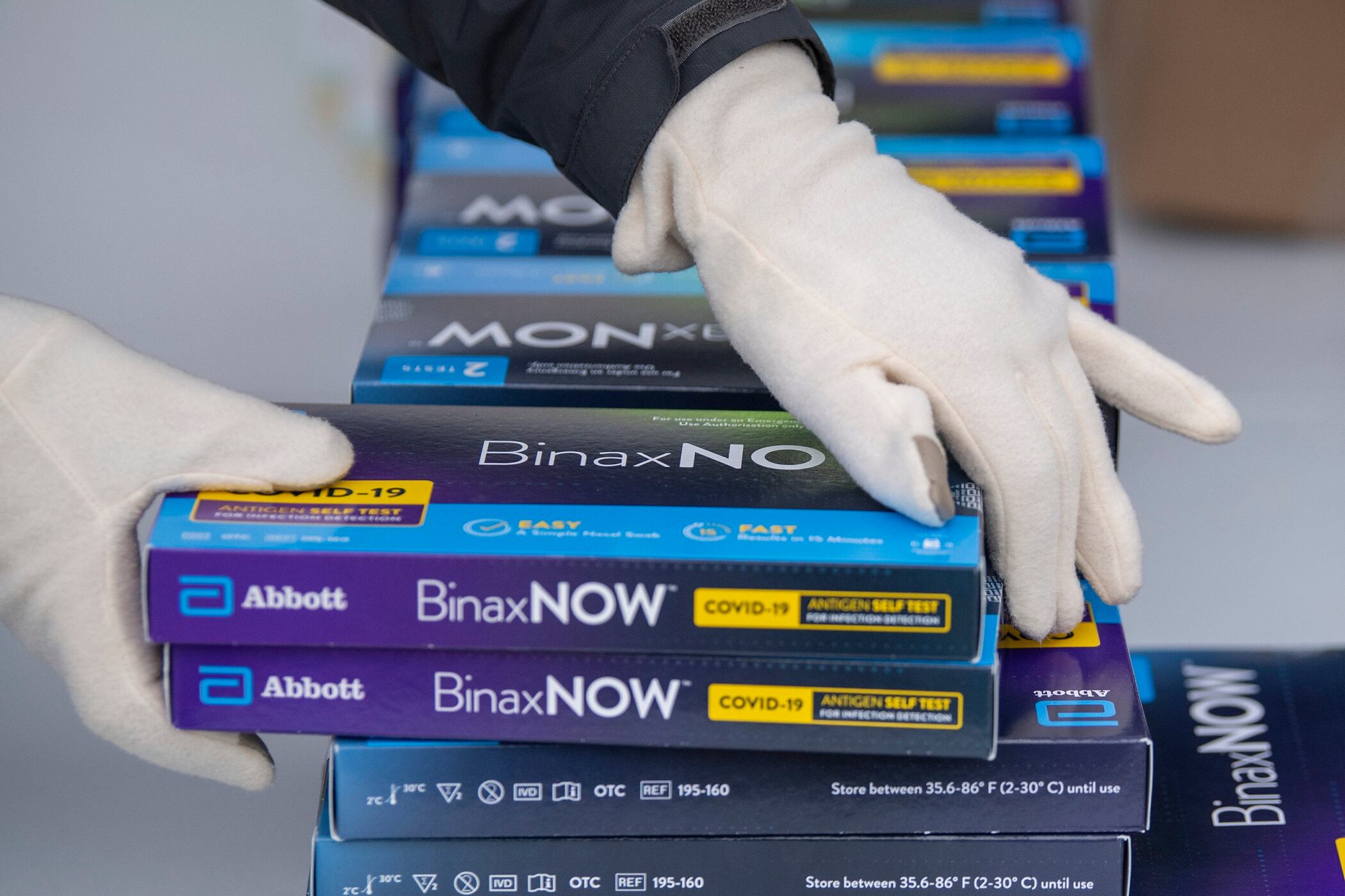
The Biden administration on Tuesday quietly launched its website for Americans to request free at-home COVID-19 tests, a day before the site was scheduled to officially launch.
Just 27% of voters aged 18-29 approve of the job Biden is doing as president, according to a survey from The Economist and YouGov late last year. Santiago Mayer, executive director of Voters of Tomorrow, joins Cheddar Politics to discuss why President Biden is losing support among young voters.
Jesse Lehrich, co-founder of Accountable Tech, joins Cheddar News to discuss it being one year since Trump was exiled from social media and the former President's new platform 'Truth Social.'
Cliff Albright, co-founder of the group Black Voters Matter, joins Cheddar Politics to discuss why he boycotted President Biden's voting rights speech this week, and the push from Senate Democrats to debate and vote on the Freedom to Vote Act and the John Lewis Voting Rights Advancement Act.
Senator Jon Ossoff (D-Ga.) has teamed up with fellow Democratic senator and former astronaut Mark Kelly to introduce the Ban Congressional Stock Trading Act, a bill to essentially end stock trading by sitting lawmakers. From the other side of the aisle, Senator Josh Hawley (R-Mo.) introduced his own legislation to enact something similar. The dueling bills come at a time when it's popular to constrain members of Congress from owning and trading stocks. Karl Evers-Hillstrom, a business and lobbying reporter at The Hill, spoke to Cheddar about the significance of the bills, and what they could mean for lawmakers, their families, and staffers moving forward.
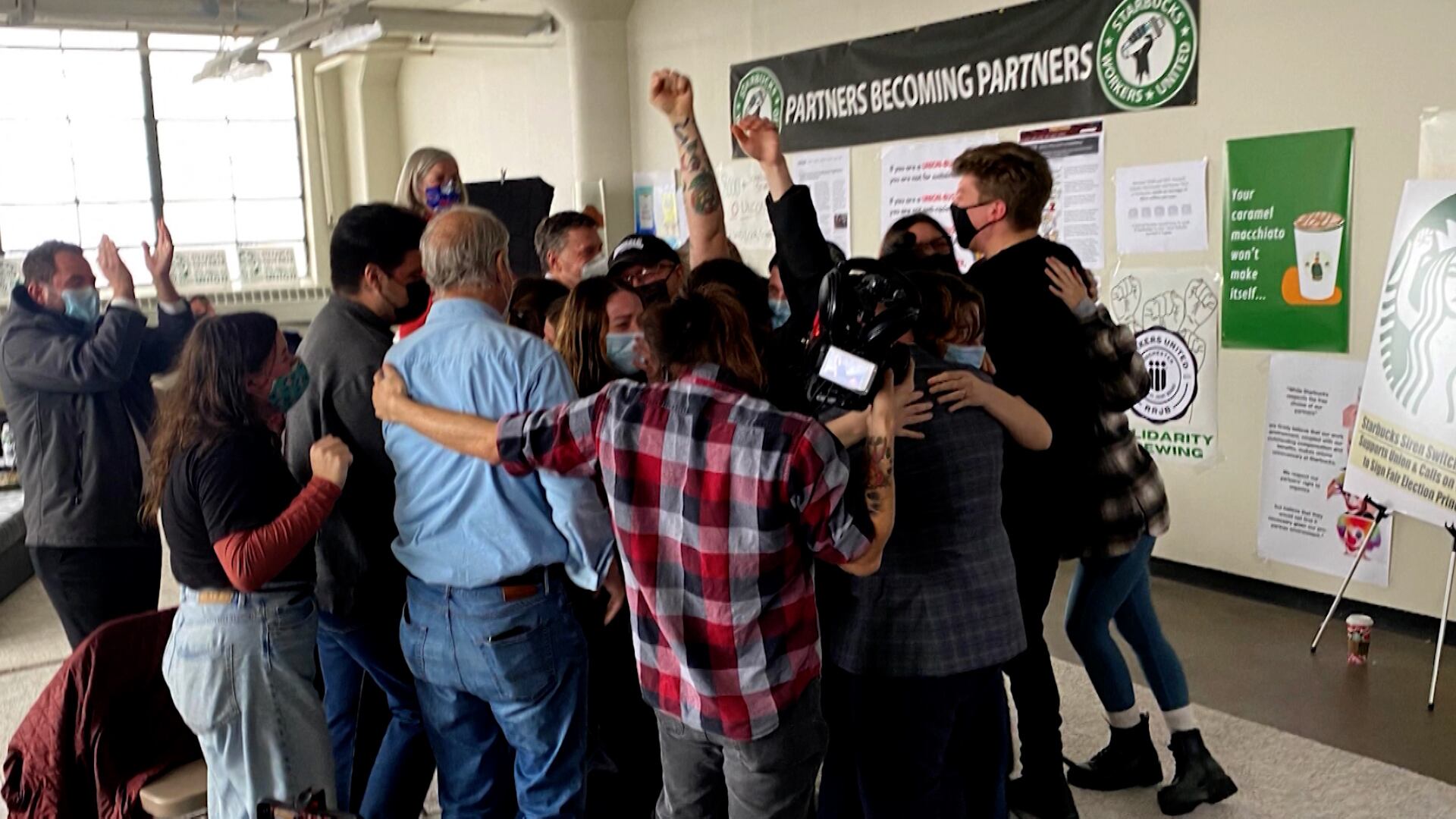
A second Starbucks location in the U.S. has officially voted to unionize. On Monday, the National Labor Relations Board announced workers at the Starbucks store located in the Buffalo, NY suburb of Cheektowaga voted 15-9 in favor of being represented by Workers United, an affiliate of the Service Employees International Union. The New York Times reports votes were tallied in December but remained inconclusive as the union challenged the ballots of several employees it said did not work at the store. A Starbucks spokesperson has said that it may appeal the labor board's decision, which comes as several other Starbucks stores across the country are also pushing to form a union. Danka Dragic, shift supervisor for the second Starbucks store in the country to unionize, joined Cheddar News' Closing Bell to discuss.
Earlier today, Minnesota Republican Representative, Tom Emmer, introduced a bill that would prevent the Federal Reserve from issuing a central bank digital currency directly to American consumers. According to the Congressman from Minnesota, requiring Americans to open a fed account to access a digital currency, would "put the Fed on insidious path akin to China's digital authoritarianism." Rep. Tom Emmer joined Cheddar's None of The Above to discuss more.
Sixteen of the country's most prestigious universities have been hit with a lawsuit claiming those schools illegally conspired to eliminate competitive financial aid offers for students. Just some of the schools mentioned include Yale, Brown, Columbia, UPenn, and Cornell. Author of "Who Gets In and Why" and Professor of practice at Arizona State University, Jeff Selingo, joined Cheddar to discuss more.