By Scott Bauer and Steve Peoples
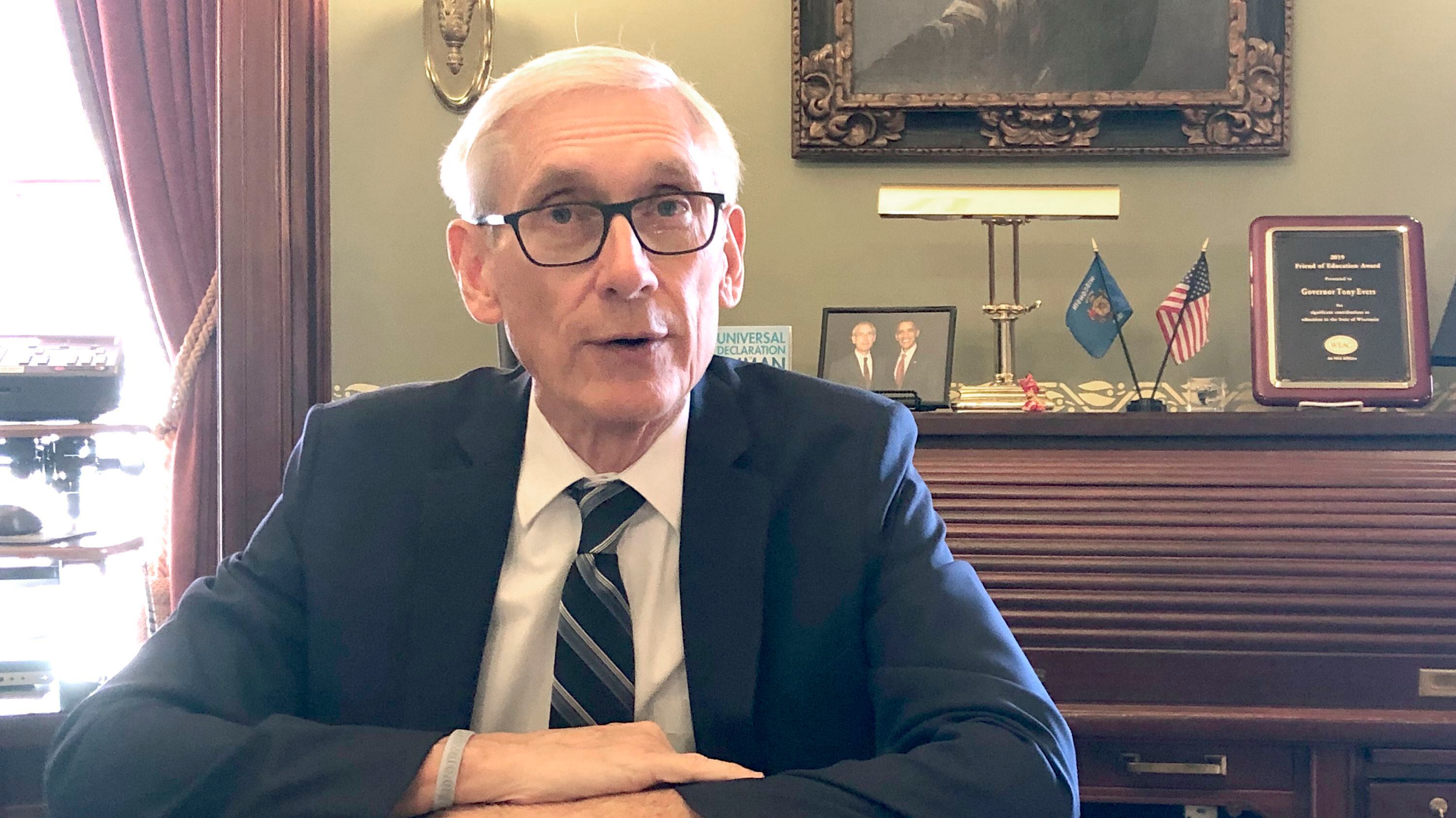
Wisconsin Gov. Tony Evers on Monday issued an executive order to delay the state's presidential primary for two months because of the coronavirus pandemic, a move that will almost certainly prompt a court challenge and inject new uncertainty about whether the election will move forward.
Evers, a Democrat, had previously opposed moving Tuesday's election. But he's pushing to delay it until June 9 amid criticism about how in-person voting can proceed safely at a time when public health officials are discouraging groups of people from gathering to avoid spread of the virus. Some poll sites have already closed because nervous volunteers are unwilling to staff them.
Evers had been unable to strike a deal with Republicans to reschedule the election. His order comes after the GOP-controlled Legislature refused his request to cancel in-person voting on Tuesday.
The Wisconsin election is being viewed as a national test case in a broader fight over voter access in the age of coronavirus with major implications for the presidential primary contests ahead — and, possibly, the November general election.
The order, which Evers had previously said he didn’t have the legal authority to make, was expected to face an immediate challenge to the Wisconsin Supreme Court, which is controlled 5-2 by conservative justices. One of them is on the ballot Tuesday and has not participated in other election-related legal fights, narrowing the conservative majority to 4-2.
The Evers order came as a separate legal fight was pending before the U.S. Supreme Court.
While several states had scheduled primaries in recent weeks, Wisconsin had been alone in moving ahead with in-person voting in the midst of the pandemic. Evers' earlier insistence on moving ahead was even more extraordinary given that he had issued a stay-at-home order and closed all nonessential businesses. Dozens of polling places have been closed.
“Your choice is to go and vote in person and take a chance on contracting COVID-19 or stay home," Democratic state Sen. Jon Erpenbach said. "What do you think people are going to do?”
Evers and Republicans initially agreed that it was imperative for the election to proceed because thousands of local offices are on the ballot Tuesday for terms that begin in two weeks. There is also a state Supreme Court election putting the conservative incumbent against a liberal challenger.
The election “must happen” because of the terms that are ending, said Republican state Rep. Ron Tusler, who tweeted over the weekend that elections continued during both the War of 1812 and the 1918 flu pandemic.
The state and national Democratic parties, along with a host of other liberal and voter advocacy groups, filed federal lawsuits seeking a delay in the election and other changes. A federal court judge just last week handed Democrats a partial win, allowing for absentee ballots to be counted through April 13, delaying the reporting of election results until then. But the judge, and later a federal appeals court, declined to postpone the election.
Republicans have appealed to the U.S. Supreme Court, asking that it not allow absentee ballots to be counted beyond Tuesday. They argue that partial results could be leaked. The court was considering whether to take action.
Wisconsin Elections Commission Administrator Meagan Wolfe warned clerks not to defy the federal court order and release any results before April 13. To reduce the chance of that happening, Wolfe told clerks to minimize access to vote totals and not transmit any until after 4 p.m. on April 13.
Republicans want to suppress turnout, particularly in Democrat-heavy Milwaukee, because that will benefit Republicans and the conservative Supreme Court Justice Dan Kelly, who is seeking a 10-year term, Erpenbach said.
“Democrats have always been good about getting out the vote on the day of," Erpenbach said. "If you’re looking at the newspapers, watching TV, you know right now it’s dangerous.”
Meanwhile, mayors across the state, including Democrats in Wisconsin's two largest cities of Milwaukee and Madison, had urged Evers not to hold the election out of public safety concerns. Evers initially said he didn't have the legal authority to do that and had instead called on the Legislature to make it a mail-in election, as was done in Ohio.
Thousands of poll workers had said they wouldn't work on Tuesday, leading Milwaukee to reduce its planned number of polling sites from 180 to just five. The National Guard was distributing supplies, including hand sanitizer, to polling sites across the state. In Madison, city workers were erecting plexiglass barriers to protect poll workers, and voters were encouraged to bring their own pens to mark the ballots.
George Dunst, 76, of Madison, is the former attorney for the state elections commission who has volunteered at his local polling site for nearly every election since he retired. But he's not going on Tuesday amid fears of contracting COVID-19.
“No matter what safety precautions you take, there’s going to be exposure," he said. "Who knows who comes into the polling place?”
As of Monday morning, a record-high 1.2 million absentee ballots had been requested and more than 724,000 had been returned. Democrats fear that if the Supreme Court reverses the judge’s ruling and cuts short the amount of time those ballots can be returned and still counted, thousands of voters will be disenfranchised and not have their votes counted.
___
Associated Press writer Todd Richmond contributed to this report from Madison, Wis.