With a major question mark still hanging over the possibility of meaningful gun reform, President Donald Trump may be turning his attention to regulating video game makers instead.
The commander-in-chief will [reportedly](http://thehill.com/policy/technology/376836-white-house-to-hold-meeting-with-video-game-industry-on-thursday) meet with industry executives on Thursday to discuss their role in preventing violent behavior.
But New York Magazine Select All Associate Editor Madison Malone Kircher says game makers are not the problem.
“Studies have shown there really is no connection between violent video games and violent actions,” she told Cheddar Monday. “The American Psychological Association came out a year ago and said to politicians and to the media [to] stop equating the two. There’s a link to a rise in slight aggression, but there’s insufficient evidence to say that these games lead to violent gun deaths.”
In a meeting with survivors of last month’s Parkland, Fla., shooting and other attacks, Trump suggested first-person shooter games and other seemingly violent content should be subject to a ratings system. One does already exist.
And Malone Kircher says Thursday’s confab is unlikely to result in more constraints on a system that’s already so highly regulated.
“It’s a pretty stringent system as it is now,” she said. “This has been through the Supreme Court. California in 2011 ruled that you can continue to sell these games to kids, and that was fine.”
For the full interview, [click here](https://cheddar.com/videos/inside-trumps-flip-flop-on-gun-reform).
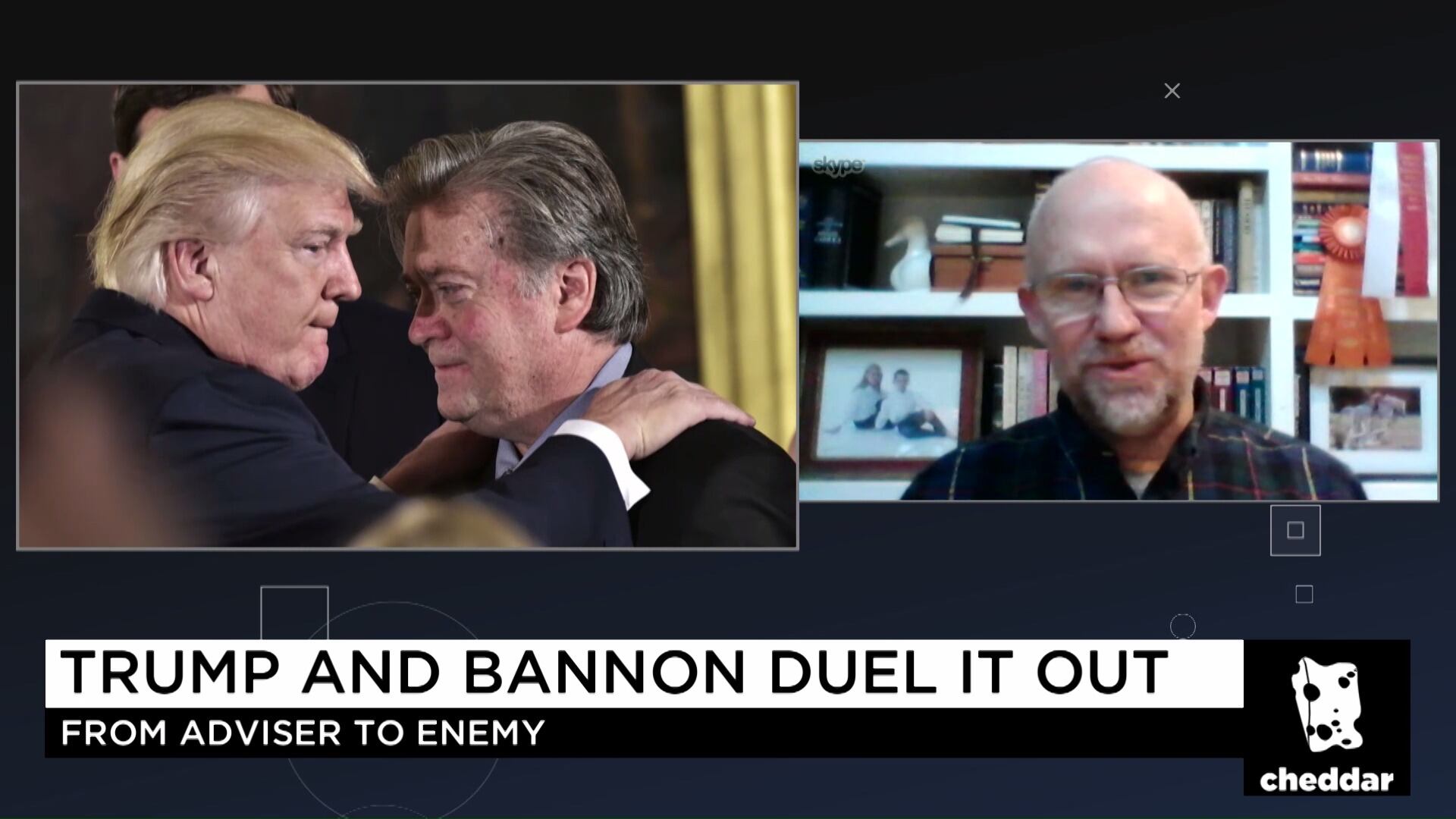
After news around Michael Wolff's book, "Fire and Fury: Inside the Trump White House," broke, the relationship between former White House advisor Steve Bannon and President Donald Trump completely deteriorated. The former team engaged in a very public fallout, but political consultant Rick Wilson was not all surprised. Wilson joins Cheddar to break down what this means for the GOP and how a Mitt Romney Senate run could further shake the White House.
VF Hive + Between Bells: The crew from Vanity Fair’s Hive discusses the new day at 'Today.' Between Bells looks at the Trump's new war on Bannon, and why Meryl is calling out Ivanka and Melania. With Women's Health, Mental Floss, YourTango and more.
Ken Stern, Former CEO of NPR and Author of "Republican Like Me: How I Left the Liberal Bubble and Learned to Love the Right," joins The Hive. Stern, Kristen Scholer, and Jon Kelly discuss the possible demise of the American two-party system and whether the Independent Party may be able to make a run in the next election. They talk about the impact the Trump Presidency may be having on the two-party system, and whether outsiders like Mark Cuban might be realistic in 2020.
Former State Department senior adviser Haroon Ullah joins the Hive to talk about his recent piece on the information war for control in Iran. He discusses the Iranian regime's strategy in dealing with protesters and what potential impact it may have. Ullah also talks about whether Iran's problems may spill out elsewhere in the Middle East.
The White House is demanding Michael Wolff not publish his upcoming tell-all, "Fire and Fury." Axios' Alayna Treene joins Cheddar to break down the story that's turning the political and media worlds on their heads.
VF Hive editor Jon Kelly, Kristen Scholer and the rest of the Hive Panel discuss the biggest stories of the week in politics, business and technology. Emily Jane Fox reports on her story on the rise of Hoda Kotb to Matt Lauer's former spot on the 7am and 8am hours of the Today Show on NBC. She discusses the notion that this role would have traditionally gone to a male. The panel also discusses a report on Fox that NBC had access to data indicating Matt Lauer's favorability had been declining for years.
Ken Stern, Author of "Republican Like Me" and former CEO of NPR, says the "independent billionaire,...the movie star who doesn't have any political baggage, may in fact be a credible candidate."
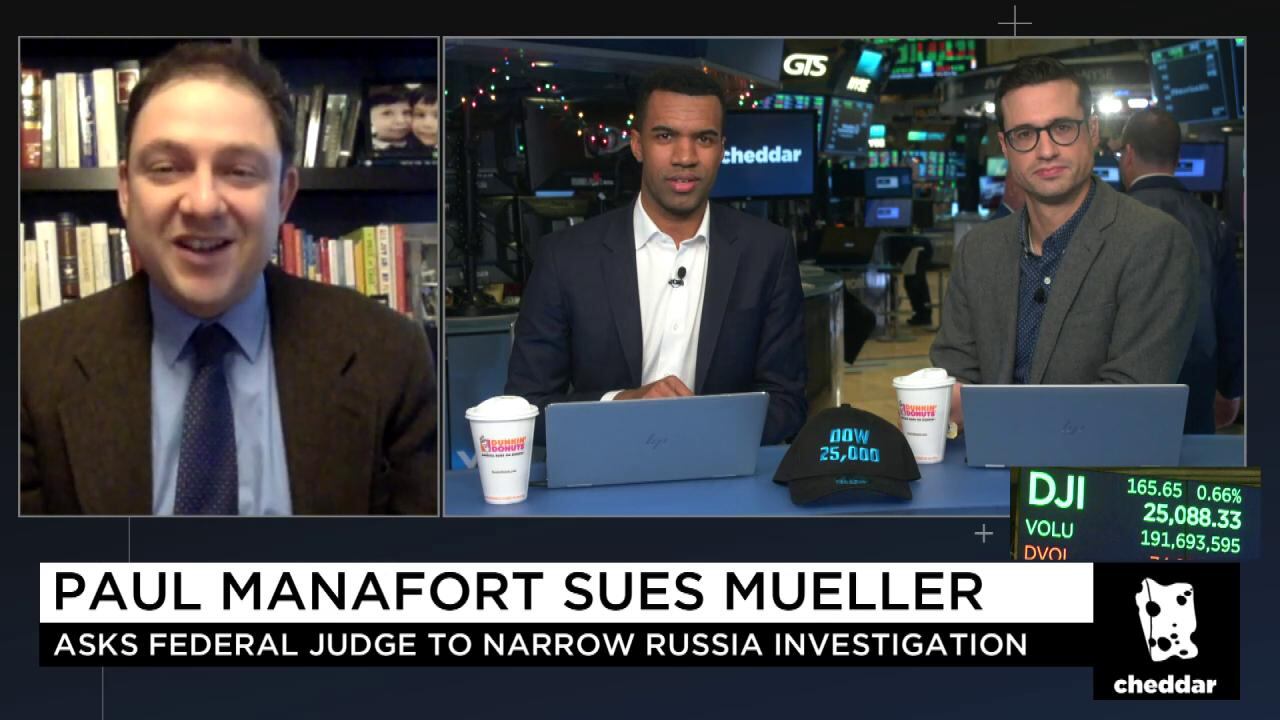
Jed Shugerman, Professor at Fordham Law, talks Paul Manafort's lawsuit against Robert Mueller and deputy attorney general Rod Rosenstein, which alleges Mueller's authority in the Russia investigation is too broad.
Jack Hunter, editor at Rare Politics, weighs in on President Trump's letter, which essentially announced the end of his relationship with former White House Chief Strategist Steve Bannon.
Fordham Law Professor Jed Shugerman says that the former campaign chair doesn't have a case against Robert Mueller, but he is trying to appeal to President Trump and his base and is seeking a pardon.