With a major question mark still hanging over the possibility of meaningful gun reform, President Donald Trump may be turning his attention to regulating video game makers instead.
The commander-in-chief will [reportedly](http://thehill.com/policy/technology/376836-white-house-to-hold-meeting-with-video-game-industry-on-thursday) meet with industry executives on Thursday to discuss their role in preventing violent behavior.
But New York Magazine Select All Associate Editor Madison Malone Kircher says game makers are not the problem.
“Studies have shown there really is no connection between violent video games and violent actions,” she told Cheddar Monday. “The American Psychological Association came out a year ago and said to politicians and to the media [to] stop equating the two. There’s a link to a rise in slight aggression, but there’s insufficient evidence to say that these games lead to violent gun deaths.”
In a meeting with survivors of last month’s Parkland, Fla., shooting and other attacks, Trump suggested first-person shooter games and other seemingly violent content should be subject to a ratings system. One does already exist.
And Malone Kircher says Thursday’s confab is unlikely to result in more constraints on a system that’s already so highly regulated.
“It’s a pretty stringent system as it is now,” she said. “This has been through the Supreme Court. California in 2011 ruled that you can continue to sell these games to kids, and that was fine.”
For the full interview, [click here](https://cheddar.com/videos/inside-trumps-flip-flop-on-gun-reform).
Gun control is at the top of the agenda for many in Washington. A number of initiatives have been proposed, from raising the minimum purchasing age for guns to banning bump stocks. But with so many cooks in the kitchen, will anything get done?
The Supreme Court hears arguments Tuesday which center around an old law written in 1986, well before email and cloud storage were so prevalent. The case has big implications for consumer privacy, says Steven Overly, tech reporter at Politico.
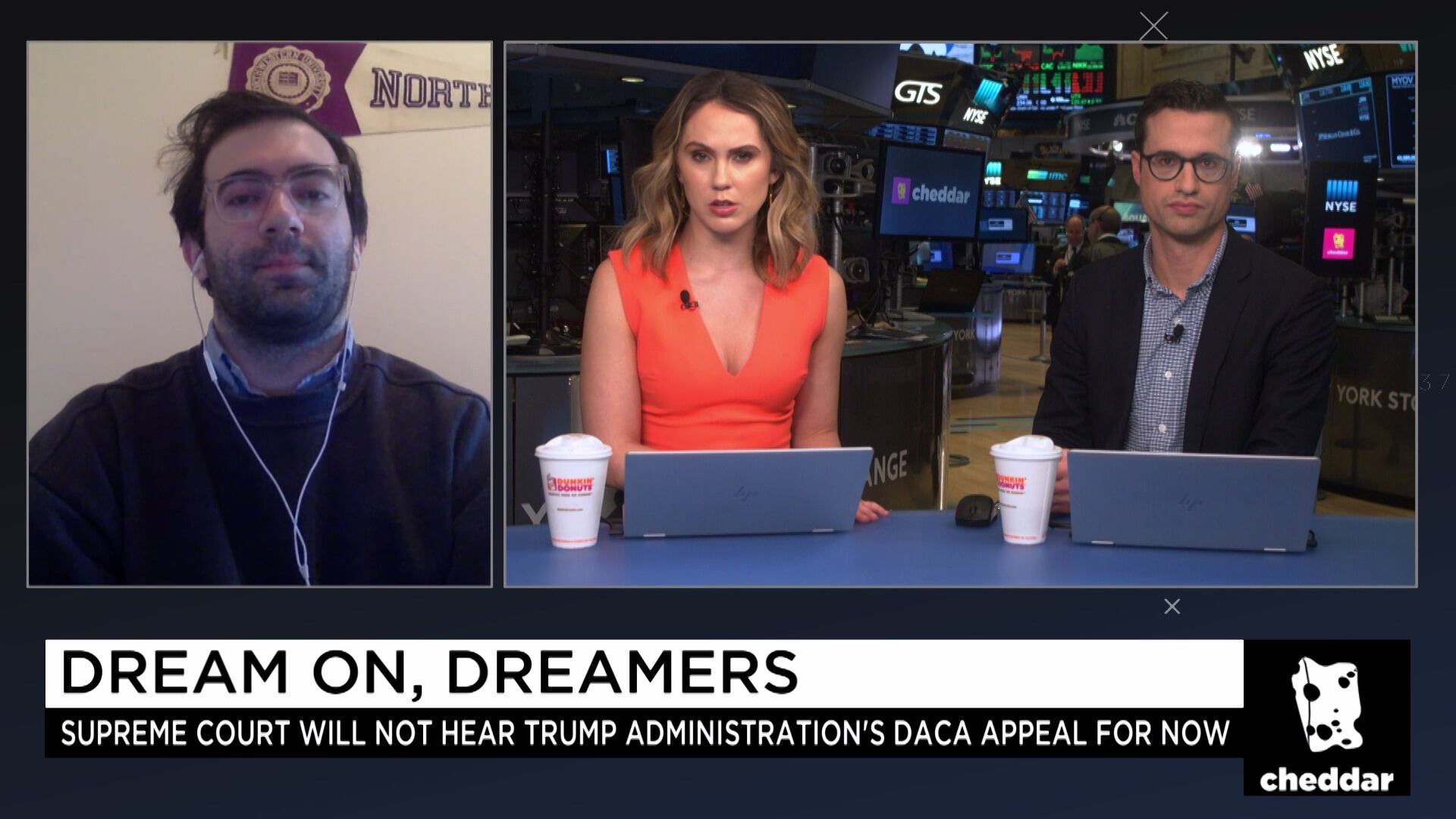
Gideon Resnick, political reporter for The Daily Beast, discusses the Supreme Court's decision to not hear the Trump administration's appeals argument on DACA. This move essentially eliminates the March 5th deadline instated by President Trump last year.
The midterm elections are rapidly approaching. Members of Congress have those races in the backs of their heads as they make key policy decisions in Washington. J.D. Durkin brings us a special look at the race in Texas.
The Dow closes up nearly 400 points. Apple is reportedly releasing three new phones. Samsung unveiled its new S9 and S9+. The Supreme Court declined to take up the Trump Administration's appeal on DACA. Fitbit misses on earnings.
Cheddar Politics goes in-depth on the gun debate with The Young Turks, Rare Media, and Congressman Ted Deutch (D-FL). Between Bells catches up with Glam Masters' Kandee Johnson, and UnREAL's Bart Edwards.
Just six weeks after legalizing recreational marijuana, one California city is slashing its cannabis tax rate. The city of Berkeley is cutting its pot tax from 10% to 5% in an effort to attract and retain businesses in the area.
In the wake of the shooting at Marjory Stoneman Douglas High School in Parkland, Florida, many people quickly pointed to mental health as the issue at hand. The quick pivot from guns to mental health once again raises the question - how does the media treat white shooters versus people of color?
In the wake of the Parkland shooting, President Trump and a number of Republicans have suggested raising the minimum age for buying a gun to 21. Will President Trump actually follow through? The Root's Michael Harriott and CRTV's Jon Miller discuss.
Congressman Ted Deutch (D-FL) represents Parkland, Florida and the victims of the Marjory Stoneman Douglas High School shooting. He joins Cheddar to discuss the state of gun control reform as Congress returns to Capitol Hill.