By Christina Larson

This year's vast wildfires in far northeastern Russia were linked to broader changes in a warming Arctic, according to a report Tuesday by the National Oceanic and Atmospheric Administration.

Wildfires are a natural part of many boreal ecosystems. But the extent of flames during the 2020 fire season was unprecedented in the 2001-2020 satellite record, and is consistent with the predicted effects of climate change, said Alison York, a University of Alaska Fairbanks fire scientist and a contributor to the annual Arctic Report Card.

The recent wildfires were exacerbated by elevated air temperatures and decreased snow cover on the ground in the Arctic region, the report found.

The past year — from October 2019 to September 2020 — was the second warmest on record in the Arctic, the report said. And the extent of snow on the ground in June across the Eurasian Arctic was the lowest recorded in 54 years.

Under those conditions, trees and plants “are just more flammable,” said York.

“The Arctic isn’t just this collection of components, it’s really an integrated system,” said Dartmouth sea ice scientist Don Perovich, who contributed to the report. "When something happens to one part of the system, it has cascading effects," he said.

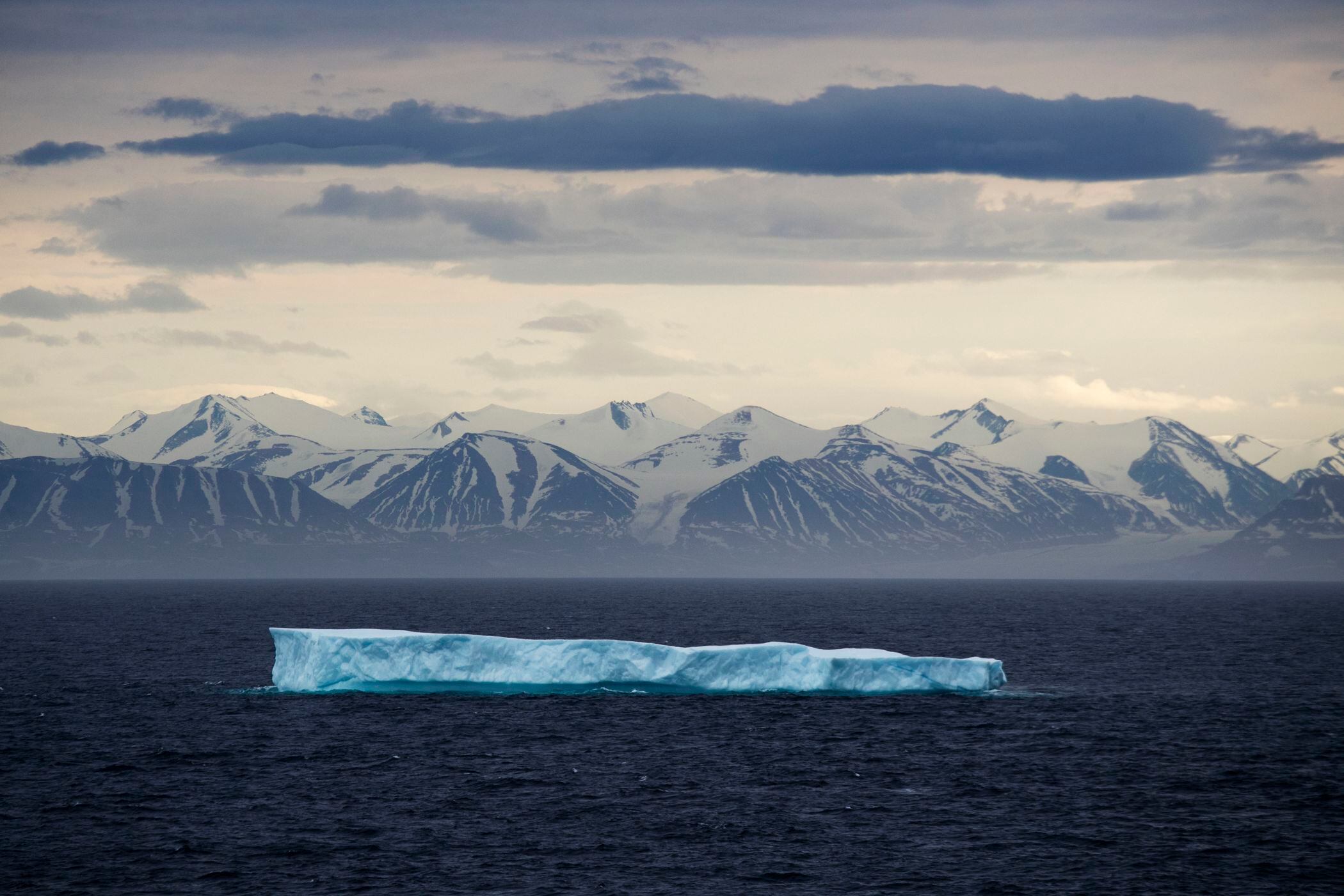
Satellites recorded the second lowest extent of sea ice in September since record-keeping began 42 years ago, the report found.

Melting ice is both a result of increased temperatures and an accelerator of further changes, Perovich said. “As sea ice thins, more light can penetrate into the ocean, with unclear impacts for ecosystems,” he said.

As snow and ice cover decreases, the land and ocean surfaces also absorb more heat.

“Changes in the Arctic climate are important because the Arctic acts as a refrigerator for the rest of the world — it helps cool the planet,” said Lawrence Mudryk, a report contributor and a climate scientist at Environment and Climate Change Canada, a governmental research group.

“How much of the Arctic continues to be covered by snow and sea ice reflects part of how efficiently that refrigerator is working,” he said.

Last year's report included essays and research contributed by the Arctic's Indigenous communities for the first time. But in 2020, close collaboration between visiting scientists and Indigenous communities was not possible because of travel restrictions related to COVID-19.

Report contributor Matthew Druckenmiller, a climate scientist at the University of Colorado Boulder, said efforts to involve Indigenous communities would resume after the pandemic subsides.

The consequences of a warming Arctic are already felt far beyond the region.

“The Arctic continues to be a warning siren of how our Earth system is changing and it is important for policymakers and the public to understand that the impacts don’t stay in the Arctic with the polar bears,” said University of Georgia meteorology professor Marshall Shepherd, who was not involved in the report.

“We feel them, too, through changes in our weather patterns, sea level rise, and fisheries."

___

The Associated Press Health and Science Department receives support from the Howard Hughes Medical Institute’s Department of Science Education. The AP is solely responsible for all content.
Share:
More In Science
Our Natural Resources: Cheddar Climate Special
It’s no secret that the world is amidst a climate crisis never before seen in our time. And our excessive resource consumption is to blame. But just exactly what resources are to blame might surprise you. Hint: fossil fuels are only one part of the problem.
The Latest on the Omicron Variant, COVID Vaccine Efficacy
Dr. Robert Lahita, the director of Saint Joseph's Institute for Autoimmune and Rheumatic Diseases, joined Cheddar to discuss the latest on omicron as the new variant has popped up in more than a dozen states so far. He emphasized that vaccinations should remain the priority despite efficacy against the new variant being unknown at this point.
Tracking the Rapid Spread of the Omicron COVID-19 Variant
Six states have confirmed cases of the new Omicron coronavirus variant, and this number is expected to grow. Cheddar's Hena Doba speaks with Dr. William Schaffner, Professor of Preventive Medicine at Vanderbilt University Medical Center, on the latest developments.
World Starts Talks On Global Pandemic Plan
Just days after the detection of the Omicron variant, the World Health Organization has agreed to start the process of establishing a global pandemic treaty or accord. Amy Maxmen, senior reporter for Nature, and Dr. Samuel Scarpino, managing director for the Rockefeller Foundation's Pandemic Prevention Institute, joined Cheddar to discuss this effort and what lessons can be learned from the many COVID-19 failures as the world prepares for future pandemics.
Local Bounti Grows Into New Stage As A Public Company
Local Bounti rang the opening bell December 3 in honor of its recent trading debut on the NYSE after closing a $1.1 billion SPAC deal. The company operates an indoor growing facility in Montana and aims to transform the production and delivery of local, fresh and sustainably-grown leafy greens. Craig Hurlbert, co-founder and co-CEO of Local Bounti, joined Cheddar to discuss the company's goals as a newly publicly-traded company.
Lamborghini CEO on Record 2021 Deliveries, Transitioning Fleet to Hybrid by 2024
Stephan Winkelmann, president of Bugatti Automobiles and CEO of Lamborghini, stopped by Cheddar to talk about Lamborghini's 2021 success after the luxury automaker set a company sales record on more than 6,9000 vehicles delivered. With climate change top of mind for the auto industry, Winkelmann also talked about Lamborghini's commitment to hybridizing its entire fleet. Still, when it comes to supercars, the legacy brand isn't quite ready to give up gasoline power, and according to the CEO, three new combustion engine vehicles will be available in 2022.
Five Omicron Variant Cases Confirmed in New York
New York officials have confirmed five omicron COVID-19 cases in New York City and on Long Island after a Minnesota man who tested positive for the same variant said he attended a convention in November at the Jacob Javits Center in Manhattan.
Possible Omicron Superspreader, Shutdown Averted & Love, Hate, Ate
It's Friday at long last. Jill and Carlo cover the latest on Omicron, including a possible superspreader event in NYC. Plus, previewing the November jobs report, a new Zoom feature no one asked for, and when it's no longer a good idea to eat Thanksgiving leftovers.
Load More