Why the World's Biggest Automakers Are Turning to This Company for Self-Driving Technology
Some of the world's leading automakers are all turning to the same company to help bring past the self-driving finish line. Aurora CEO and Co-Founder Chris Urmson joins Cheddar at CES to discuss his firm's newly-announced partnership with Volkswagen Group. He describes his company's goal as providing the "drivers," by way of software, for autonomous vehicles.
The partnership is focused on developing "mobility as a service" initiative in major cities. Urmson describes how Aurora will help Volkswagen Group's fleet of self-driving cars, known as Sedric, connect people in urban communities. He explains how the service initiative will help people with mobility issues of their own, as well as making transportation easier for commuters.
Urmson reveals how his company spent the past year working with Volkswagen Group to integrate its system into the automaker's fleet. He breaks down Aurora's high-pedigree founding team, including himself, a veteran of Google's self-driving initiative, and Sterling Anderson, one of the minds behind the launch of Tesla's Model X.
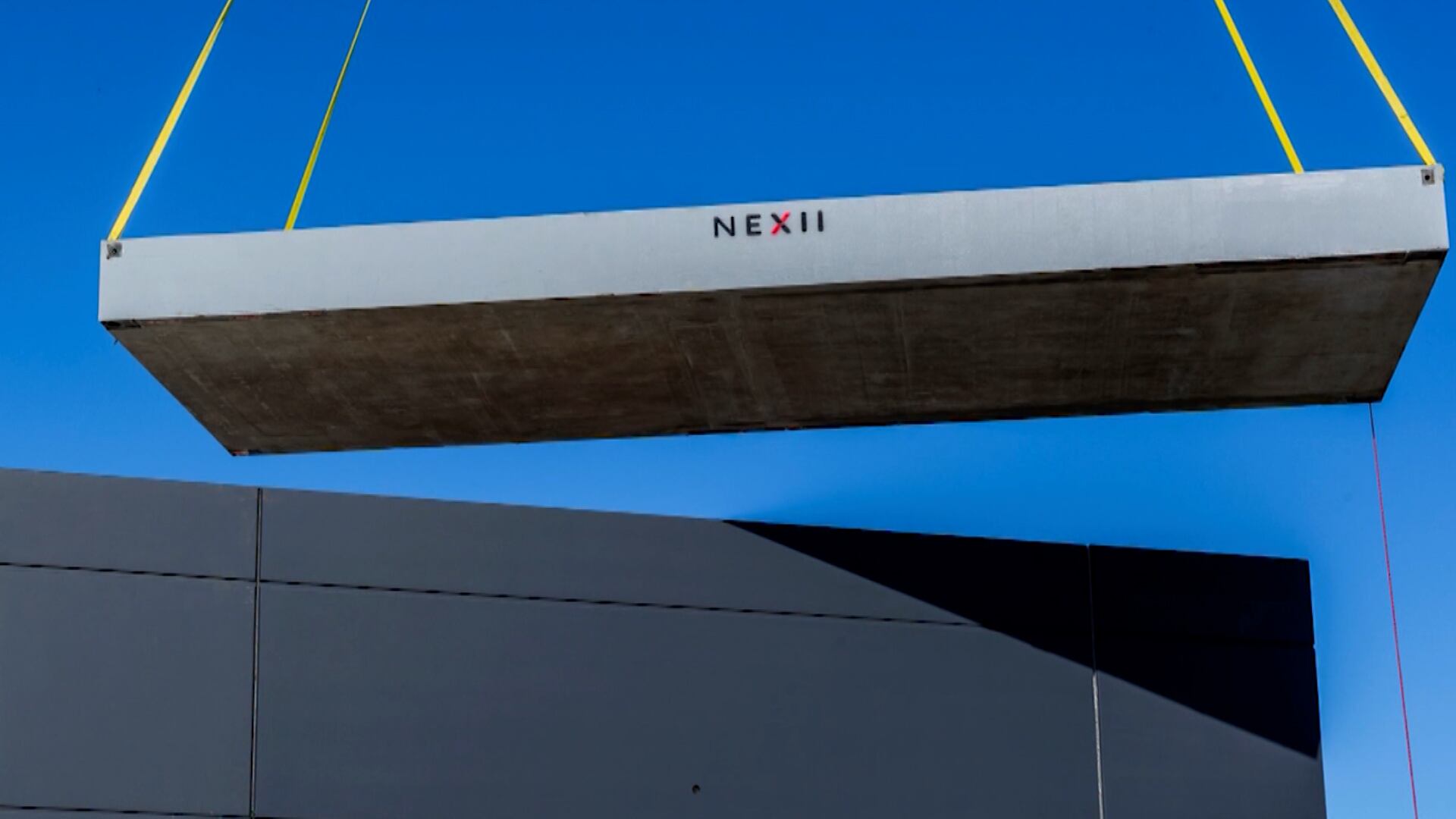
Nexii, a company based in Canada, is getting some big backing for its sustainable, low-carbon concrete alternative. CEO Stephen Sidwell, joined Cheddar News to talk about the initiatives his company is taking to tackle climate change and scaling up production to meet demand. "Most people don’t realize it, but buildings are the number one contributor to CO2 emissions," he said. "So that's really what we're attacking, the overall CO2 emissions."
President Volodymyr Zelenskyy last week seemed to have put out a video that urged Ukrainians to put down their arms and surrender to Russia. It was later revealed that it was a “deepfake,” a computer-generated video to mimic the Ukrainian leader. Cheddar News speaks with security expert Morgan Wright about how the technology is being used in the war in Ukraine.
After scrutiny over the negative impact on the mental health of children, social media apps have begun adding stricter limitations to parental controls. Jim Steyer, CEO of Common Sense Media, a nonprofit organization focusing on recommendations for entertainment platforms, joined Cheddar News to talk about the changes, why they might not be enough, and what parents can do to help. "It's almost that the companies — whether they're Snapchat, Instagram, YouTube, or whatever — have to start the process from the beginning of designing the product," he said. "They have to be much more clear about age verification so that a 12-year-old and 11-year-old can't get on there." Steyer also pushed for federal legislation to reign in the issue.
Catching you up on what you need to know on March 25, 2022, with Ukrainian forces retaking Kyiv, 300 deaths reported from the bombing of a theater used as a shelter in Mariupol, U.S. regulators ditch a climate review of natural gas projects, the 94th Academy Awards, and more.