Why Pennsylvania's Special Election Could Swing Blue
The historically Republican District 18 of Pennsylvania could swing blue in Tuesday’s special election, according to Kyle Kondik, Managing Editor at political website Sabato’s Crystal Ball.
Democratic candidate Conor Lamb is “a good fit culturally for the district,” he told Cheddar, citing Lamb’s military background and moderate views on issues like abortion and guns.
Meanwhile, Republican candidate Rick Saccone “is a standard economic conservative,” said Kondik, which doesn’t necessarily sit well with the largely blue-collar residents of the district.
The race in the 18th District is shaping up as a potential bellwether for the midterm elections in November. President Trump carried the district by 20 points in 2016, and a Democratic win there would be a huge blow to him and to the GOP.
As a sign of how critical the party and the White House view the race, Trump will travel to the district on Saturday for a Saccone campaign rally. Friday afternoon, the president tweeted: Look forward to being in Pennsylvania tomorrow in support of Rick @Saccone4PA18. Big crowd expected in Moon Township. Vote Rick and see you there! #MAGA
Several weeks ago, Ivanka Trump, the president’s daughter campaigned with Saccone, and on Monday, Donald Trump Jr. will campaign with the Republican.
To regain control of the house, Democrats need to win 24 seats now held by the GOP. And many political experts believe the party has a good chance, particularly given the historic tendency of the party that controls the White House to lose seats in Congress during the midterms.
“Generally, the party that holds the White House pays a penalty down the ballot, particularly in special elections like we’re seeing in Pennsylvania on Tuesday,” Kondik said.
“Turnout is always significantly lower than a presidential election,” explained Kondik. “The out-party is sometimes more motivated to show up to vote.” On top of that, President Trump’s overall approval rating is hovering at a meager 40 percent.
Kondik also pointed out that the district, largely composed of the southern suburbs of Pittsburgh, has a demographic makeup that veers from Trump’s base.
Voters generally have higher-than-average incomes and higher-than-average educational attainment. “It’s a Trump district, but it’s also full of voters who are sort of skeptical of Trump even though they voted for him.”
The special election was called after Rep. Patrick Murphy resigned amid reports that he had encouraged his lover to have an abortion despite his strong anti-abortion stance.
“It’s a true toss up, which is kind of crazy in and of itself,” said Kondik.
For the full interview, [click here](https://cheddar.com/videos/pennsylvanias-special-election-gives-pollsters-a-sneak-peak-into-the-2018-midterms).
Meta, the parent company of Facebook, is facing a lawsuit from Ohio's attorney general Dave Yost, who said the company misled the public about safety on the platform.
Cases of covid-19 are climbing in the Upper Midwest, Southwest, and parts of the Northeast. The seven-day national average is sitting at roughly 82,000 new cases which is an 11 percent jump from the week before. Dr. Amesh Adalja, Infectious Disease, Specialist, Sr. Scholar at Johns Hopkins Center for Health Security joined Cheddar's Opening Bell to discuss this recent uptick ahead of the holiday season.
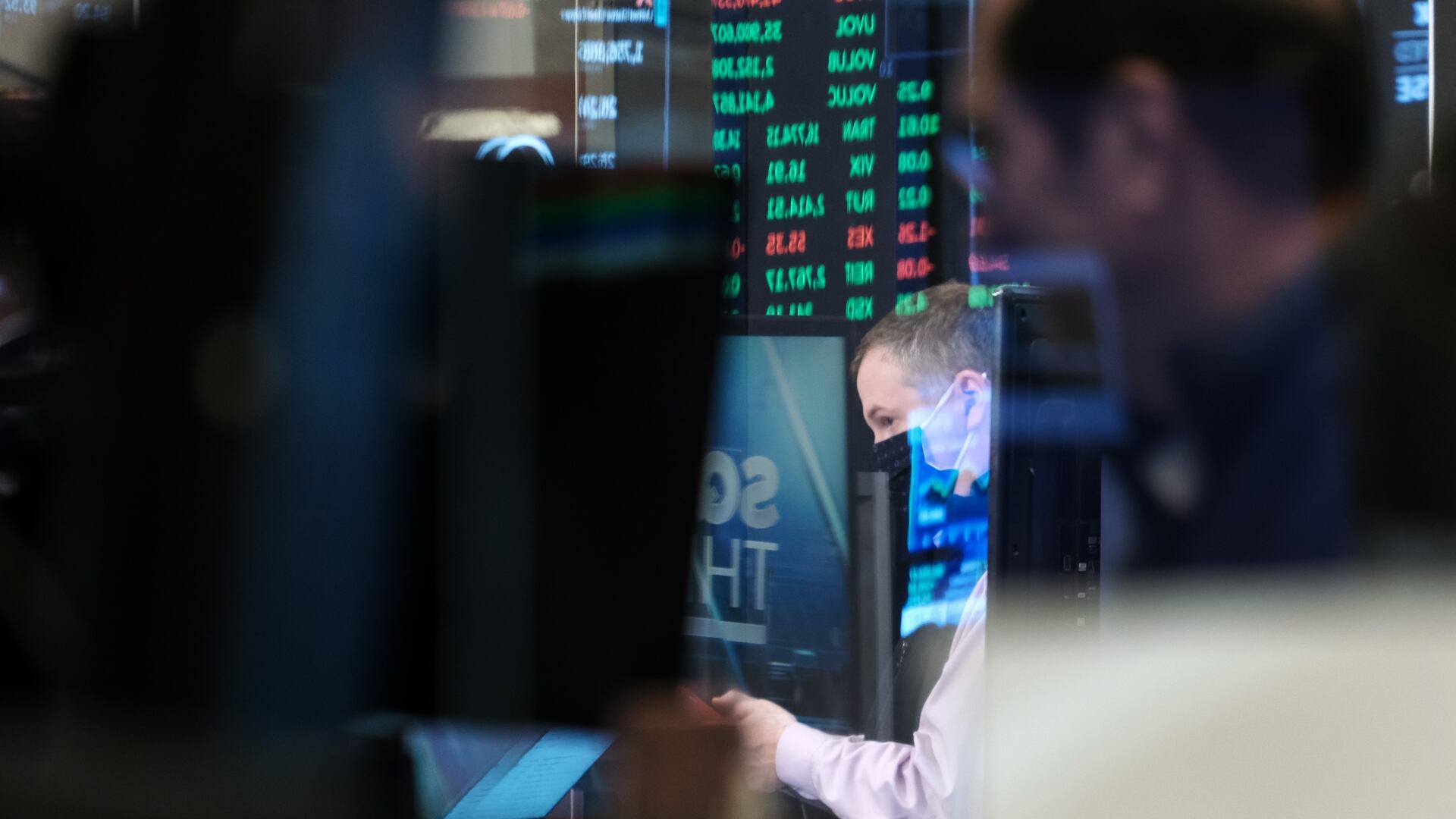
Markets were pointing to a higher open to kick off the third trading week in November. It comes as stocks come off a losing week in reaction to October's consumer price index--which showed inflation at its highest point in over 30 years.
Ryan Detrick, Chief Market Strategist for LPL Financial joined Wake Up with Cheddar to discuss.
Harvard Business School Professor Ranjay Gulati joined Wake Up With Cheddar to break down the massive challenge the Biden Administration faces in ensuring projects in the $1.2 trillion infrastructure bill are completed on time and on budget.
Jill is joined by Baker Machado to talk all things infrastructure: where will the money go and who’s in charge? Plus, Sesame Street has its first Asian-American muppet. And a trailer for the trailer for Spiderman. Huh?
In this week's Cheddar Changemakers, Megan Pratz spoke with a 16-year-old climate activist Sarah Goody. She is the founder of a youth-led climate action group 'Climate NOW.'
We toss around the term "democracy is under attack" quite often without thinking too much, but one organization is actually stepping up to do something about it. The Fairness Project is a group that funds and organizes state ballot measures across the country. It has used ballot initiatives on campaigns aimed at expanding Medicaid, adding more paid time off, and raising minimum wage. It recently launched a new direct democracy campaign to fight back against attempts to make ballot measures inaccessible.
Kelly Hall, executive director of The Fairness Project, joined Cheddar Politics to discuss more about the group's efforts to push for economic and social justice, avoiding partisan gridlock.
Doug Flynn, Certified Financial Planner and Co-Founder of Flynn Zito Capital Management, joins Cheddar News' Closing Bell, where he says he believes the news of the infrastructure bill was already priced into the market and that inflation continues to loom large on Wall Street.
President Joe Biden signed into law today his landmark $1.2 trillion infrastructure bill, and it includes approximately $550 billion in new funding for increased broadband access, improving the power grid, and more. But what does this mean for the American economy, and American workers? Eliza Collins, Politics Reporter at The Wall Street Journal joins Cheddar News' Closing Bell to discuss what's included in the bill, which former mayor has been tapped to oversee how the bill is implemented, and how these new infrastructure investments will impact the economy.