Why Parents Hesitate Before Seeking Mental-Health Expertise
Parents who have no problem making a doctor's appointment when their children have a cough, sneeze, or sniffle appear to be resistant when it comes to mental health.
Parents Magazine and the Child Mind Institute conducted a new survey to find out why parents hesitate before getting mental-health expertise for their children.
"If your child has a fever you take them to the doctor, if your child has an emotional pain, it should be the same thing," said Liz Vaccariello, the editor-in-chief of Parents Magazine, in an interview with Cheddar on Tuesday.
A new survey of about 400 parents in the United States found 62% would wait more than five weeks to get their children help with a mood or behavior disorder.
Of the families that said they would think twice before pursuing treatment options, most (83%) said they try to avoid an overreaction and would rather wait to see if symptoms resolve on their own. Other reasons include the perceived cost of mental-health care and the fear that their children would be labelled mentally ill.
"All of these are myths and we're trying to overcome that," said Vaccariello.
She said parents should be vigilant about monitoring their children's behavior for potential warning signs. Doctors describe these potential symptoms as "pink flags" instead of "red flags" because they're often subtle indicators of mental illness.
Vaccariello said symptoms include sleep disturbances, obsessive thoughts, and debilitating fears.
"It's one thing to be scared of a bee, it's another thing to be terrified to go outside because you don't want to be stung by a bee," she said.
There are fewer than 9,000 clinical child psychiatrists in the United States, but Vaccariello said parents can also reach out to child psychologists, therapists, and school counselors.
"Even something like that can be helpful and healing for the whole family," she said.
For full interview, [click here](https://cheddar.com/videos/why-do-parents-wait-to-seek-help-on-mental-health-issues).
Neil Young has come up with an ultimatum for Spotify: his music or Joe Rogan’s podcast. This comes over concerns that the podcast is spreading COVID-19 vaccine misinformation to its listeners. "The Joe Rogan Experience," which is exclusive to Spotify, is currently the number one streamed podcast on the platform.
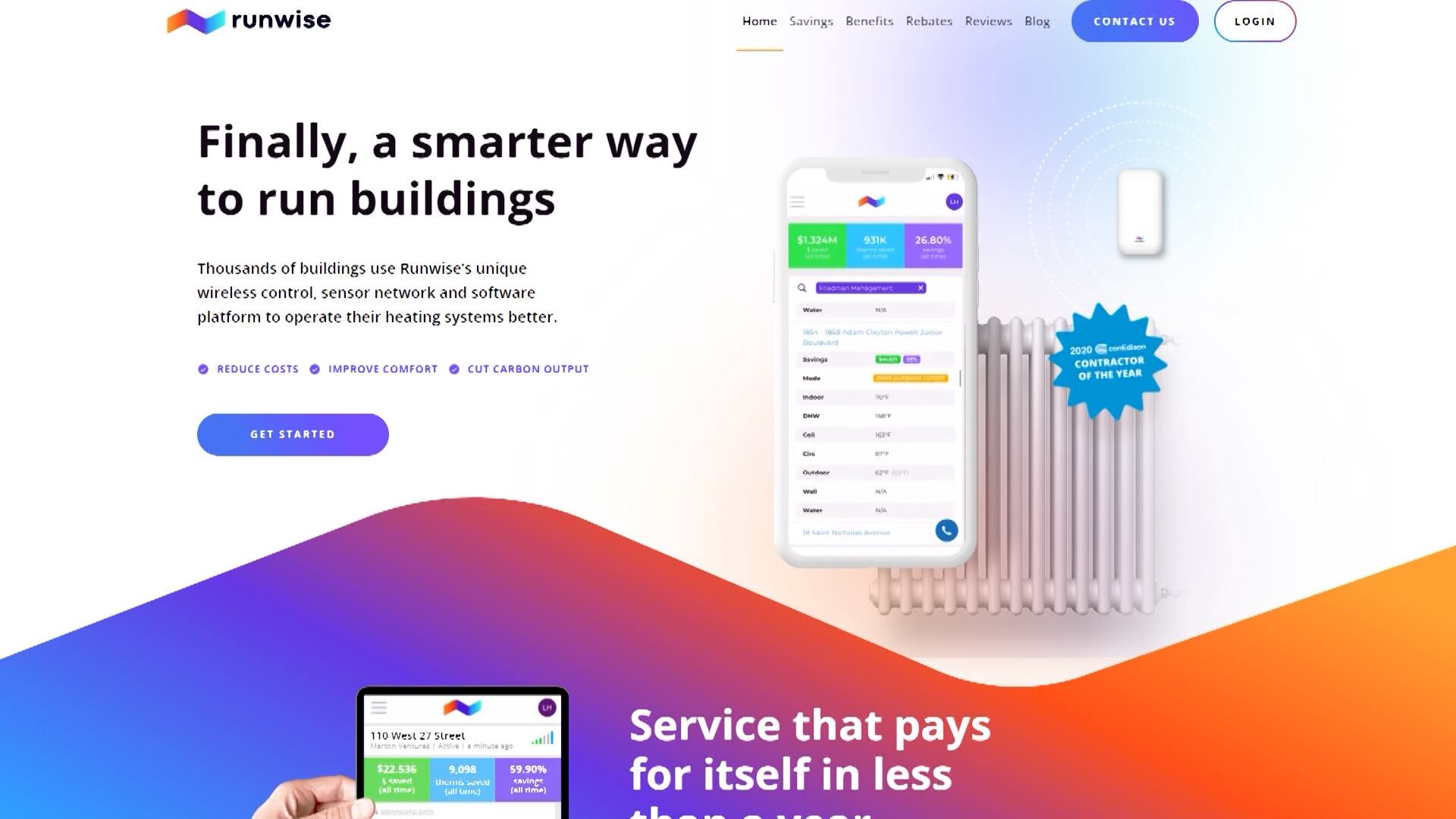
Commercial and residential buildings account for 13% of carbon emissions in the U.S., according to the EPA, and one company says it has a solution. Runwise says it has updated the boiler and heating systems of thousands of buildings, and that its technology not only lowers carbon output but also saves landlords money. Lee Hoffman, Co-Founder and COO of Runwise, joined Cheddar Climate to discuss.
Jo Ruxton, Founder of Ocean Generation, joins Cheddar Climate, where she explains the threat that plastic pollution poses to marine life, but elaborates on why we shouldn't be looking to ban plastic entirely. Ruxton also discusses her biggest takeaways while producing the film ‘A Plastic Ocean.'
President Joe Biden's Build Back Better deal seems all but finished after months of Democratic infighting and the Senate's deadlock over certain provisions. But Biden mentioned during a press conference marking his first year in office that 'chunks' of the bill could be passed. Is that enough motivation to force Democrats to rally around certain parts of the bill - especially those that focus on climate and green energy? Andrew Freedman, Energy and Climate Reporter at Axios, joins Cheddar Climate to discuss whether Senate Democrats will be able to rally around climate provisions, if the idea of passing Build Back Better in 'chunks' is doable, and more.
Anyone who remembers the 70s and 80s will probably remember acid rain. Industrial emissions acidified precipitation around the globe, which killed forests and crops, rendered lakes inhospitable, corroded buildings, and exacerbated human health problems.
But anyone who follows environmental news will be surprised to learn this: we solved it! Countries came together to limit acid rain-causing emissions, eliminating the problem altogether.
…kind of. Acidic precipitation may not be a thing of the past after all.
Natalie Ginsberg, Global Impact Officer, MAPS, joins Cheddar Reveals to discuss MAPS organization and its current initiatives and their work to get FDA approval for MDMA to treat PTSD.
Kelsey Ramsden, Co-Founder, President & CEO, Mind Cure Health, joins Cheddar Reveals to break down what 'psychedelic therapy' could look like once it's legalized and how Mind Cure Health is using AI to help treat everything from addiction to depression.
On this episode of Cheddar Reveals, Natalie Ginsberg, Global Impact Officer, MAPS, discusses the MAPS organization and its current initiatives and their work to get FDA approval for MDMA to treat PTSD; Kelsey Ramsden, Co-Founder, President & CEO, Mind Cure Health, breaks down what 'psychedelic therapy' could look like once it's legalized and how Mind Cure Health is using AI to help treat everything from addiction to depression; Cheddar gets a look at Curiosity Stream's 'Pain, Pus and Poison.'