More executives are feeling better about the global economy, but a growing number don't think their companies will survive the coming decade without a major overhaul because of pressure from climate change and technology like artificial intelligence, according to a new survey of CEOs by one of the world's largest consulting firms, PwC.
The survey of more than 4,700 CEOs worldwide was released Monday as business elites, political leaders and activists descended on the World Economic Forum's annual meeting in Davos, Switzerland, and it showed a mixed picture of the coming years.
Of the executives, 38% were optimistic about the strength of the economy, up from 18% last year, when the world was mired in high inflation, weak growth, rising interest rates and more.
The CEOs' expectation of economic decline has dropped to 45% from a record-high 73% last year, and fewer saw their company as highly exposed to the risk of geopolitical conflict, according to the PwC Global CEO Survey. That's despite wars in Ukraine and the Middle East, including disruptions to global trade from attacks by Yemen’s Houthi rebels on commercial ships in the Red Sea.
Even with the improved economic outlook, the challenge isn't close to over, with the World Bank saying last week that it expects the global economy would slow for a third consecutive year in 2024.
The executives, meanwhile, felt worse about the prospects for their companies' ability to weather big changes. The survey shows 45% of the respondents were worried that their businesses wouldn't be viable in a decade without reinvention, up from 39% last year.
The CEOs say they're trying to make changes, but they are running up against regulation, a lack of skills among workers and more.
"Whether it is accelerating the rollout of generative AI or building their business to address the challenges and opportunities of the climate transition, this is a year of transformation,” Bob Moritz, global chairman of PwC, formerly known as PricewaterhouseCoopers, said in a statement.
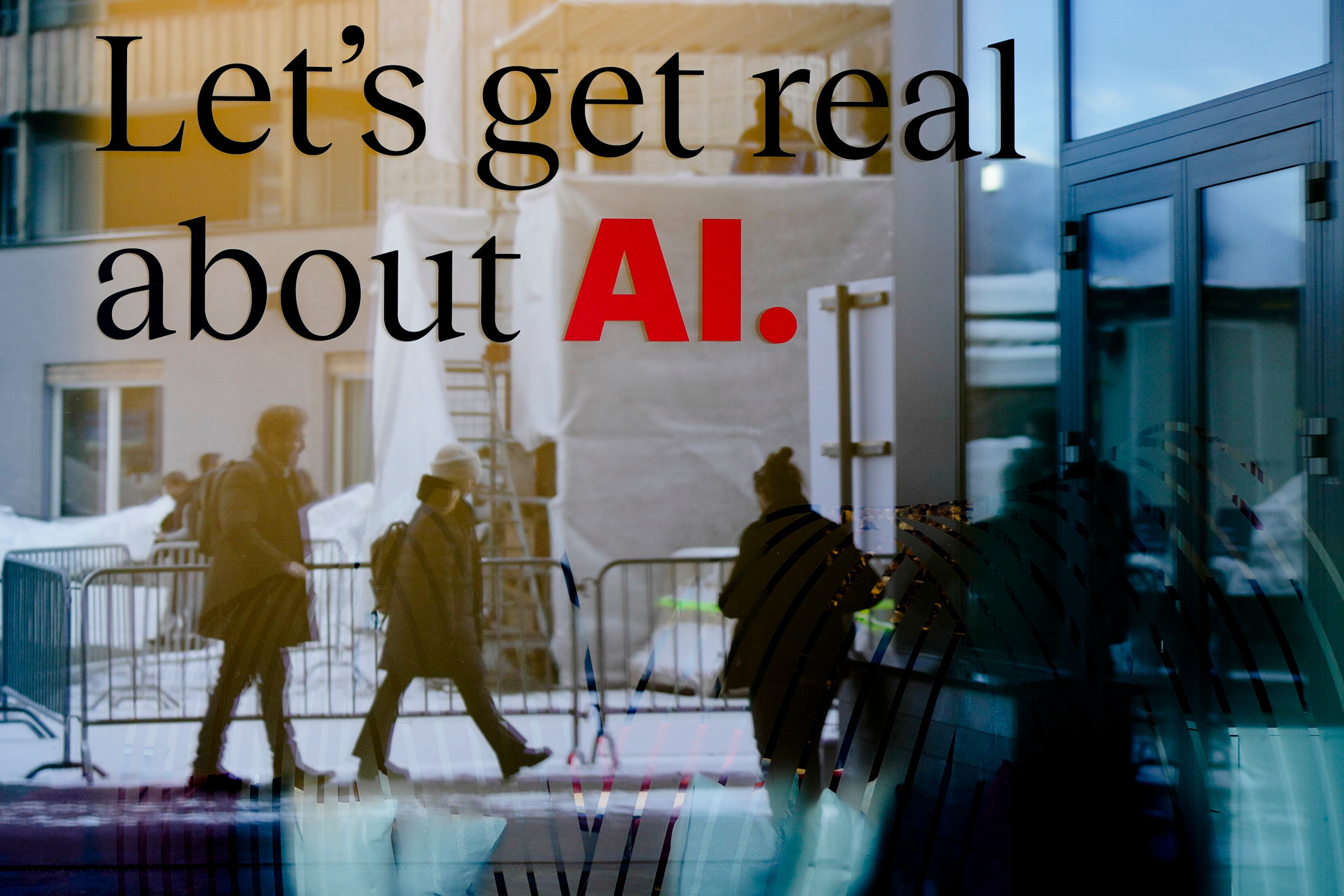
Artificial intelligence was seen as both a way to streamline business operations and a weakness. Nearly three-quarters of the executives said “it will significantly change the way their company creates, delivers and captures value in the next three years,” PwC said.
More than half the CEOs said AI will make their products or services better, but 69% noted that their workers needed training to gain skills to use the developing technology. They also were concerned about how AI would increase cybersecurity risks and misinformation.
Organizers of the Davos gathering warned last week that the threat posed by AI-powered misinformation, such as the creation of synthetic content, is the world’s greatest short-term threat.
Another worldwide survey released around Davos, the Edelman Trust Barometer by public relations firm Edelman, says innovation is being managed badly and is increasing polarization, especially in Western democracies, where people with right-leaning beliefs are much more likely than those on the left to resist innovation.
“Innovation is only accepted if there is a sense that we’re looking at the big picture of how we take care of the people whose jobs are going to change, how scientists are going to talk to the people directly so they understand it," CEO Richard Edelman told The Associated Press on Monday. "And finally, that one way in another, AI is affordable and makes it easier for people to live.”
The online survey — which again showed that business is the most trusted institution among government, media, science and nongovernmental organizations — gathered responses from more than 32,000 respondents in 28 countries from Nov. 3 to Nov. 22.
Similar to AI, the PwC survey shows that the climate transition is both an opportunity and a risk. An increasing number of CEOs — nearly a third — say climate change was expected to shift how they do things over the next three years.
More than three-quarters of the executives said they have begun or completed changes to increase energy efficiency, but only 45% noted that they have made progress on taking the climate risks into account in financial planning.
The PwC survey of 4,702 CEOs in 105 countries and territories was conducted from Oct. 2 to Nov. 10.