President Trump's first year in office has seen style choices turn into political controversies. Racked's Eliza Brooke joins Cheddar to explain why Americans are so fixated on The White House fashion choices. She explains why the fixation touches on issues of class and wealth disparity.
The senior reporter revisits some of the most buzz-worthy White House fashion moments of the year. From President Trump's taped-on necktie to Melania Trump's stilettos, there was no shortage of sartorial political headlines. Brooke reveals why the president's style is a flashpoint for both his critics and biggest supporters.
A Wall Street Journal report found that Ivanka Trump has worn her own brand in 68% of her official appearances this year. Brooke considers whether the First Daughter is acting as a walking billboard for her personal fashion line. We also look back at the fashionable moments from other White House figures like Sean Spicer and Kellyanne Conway.
The U.S. Senate Committee on Banking, Housing and Urban Affairs introduced legislation Tuesday requiring banks to maintain “digital dollar wallets” for coronavirus stimulus payments to consumers.
New York Governor Andrew Cuomo Wednesday afternoon said the greatest strain on the state’s health care system from the coronavirus could come in approximately 21 days, while also providing early indications about steps the state might eventually take to restart the economy.
One of the most influential industries on Capitol Hill was left out of the package that advanced early Wednesday, an apparent setback for a sector that had expected to easily secure $3 billion to fund the purchase of oil to fill the Strategic Petroleum Reserve (SPR).
There's no 12th Democratic presidential debate on the horizon now that the nominating process is in a holding pattern due to the coronavirus pandemic.
The Senate will reconvene later Wednesday to vote on the package. But that does not mean the bill is guaranteed to land on President Donald Trump’s desk. The House of Representatives has to pass it, and that may not be an easy feat.
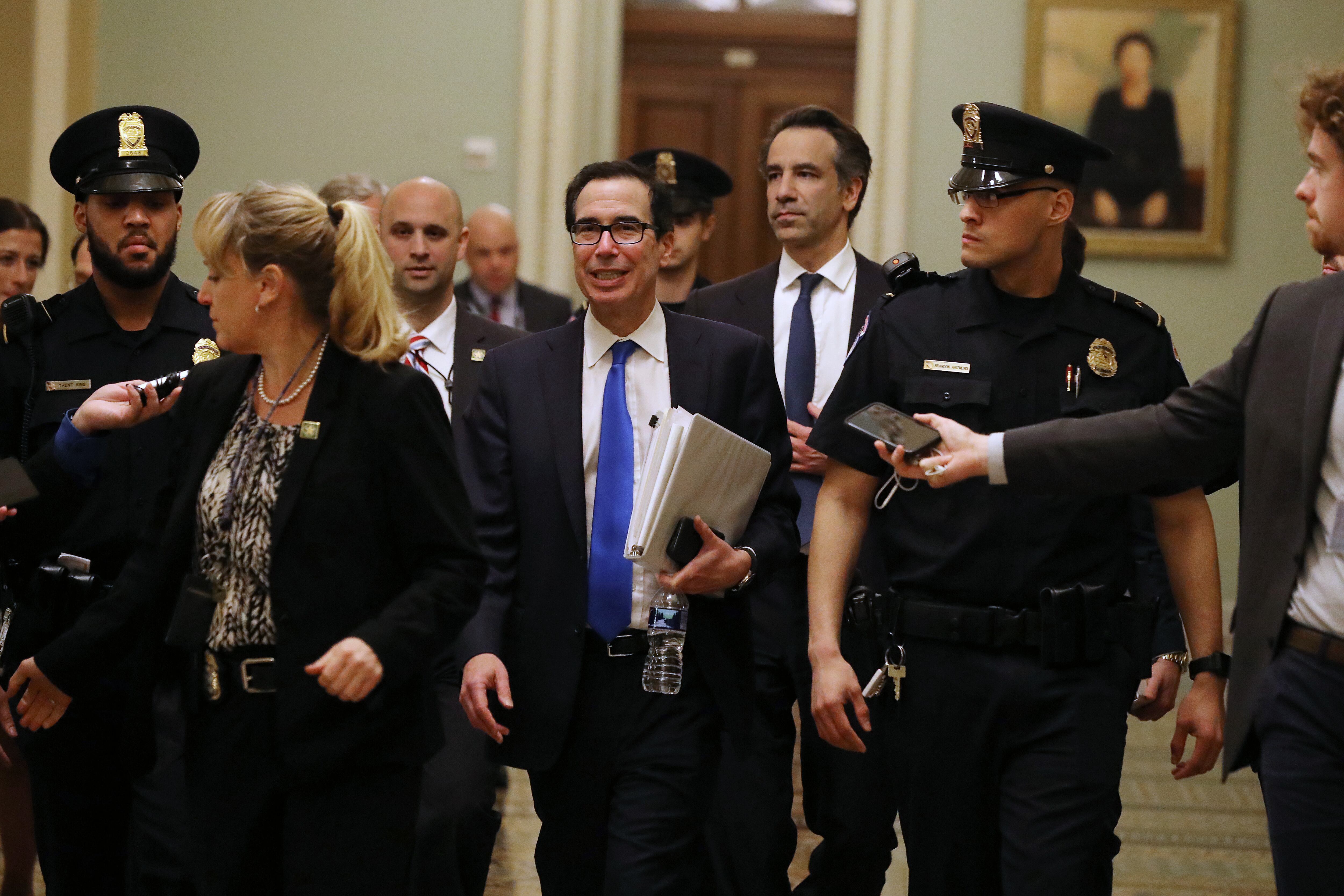
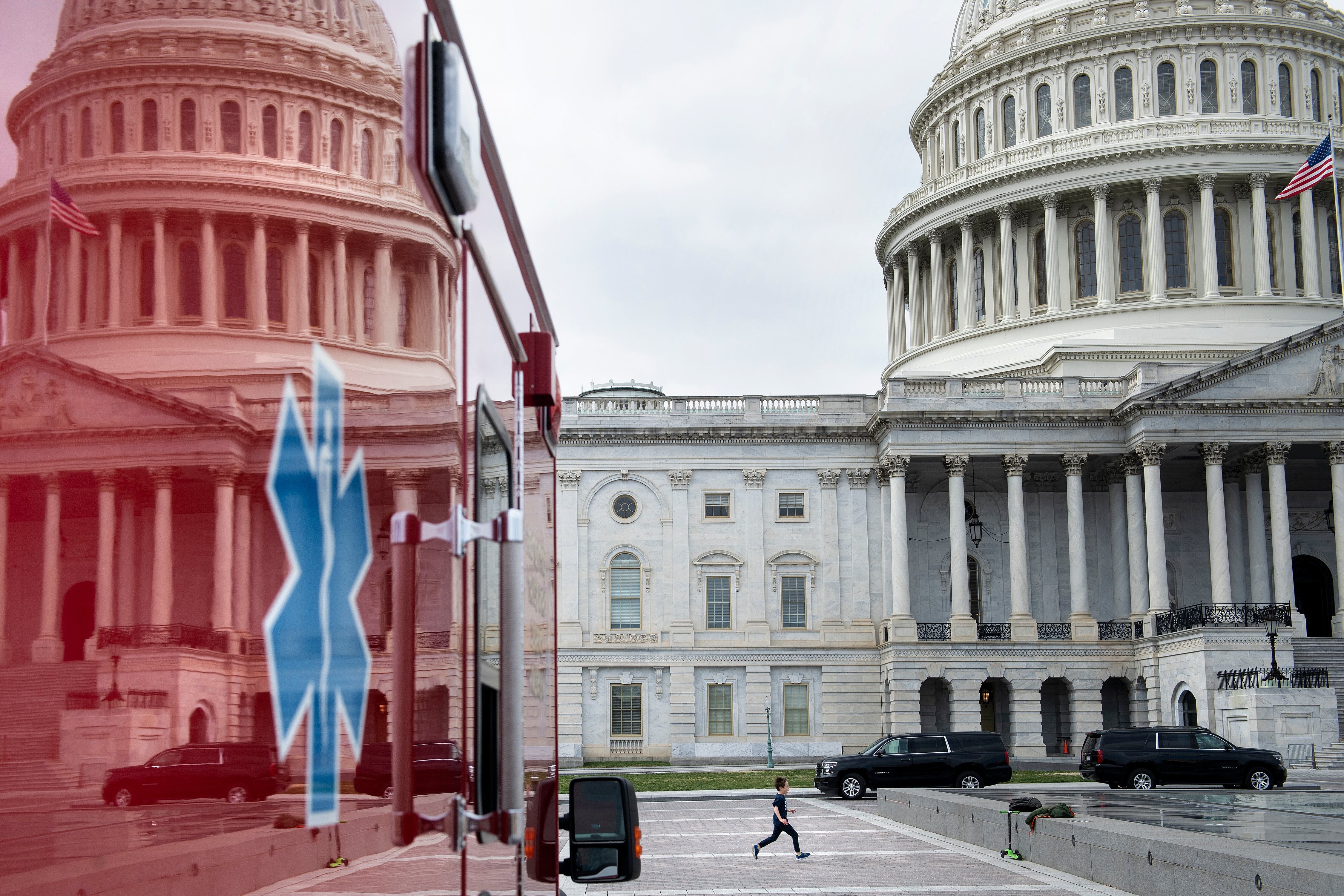
The White House and Senate leaders of both major political parties announced agreement early Wednesday on an unprecedented $2 trillion emergency bill to rush sweeping aid to businesses, workers and a health care system slammed by the coronavirus pandemic.
Stocks are moving tentatively higher in early trading on Wall Street Wednesday after Congress and the White House reached a deal to inject nearly $2 trillion of aid into an economy ravaged by the coronavirus.
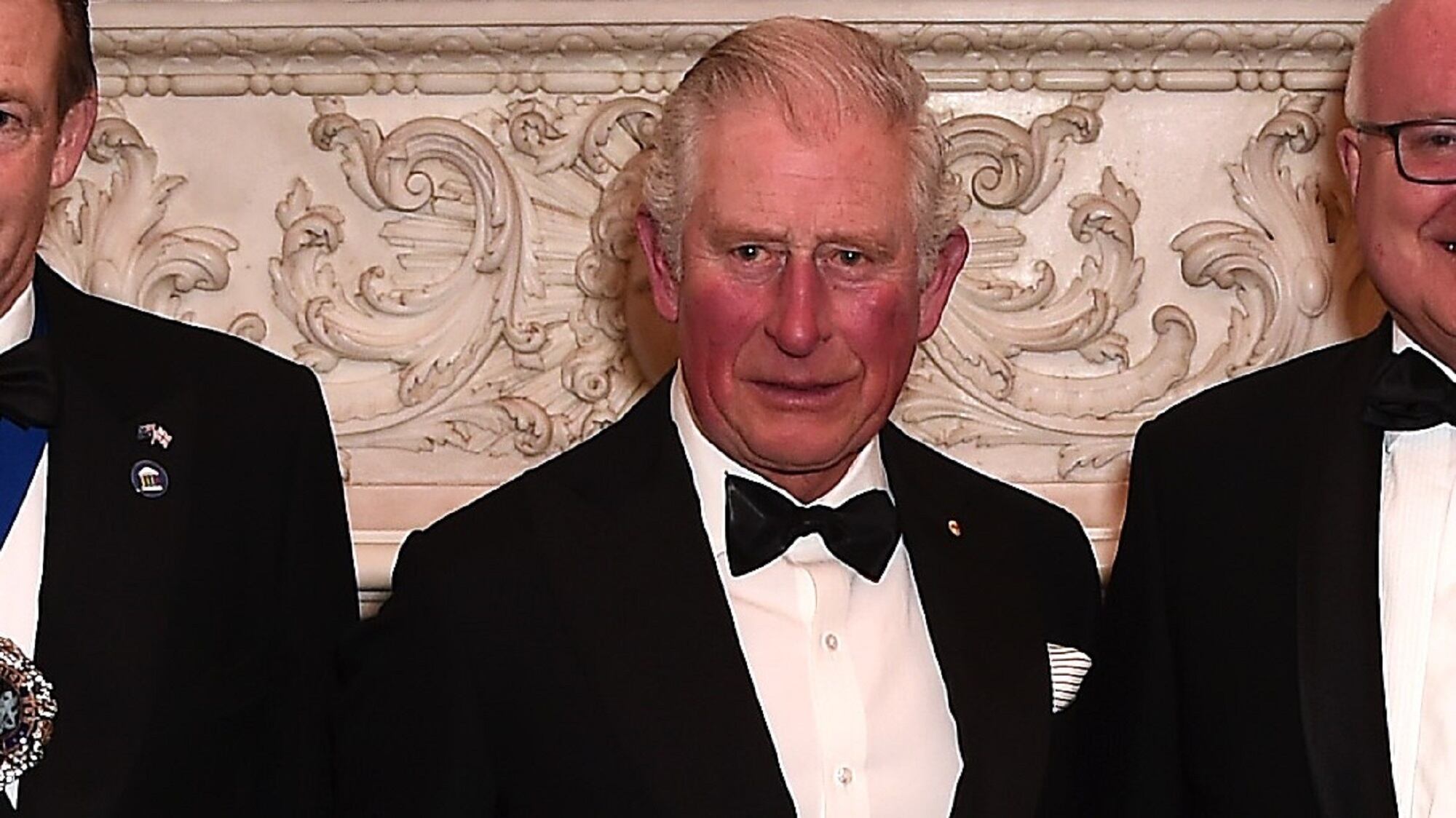
The death toll in Spain from the coronavirus shot up by more than 700 on Wednesday, surpassing China and is now second only to Italy as the pandemic spread rapidly in Europe, with even Britain’s Prince Charles testing positive for the virus.
Each piece of legislation is long: 247 pages for the Senate bill and a whopping 1,404 pages for the House bill. While we cannot distill every provision, here’s a look at some of the major differences between the two pieces of legislation.
Stocks are jumping in midday trading on Wall Street Tuesday amid expectations that Congress is nearing a deal on a big coronavirus relief bill. That would follow more aggressive steps from the Federal Reserve announced a day earlier to support lending and bond markets.