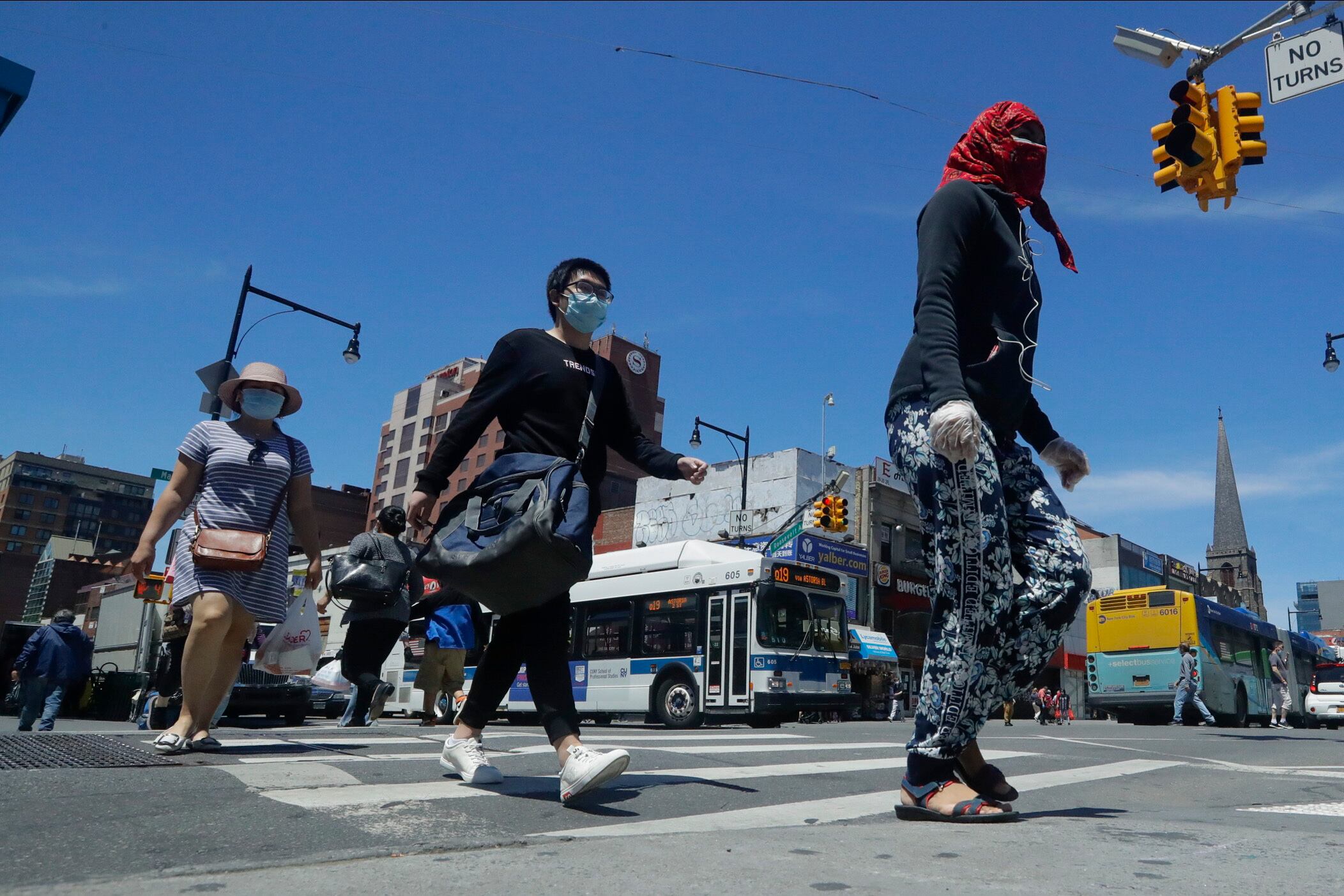
Pedestrians wear face coverings and protective masks as they cross Mains street, Monday, June 8, 2020, in the Flushing section of the Queens borough of New York. After three bleak months, New York City will try to turn a page when it begins reopening Monday after getting hit first by the coronavirus, then an outpouring of rage over racism and police brutality. (AP Photo/Frank Franklin II)
A top World Health Organization expert has tried to clear up “misunderstandings” about comments she made that were widely understood to suggest that people without COVID-19 symptoms rarely transmit the coronavirus.
Maria Van Kerkhove, the UN health agency's technical lead on the virus pandemic, insisted Tuesday that she was referring only to a few studies, not a complete picture, in the comments she made Monday.
Van Kerkhove's remarks on Monday raised confusion and questions among outside experts and health officials who have recommended and in some places required that people wear masks to try to prevent the virus from spreading.
The “clarification” she provided during a WHO social-media chat showed many questions remain about whether infected people who don’t show symptoms of illness such as fever, dry cough or difficulty breathing can transmit the virus to others.
Van Kerkhove said: “What I was referring to yesterday were very few studies, some two or three studies that have been published, that actually try to follow asymptomatic cases.”
“That’s a very small subset of studies,” she continued. “I used the phrase ‘very rare,’ and I think that that’s (a) misunderstanding to state that asymptomatic transmission globally is very rare. What I was referring to was a subset of studies.”
Members of the Kappa League mentoring program at Wyandanch Memorial High School in Long Island, NY are preparing for an educational trip to Ghana. Principal Paul Sibblies is on a mission to enrich his students' lives to put some of them in touch with their roots. "When you invest in young people, then it's the greatest investment you can make," he said.
A group of 15 students recently graduated from SANYS U., a six-week program held by the Self Advocacy Association of New York State. The course helps people with disabilities to advocate on their own behalf, learning more about their rights, legislation and issues that matter most.
The minivan is turning 40 years old this year. While it made up just 1.8 percent of the car market in 2022, that number could begin to tick up, as more families increase interest in the car's advantages. Cheddar News' senior reporter Michelle Castillo takes a deeper look at the minivan's lineage.