By Andrew Taylor
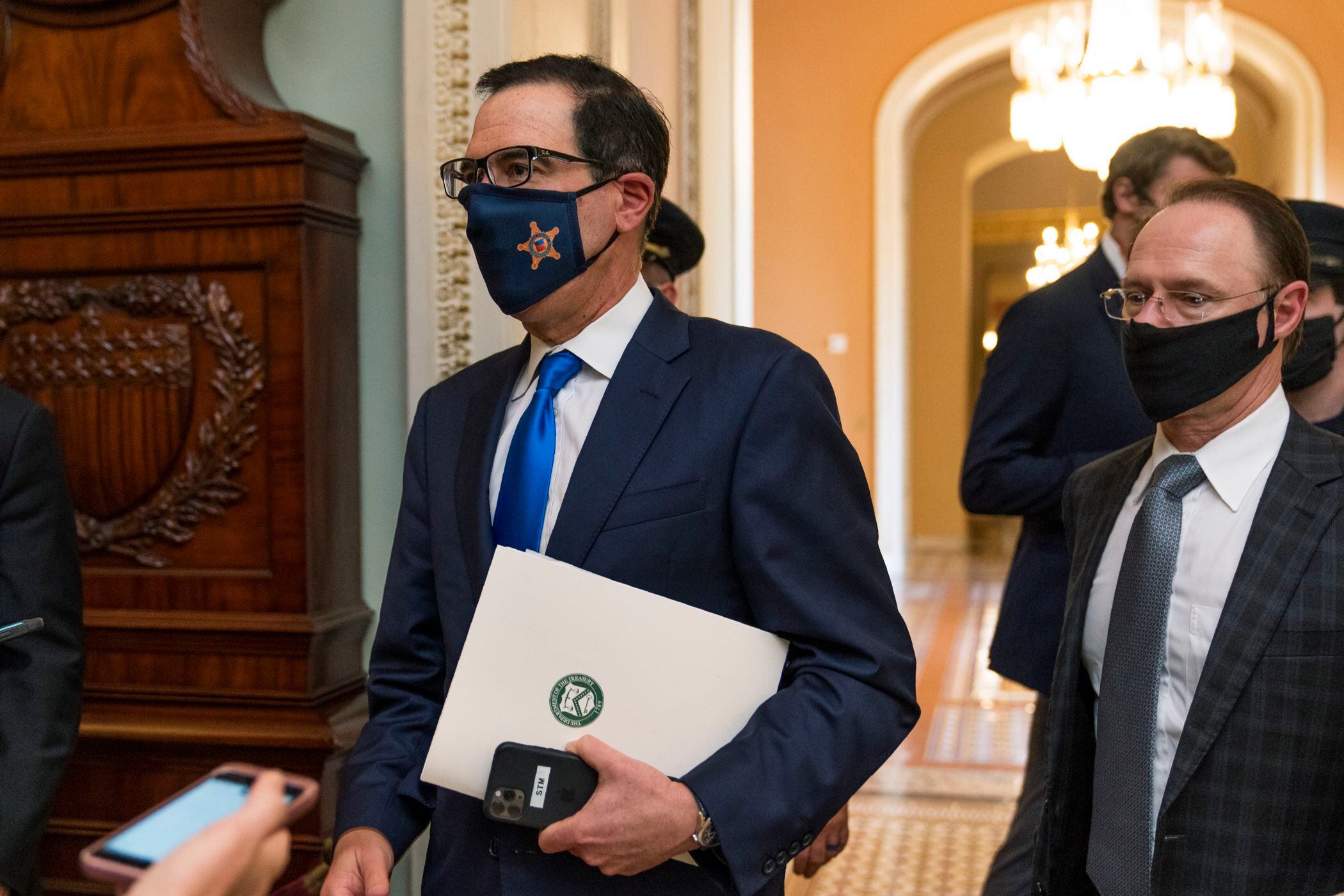
The White House is backing a $400 per week pandemic jobless benefit and is dangling the possibility of a COVID-19 relief bill of $1.6 trillion as last-ditch, pre-election negotiations hit a critical phase Thursday. But pessimism is again seeping into the talks and the two sides switched back to attacking each other in public.
The offer by Treasury Secretary Steven Mnuchin on unemployment is higher than many Republicans would like in any potential COVID deal with House Speaker Nancy Pelosi. Significant, possibly unbridgeable hurdles remain.
After Pelosi said the new offer still fell short, White House Press Secretary Kayleigh McEnany said the speaker was "not being serious" in the negotiations.
"We raised our offer to $1.6 trillion," McEnany told reporters Thursday. "It's one that she is is not interested in."
Mnuchin and Pelosi were expected to talk by phone early Thursday afternoon, but the speaker was publicly dismissive of the latest White House plan.
"This isn't half a loaf, this is the heel of the loaf," Pelosi said in a Thursday interview on Bloomberg TV.
The Trump administration, meanwhile, appears more eager than Capitol Hill Republicans to reach an agreement.
The White House plan, offered Wednesday, gave ground with a $250 billion proposal on funding for state and local governments and backed $20 billion in help for the struggling airline industry. Both areas are of great interest to Democrats' union backers.
Details on the White House offer were confirmed by congressional aides, speaking on condition of anonymity to discuss closed-door discussions.
Pelosi postponed debate Wednesday on a Democratic alternative measure in hopes of getting an agreement. A vote is likely on Thursday, spokesman Drew Hammill said, depending on how the Mnuchin-Pelosi exchanges go.
White House Chief of Staff Mark Meadows cautioned late Wednesday that Trump won't approach a $2 trillion threshold. But there's plenty of wiggle room in numbers so large, and the revenue picture for many states is not as alarming as feared when more than $900 billion for state and local governments swelled a $3.4 trillion Democratic aid bill that passed in May.
In a Wednesday evening appearance on Fox Business, Mnuchin described the talks as the first serious discussions with Pelosi in several weeks and said he is raising his offer into "the neighborhood" of $1.5 trillion. That's well above what many Senate Republicans want but would probably be acceptable to GOP pragmatists and senators in difficult races.
Pelosi responded Thursday, saying the administration is still far short on aid to state and local governments. And she said she won't agree to take half a loaf now.
"Some of you have asked, 'Isn't something better than nothing?' No," Pelosi told reporters, citing the "opportunity cost" for provisions sought by Democrats but potentially lost in any rush to agreement.
At issue is a long-delayed package that would extend another round of $1,200 direct stimulus payments, restore bonus pandemic jobless benefits, speed aid to schools and extend assistance to airlines, restaurants and other struggling businesses. A landmark $2 trillion relief bill in March passed with sweeping support and is credited with helping the economy through the spring and summer, but worries are mounting that the recovery may sputter without additional relief.
The "top line" limit upon which Pelosi, the Trump administration and Senate Republicans might be able to agree has been a subject of considerable speculation. Pelosi had drawn a hard line until recently, and talks had foundered, but failure now could mean there wouldn't be any COVID relief until next year, especially if Trump loses his reelection bid.
Pelosi has never had a reputation for leaving large sums of money on the table and her tactical position — facing a White House and Senate controlled by Republicans — is not as strong as her hardline tactics might indicate.
The White House also seems far more eager for a deal than does McConnell. Any compromise that could pass both the House and Senate is sure to alienate a large chunk of the Senate GOP.
McConnell said the two sides remain "very, very far apart."
Even if Pelosi and Mnuchin were able to reach a tentative agreement on "top line" spending levels, dozens of details would need to be worked out. A particularly difficult issue, Pelosi told her colleagues earlier in the day, remains McConnell's insistence on a liability shield for businesses fearing COVID-related lawsuits after they reopen their doors.
Pelosi has sold her latest bill as an attempt to establish a negotiating position that might boost the negotiations. A more skeptical take is that the speaker is trying to placate party moderates who protested that she has been too inflexible in negotiations and played a role in the collapse of aid talks this summer and earlier this month.
The Democratic bill would revive a $600-per-week pandemic jobless benefit and send a second round of direct payments to most individuals. It would scale back an aid package to state and local governments to a still-huge $436 billion, send a whopping $225 billion to colleges and universities, and deliver another round of subsidies to businesses under the Paycheck Protection Program. Airlines would get another $25 billion in aid to prevent a wave of layoffs that are expected this week.
The partisan Democratic plan represents a cutback from a $3.4 trillion bill that passed the House in May but remains well above what Senate Republicans are willing to accept. Republicans have endorsed staying in the $650 billion to $1 trillion range.
The specific numbers are also fuzzy because both sides are using offset spending cuts or new tax revenues to pay for part of their respective bills. The Congressional Budget Office has not scored either the most recent Senate GOP measure or the Democratic plan facing a vote Thursday.