By Alexa St. John
The White House is lending its support to an auto industry effort to standardize Tesla’s electric vehicle charging plugs for all EVs in the United States, part of a broad effort to stimulate their sales to help combat climate change.
More than 1 million EVs have been sold in the United States in 2023, a record, but that pace still lags behind sales in such countries as China and Germany. One key reason is that the limited availability of charging infrastructure across the country has been a widespread concern for many would-be buyers of EVs and has held back their sales in the United States.
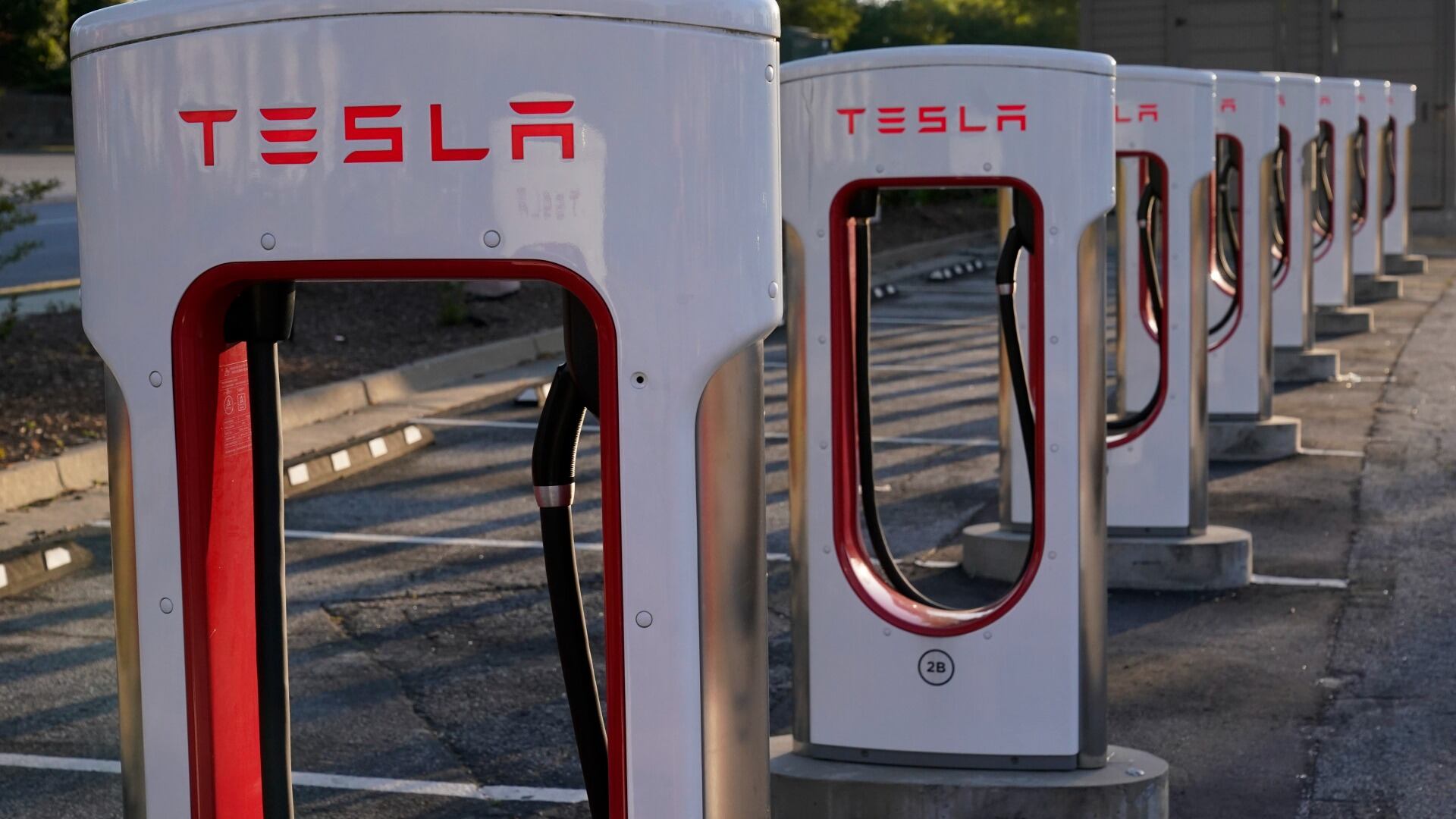
Tesla, the leader in the EV market, operates the largest network of fast-chargers. And many of its Supercharger stations are in prime locations along highly traveled corridors, where other charging stations are sparse.
On Tuesday, SAE International, formerly the Society of Automotive Engineers, confirmed as a new standard Tesla’s North American Charging Standard connector. That connector, known as NACS, links Tesla's EVs to the company's network. In June, the automotive organization had said it would set standards for Tesla’s EV charging plug to try to allow it to work with all EVs.
The new standard “ensures that any vehicle or charging equipment supplier or manufacturer will be able to use, manufacture, or deploy the connector and expands charging access for current and future EV drivers across the country,” the U.S. Joint Office of Energy and Transportation said in a statement Tuesday.
The standard could help boost consumer confidence in EVs as the White House, the auto industry and other stakeholders strive to encourage mass adoption. President Joe Biden has made transportation decarbonization a top priority and has set the ambitious goal of having 50 percent of all new vehicle sales in the United States be electric by 2030.
Tesla's charging standard has long been in conflict with the Combined Charging Standard connector, which most other automakers have incorporated in their EVs. Tuesday's announcement essentially formalizes what has already been happening across the industry this year.
Tesla agreed earlier this year to open parts of its network, with plans to provide access to at least 7,500 of its chargers to non-Teslas by the end of 2024. Since then, nearly all major global automakers have signed on to use NACS with their EVs and join Tesla's charging network in the future, with the exception of some holdouts including Stellantis and Volkswagen.
“Now, nobody can say it’s just ‘the Tesla thing,' " said Loren McDonald, CEO of EVAdoption LLC, an independent industry analysis firm that tracks NACS. “There’s nothing now to hold them back.”
By next year, Ford, General Motors and others say they plan to provide adapters to customers whose EVs are now equipped with the CCS technology so they can plug into the Tesla network without needing a NACS connector. Most of these automakers will officially begin equipping their EVs with NACS starting in 2025.
Senior Biden administration officials told The Associated Press that they expect many vehicles to use both connectors on the road for some time.
McDonald cautioned, though, that the transition in charger technology and the distribution of adapters may leave many EV drivers confused.
“We are still going to have several years of millions of CCS connector vehicles on the road, and they’re going to last a long time,” McDonald said. “Until we know how the automakers are actually going to distribute these adapters, to me it’s really unknown how it’s going to help solve this problem over the next couple of years if you’re an existing CCS owner.
“The reality of all of this, is we’re going to be living in adapter hell for the next several years and that transition, then, is problematic for mainstream consumers who say, ‘I don’t get this.' ”
At the same time, some automakers are still investing in their own charging initiatives without Tesla. Mercedes-Benz is building its own network, and seven automakers announced plans to build out fast-charging together.
Tesla did not respond to request for comment.
The Biden administration’s $1.2 trillion bipartisan infrastructure law, signed into effect in November 2021, set aside $7.5 billion to building a nationwide EV charging network.
The Federal Highway Administration established requirements for federally funded charging stations that require a CCS plug, though it also allowed other plugs. The agency will now determine how the new standard for the Tesla plug meets those requirements.
The administration and climate advocates regard widespread EV ownership as one way to help reduce the transportation sector's reliance on fossil fuels, a key contributor to greenhouse gas emissions and climate change.
Alexa St. John is an Associated Press climate solutions reporter.
AP Auto Writer Tom Krisher in Detroit contributed to this report.
Associated Press climate and environmental coverage receives support from several private foundations. See more about AP’s climate initiative here. The AP is solely responsible for all content.