If you wanted to previously find an image that perfectly matched what you saw in your head online, you had to type in a wordy search inquiry. You’d hit send and hope you find the perfect match from the billions of images out there.
Now, that mental snapshot can be crafted in seconds by artificial intelligence and sometimes it’s even better than you could imagine.
“We want to solve a big problem that everyone has, which is roughly half of the searches today are going unanswered,” said Yusuf Mehdi, Microsoft’s consumer chief marketing officer. “But with A.I., we can now start to answer more and more of those questions.”
Microsoft invested $10 billion in Open A.I., the artificial intelligence research laboratory responsible for text-based ChatGPT and image generator DALL-E. It recently combined its powers with its search engine Bing. Not only will it store the searches, it will use third-party apps like Open Table and the breadth of the internet to give you simplified answers. Think of it as the modern version of Ask Jeeves, but it actually works, Mehdi said.
“You can just talk to it like an everyday person, and the A.I. does all the work and comes back with simple answers,” he explained.
When you describe something to Bing through its chat function and ask for an image, it will generate it for you using DALL-E technology in seconds -- even if it’s something that never existed like Baby Yoda sharing a drink with Boba Fett in Mos Eisley.
Or you can ask Bing to come up with reference images to give to a contractor. Mehdi recently queried for pictures of a mid-Century modern-style bar to serve as inspiration for an upcoming house remodeling project.
“It's going to make people in their current jobs that much more productive, that much more effective, than we're seeing that today,” Mehdi said. “Second, it’s going to create a new set of jobs where people can learn how to take advantage of the A.I.”
If what you need can only be described in words, Bing and ChatGPT combine together to give you answers with context. Instead of having to research individual items and draw your own conclusions, it will compile the results for you. It can be especially useful when it comes to travel.
“Travel planning takes multiple weeks, people taking lots of notes, lots of tabs, having to compile it together,” he said. “What you can see here is in one chat session, you can literally just ask multiple questions like we were saying, “Hey, give me a day-by-day itinerary. Tell me about the festivals. What should I wear? What should I know about the customs of coming in?”
At the end of the day, it will save us time.
“We're automating the mundane tasks, the things you don't want us to do so it frees you up to do the really interesting work,” Mehdi said.
Vacasa is the largest full-service vacation rental property management company in the United States. Today, it announced the launch of a new homeowner app to help users monitor how the company is managing their vacation rental homes. It comes as consumer confidence in travel is on the rise ahead of the holiday season. Vacasa CEO Matt Roberts joined Cheddar News' Closing Bell to discuss.
Gaming publisher Kepler Interactive secured $120 million in funding from the Chinese gaming firm NetEase. This investment comes as the global gaming market explodes with projections to cross the $200 billion mark as early as 2023. Lindsey Rostal, Co-Founder and Game Director of Timberline Studio, one of the founding studios at Kepler joined Cheddar News' Closing Bell for more.
Everyone is stepping into the NFT space, including the Grammys. 'Oneof' is entering a three-year partnership with The Recording Academy to release exclusive NFTs commemorating the 64th, 65th, and 66th Annual Grammy Awards. A portion of the proceeds will also go to The Recording Academy's scholarship fund. Adam Fell, co-founder and board member of Oneof and the president of Quincy Jones Productions, joins Cheddar News to discuss the announcement.
Jean Foster, SVP of marketing and communications for the Consumer Technology Association, joins Cheddar News to preview what attendees can expect from this year's trade show.
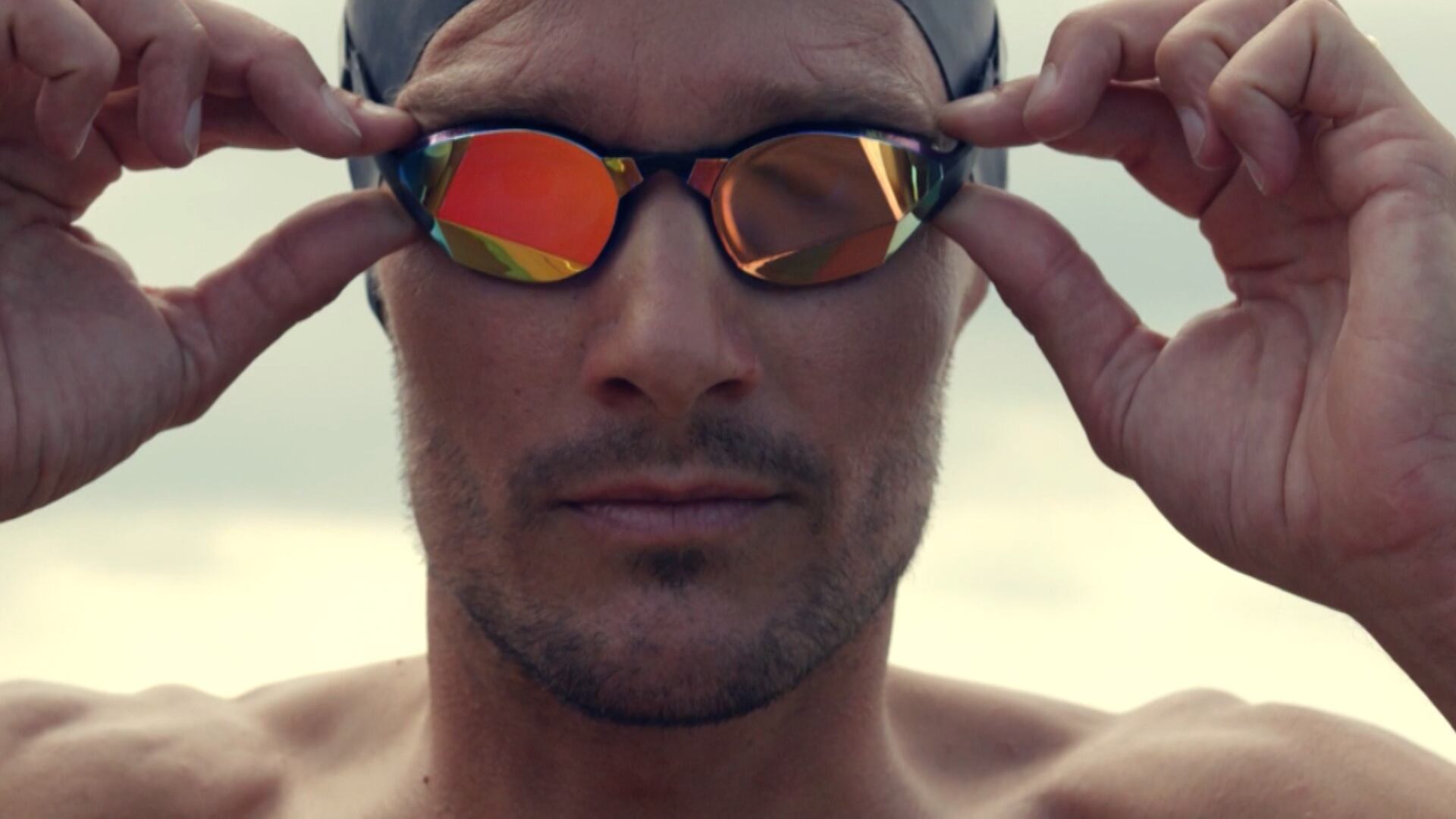
'THEMAGIC5' produces swimming goggles that contour the face using advanced robot technologies and 3D printing. Both of the company's founders Bo Haaber and Rasmus Barfred went on ABC's 'Shark Tank' and caught a $1 million deal. The duo join Cheddar News to talk about what the new funding means for the company.
Things are looking up for everyone's favorite crypto. Bitcoin rallied nearly 40% in October, hitting a record high of $66,975. That was the biggest single-month percentage rally since December 2020. On Monday morning, Bitcoin was trading 2.4% higher while Ethereum and Dogecoin were trading at 1.71% and 3.95%. Ben Armstrong, founder of BitBoy Crypto, joins Cheddar News to talk about the latest in the crypto space.
John Paul Mejia, the national spokesperson for the Sunrise Movement, joined Cheddar to talk about what the youth activist group wants to see from President Joe Biden as he attends the COP26 climate summit. Mejia admonished the president for having little to deliver on his own climate agenda domestically while at the conference. "We need the president to follow through with his promises because, frankly, it's a matter of life or death not only for communities here in the United States but also those looking to us around the world," he said.
Markets opened higher after the Dow and S&P 500 closed at record highs on Tuesday. It comes amid a slew of strong corporate earnings reports. Frances Newton Stacy, Director of Strategy, Optimal Capital, joined Cheddar's Opening Bell.
Amazon plans to launch its first prototype satellites for Project Kuiper, an internet-from-space venture, in 2022. It's the first major step in the e-commerce giant's plan to rival SpaceX by building a network of satellites in space, providing internet to rural, underserved communities around the world. Loren Grush, senior science reporter for the Verge, discusses the project and how it could transform internet access moving forward.
While Facebook didn't unveil a name change in its Q3 results, it did reveal a new reporting structure, separating its revenue into two separate businesses: its slate of social networking apps, and Facebook reality labs.
This distinction comes as Facebook continues to ramp up its augmented and virtual reality efforts as it plots its foray into the metaverse. Angelo Zino, Senior Industry Analyst, CFRA Research, joined Cheddar's Opening Bell to discuss.