If you wanted to previously find an image that perfectly matched what you saw in your head online, you had to type in a wordy search inquiry. You’d hit send and hope you find the perfect match from the billions of images out there.
Now, that mental snapshot can be crafted in seconds by artificial intelligence and sometimes it’s even better than you could imagine.
“We want to solve a big problem that everyone has, which is roughly half of the searches today are going unanswered,” said Yusuf Mehdi, Microsoft’s consumer chief marketing officer. “But with A.I., we can now start to answer more and more of those questions.”
Microsoft invested $10 billion in Open A.I., the artificial intelligence research laboratory responsible for text-based ChatGPT and image generator DALL-E. It recently combined its powers with its search engine Bing. Not only will it store the searches, it will use third-party apps like Open Table and the breadth of the internet to give you simplified answers. Think of it as the modern version of Ask Jeeves, but it actually works, Mehdi said.
“You can just talk to it like an everyday person, and the A.I. does all the work and comes back with simple answers,” he explained.
When you describe something to Bing through its chat function and ask for an image, it will generate it for you using DALL-E technology in seconds -- even if it’s something that never existed like Baby Yoda sharing a drink with Boba Fett in Mos Eisley.
Or you can ask Bing to come up with reference images to give to a contractor. Mehdi recently queried for pictures of a mid-Century modern-style bar to serve as inspiration for an upcoming house remodeling project.
“It's going to make people in their current jobs that much more productive, that much more effective, than we're seeing that today,” Mehdi said. “Second, it’s going to create a new set of jobs where people can learn how to take advantage of the A.I.”
If what you need can only be described in words, Bing and ChatGPT combine together to give you answers with context. Instead of having to research individual items and draw your own conclusions, it will compile the results for you. It can be especially useful when it comes to travel.
“Travel planning takes multiple weeks, people taking lots of notes, lots of tabs, having to compile it together,” he said. “What you can see here is in one chat session, you can literally just ask multiple questions like we were saying, “Hey, give me a day-by-day itinerary. Tell me about the festivals. What should I wear? What should I know about the customs of coming in?”
At the end of the day, it will save us time.
“We're automating the mundane tasks, the things you don't want us to do so it frees you up to do the really interesting work,” Mehdi said.
Back in February 2021, Twitter announced its three-year plan to double development velocity, to reach 315 million monetizable users, and double its total annual revenue. Chief Customer Officer Sarah Personette, joined Cheddar to discuss where the social media giant stands now a year after the announcement. "The progress against all three of those pillars has been substantial, and we'll continue to drive that over the course of the next year and beyond," she said. Personette also discussed the leadership of Twitter's CEO Parag Agrawal who took over for founder Jack Dorsey late in 2021.
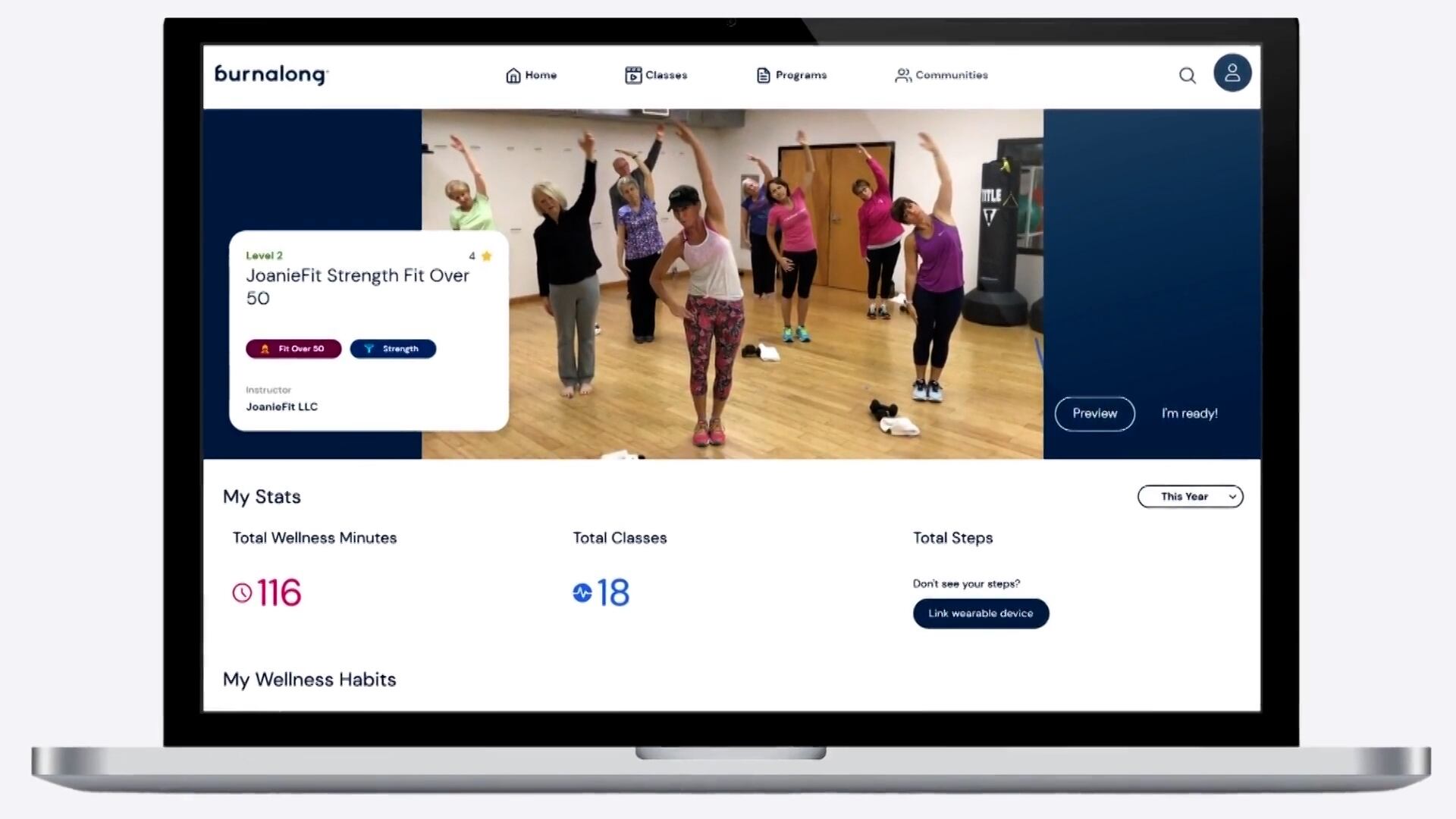
Daniel Freedman, co-CEO of Burnalong, joins Cheddar News to talk about how Burnalong is helping companies support its staff and prevent workplace burnout.
A record 4.5 million Americans quit their jobs in November as people continue to take advantage of red hot job market. The resignation rate is now the highest in the two decades the government has kept records, with many people voluntarily leaving their current jobs for other opportunities. Harley Lippman, CEO of Genesis 10, discusses how why so many people are quitting their jobs right now, and how the tech sector is being impacted.
It was 'game on' for sports bettors in the state of New York, as mobile betting kicked off on four major betting operating platforms Saturday. This comes at an exciting time for sports fans with some of the biggest NFL games of the season right around the corner. Cam Rogers - Host of Lock It In with Cam Rogers, Betting Analyst at the Bleav Podcast Network joined Cheddar's Opening Bell to discuss.
Take-Two Interactive is set to buy Zynga for $12.7 billion. The deal marks the latest blockbuster acquisition in the video game industry. The massive deal will bring the maker of popular mobile games like 'Farmville' and 'Words with Friends' under the scope of Take-Two, the company behind 'Grand Theft Auto' and 'NBA 2K.' Kenny Rovello, President & Co-Founder of Arkadium, joined Cheddar's Opening Bell to discuss.
The United States purchased over 600,000 doses of a monoclonal antibody treatment from Glaxosmithkline and Vir Biotechnology, bringing the total worldwide doses purchased to 1.7 million. This comes as the country attempts to ramp up treatment options as cases of the omicron variant continue to surge. Dr. Asha Shah, Director of Infectious Diseases at Stamford Health joined Cheddar's Opening Bell to discuss.
GameStop is getting into the NFT and crypto space. The video game retailer announced the launch of an entire division aimed at creating a marketplace for NFTs and other crypto partnerships. The move comes as part of a turnaround plan by GameStop which has struggled in recent years as gamers shift away from physical game releases. Patrick McConlogue, CEO, Overline & Former Citadel Investment Group Engineer joined Cheddar's Opening Bell.
Max Bichsel, vice president at Gambling.com Group joins Cheddar News to talk about the growing sports betting industry, New York legalizing mobile betting, and 2022 predictions for the sector.
Meta's request to have a Federal Trade Commission antitrust lawsuit dismissed was rejected by a federal judge. Prosecutors presented enough evidence in their latest filing to go forward with the case accusing the tech giant of operating a social networking monopoly through Facebook, Instagram, and WhatsApp.