*By Carlo Versano* The bitter midterm election season is coming down ー as it always does ー to who turns out to vote. With control of both chambers of Congress and dozens of statehouses up for grabs on Tuesday, and a polarizing president at the center of it all, the 2018 midterm election will be seen as one of the most consequential in modern U.S. history. Democrats hope that Trump's unpopularity will drive voters to the polls and, in so doing, repudiate his agenda and divisive style of leadership. Republicans are counting on a booming economy to counterbalance the conventional midterm wisdom that the party in power loses seats. That focus on the economy ー historically low unemployment, a bull market, and sustained wage growth ー would have been easy to miss during the last leg of the campaign season, as Trump and his surrogates went all-in on a hard-line immigration message. Nick Givas, a reporter with The Daily Caller, said that the economy was the GOP's best bet for holding off Democratic gains: "If there's one thing voters can point to that's tangible, it's more jobs, it's more money in their wallet," he said. Trump's incendiary rhetoric, particularly on the subject of immigration, is a callback to the very strategy that got him elected. "Immigration also helped him rise in the polls as a presidential candidate," Givas said. "He's going back to his bread and butter here" and making a bet that getting his base "hot and bothered" will drive turnout. But that strategy is exactly what mobilizes Democrats to vote, as noted by the DCCC's Molly Mitchell in an earlier interview on Cheddar. "We've built the largest battlefield for Democrats in over a decade, and we've recruited incredible candidates across the country," she said. The DCCC counts 80 House districts in play nationwide, 71 of which are Republican-held. Democrats need a net gain of 23 seats to take the House. The Senate map remains favorable for the GOP, and the chalk bet is that the party will keep control of that chamber, but lose the House. Meanwhile, 36 governorships (26 of which are held by Republicans) will also be decided, with Democrats expected to make inroads in red states. Then, of course, there are the ballot initiatives that have been largely overshadowed by so many contentious races. From marijuana legalization to gas taxes to minimum wage, voters in 37 states have 155 ballot propositions in front of them. Wall Street will be particularly attuned to whether voters choose to legalize pot for recreational use (Michigan, North Dakota) or medical use (Missouri, Utah) and whether minimum wage hikes (Arkansas, Missouri) can get passed in an era of soaring corporate profits. With so much at stake and so much attention being paid, it will come down to turnout ー a worry for Democrats in the East, which is under widespread threat of severe weather. Bad weather on Election Day is widely believed to favor Republicans ー as the people most likely to stay home tend to be Democrats. The first polls close at 6 p.m. ET in parts of Kentucky and Indiana, and the "first test of what kind of night this going to be" will come when polls close at 7 p.m. in Virginia, according to Reid Epstein, political reporter at The Wall Street Journal. He's keeping an eye on VA-7, the district outside Richmond. If incumbent GOP Rep. Dave Brat falls early, that will bode well portend good things for Democrats. Epstein cautioned against gleaning too much from exit polling aside from the composition of a given electorate. After all, Democrats who took exit polls as gospel in 2016 went to bed thinking they would wake up to President Hillary Clinton. As the night progresses and the results roll in, California could throw a wrench into the results things. The massive state, home to multiple swing districts and notoriously slow to tabulate results, allows mail-in ballots through Election Day, meaning if control of the House is riding on the Golden State, we may not know right away. Polls there close at 11 p.m. ET. "We may all be sitting and watching the mail get delivered in Santa Ana and Irvine over the course of the next few days," Epstein cautioned. Both he and Givas, and the Daily Caller reporter, agreed on one thing: "It's going to be a long night." For full interview [click here](https://cheddar.com/videos/voters-head-to-the-polls-on-election-day).
Share:
More In Politics
Oregon Senator's Bill Tackles Legacy College Admissions to 'Level Playing Field'
In February, Senator Jeff Merkley (D-Ore.) and Representative Jamaal Bowman (D-N.Y. 16th District) introduced the Fair College Admissions for Students Act. The bill looks to curb the admissions advantage given to the children of alumni and donors for colleges and universities. Sen. Merkley joined Cheddar news to discuss the push behind the legislation. "My dad was a mechanic. I was applying to schools around the country. I never thought about the fact that those students who came from the most privileged backgrounds also got a special advantage in applying to college," he said. "They take up 10-25 percent of the slots at many of our universities, and so this is kind of affirmative action for those who need it least rather than a level playing field for everyone else." If enacted, the law would amend the Higher Education Act of 1965 doing away with legacy or donor status admissions for any school participating in the federal student aid program.
Stocks Close Sharply Higher On Eve of Fed Decision
Nancy Daoud, a private wealth adviser for Ameriprise Financial, joins Cheddar News' Closing Bell, where she discusses what led to a sharp spike on Wall Street during Tuesday's session and what she will be watching for most closely when the Fed announces it latest policy decision on Wednesday.
Russia Could Default on Sovereign Debt After Foreign Reserves Frozen by Sanctions
Russia's economy is effectively at a standstill after it was slapped with extensive western sanctions, and now it has to make the first of four monthly interest payments on dollar bonds. It's likely the country will not be able to pay — so what happens next? Major credit ratings agencies have downgraded Russian sovereign debt, with Fitch issuing a 'C' rating and S&P Global Ratings issuing a 'CCC-' rating. Caleb Silver, Editor in Chief of Investopedia, joins Closing Bell to discuss what a Russian debt default could mean for Russia's economy, U.S. consumers who have pensions with exposure to Russian assets, and whether this could create a global financial crisis.
Harvard Students Build Ukraine Takes Shelter Website to Help Shelter Refugees
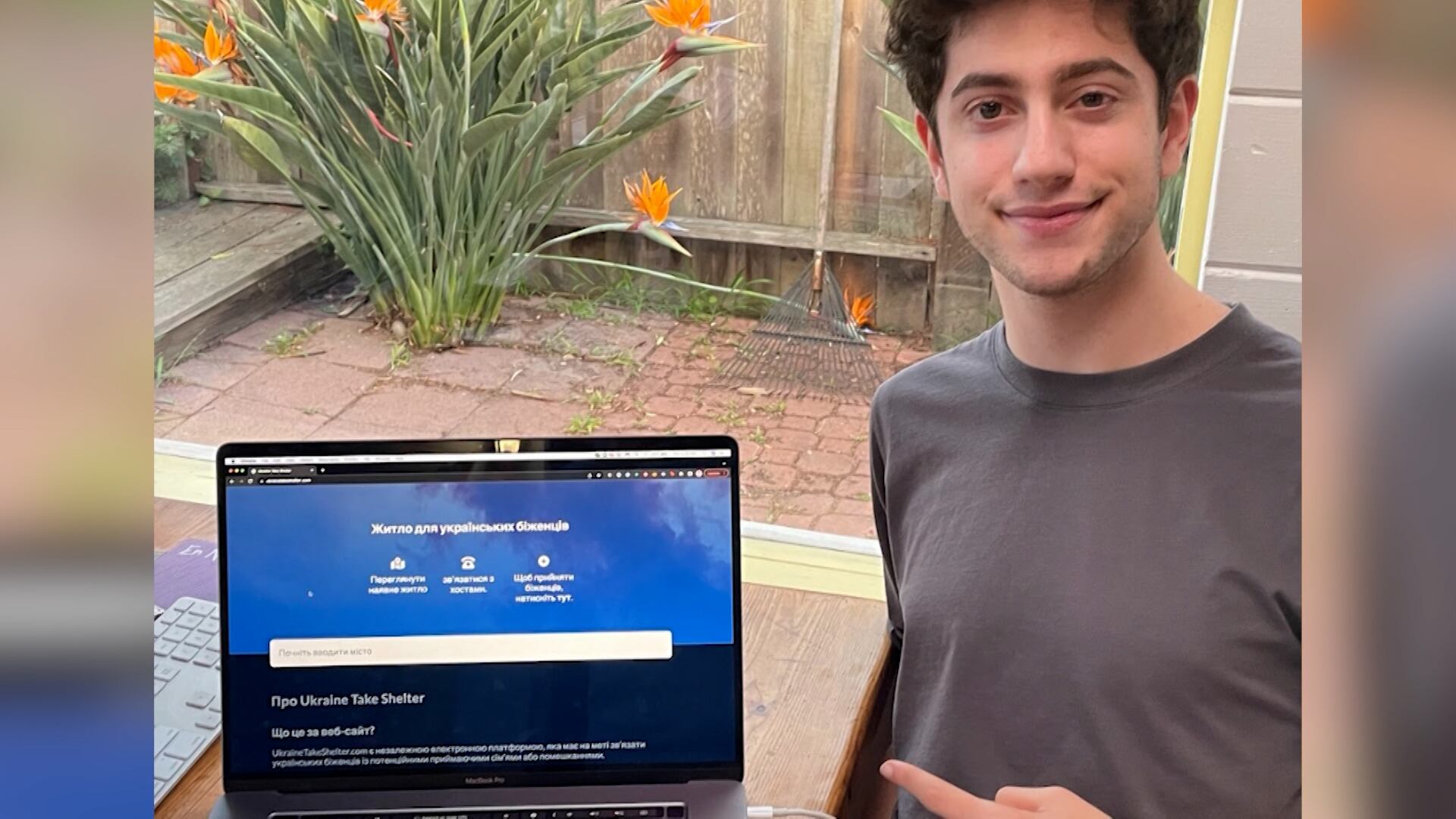
With the number of Ukrainians being displaced due to the Russian invasion surging, two students from Harvard took it on themselves to develop a website to help connect potential hosts with refugees seeking housing. The co-founder of the website Ukraine Takes Shelter, Marco Burstein, joined Cheddar news to discuss working together with fellow freshman Avi Schiffmann to streamline the effort to aid Ukrainian refugees. "We basically worked for three days straight developing the website, and since then the response has been pretty incredible," Burstein said.
What Happens Now For Brittney Griner?
Over three weeks ago, WNBA player Brittney Griner was arrested in Russia on drug charges. According to reports, the Star arrived at an airport near Moscow where authorities found Vape cartridges and hashish oil in her luggage. Grindr faces serious charges that could carry a possible sentence of 5-10 years in a Russian prison. Experts warn that Griner's arrest could be used as a bargaining chip. Partner at Stroock & Stroock & Lavan, Thomas Firestone, joined Cheddar to discuss more.
Ukrainian Fact-Checking Org on Putin Laying the Groundwork for Disinformation
On a live broadcast, an employee on a Russian state news television channel held up a sign protesting propaganda about the war in Ukraine. Ruslan Deynychenko, executive director of the Ukrainian fact-checking organization StopFake, joined Cheddar News to discuss what he called the misinformation spread to the Russian people about the invasion. "They are not about informing people they are about brainwashing people," he said. "Russian government uses their media as an instrument, as a tool, of their foreign policy."
White House May Extend Payment Pause On Student Loans
Student loan payments for millions of borrowers are set to resume on May 1st. However, signals from the Department of Education show that the date may be pushed back. Once again, it's been pushed back a few times. Initially, the Biden Administration stated loan payments would resume as the economy continues to show signs of recovery. Student Loan Expert and Author of "How to Appeal for More College Financial Aid", Mark Kantrowitz, joined Cheddar to discuss more.
Load More