T-Mobile’s new bank account might not pose a competitive threat to the biggest U.S. banks, but it’s a strong competitor to the many startups vying to shape how people save and manage their money.
The wireless phone company partnered with BankMobile to create a debit account for its customers with a whopping 4 percent return on deposits, if they deposit at least $200 each month, and 1 percent back for prepaid customers and everyone else. It announced the offering last fall and rolled it out nationally on Thursday.
The product, called T-Mobile Money, will remain entirely separate from its core wireless business, according to Tiffany Minor, director of marketing for T-Mobile’s financial services business.
“We can’t see your transactions, your balance, or anything else you do,” Minor said. “That’s your Money account and that’s separate from your wireless. If questions come up like ‘What if I haven’t paid my bill? Can you see money in my T-Mobile Money account?’ We don’t, we don’t see it at all, as we should not, and that’s one of the reasons we partnered with a bank.”
Though T-Mobile offers device installment plans, Minor maintained that those plans are separate from the bank account as well. She also declined to comment on potential cross-selling opportunities, maintaining that as of today the company is focused on providing customers a better checking account and delivering on a strong value proposition, which it believes to be the 4 percent interest rate.
It isn’t exactly clear why T-Mobile launched a bank account or what the long-term value strategy is for it, but it does show evidence of a new reality in which major non-bank brands become distribution channels for fintech startups.
“Looking at the phone and the device as the epicenter for how we use and interact with banking, it became evident that [banking] was hard, expensive and there’s no value,” Minor said. “Money and banking have kind of outgrown the traditional banking.”
Banking startups once sought to disrupt their legacy counterparts by reinventing bank accounts that are easier to use, more fair and more valuable. But that’s proven to be impossible without the scale or the resources of a large corporation. The largest U.S. bank has about 50 million customers so any new startup starting from zero has a steep mountain to climb.
Those startups have had some success, however, selling their products as a service to bigger brands looking to provide more value to their own customers. For example, the point-of-sale financing company Affirm has said it eventually wants to become a full-service bank, but it’s the company’s Walmart partnership that will have a big hand in bringing Affirm new customers and gaining their trust.
“We are in the business of banking-as-a-service and look for partners that are in the business of creating the best customer experience for their customers, and focusing on solving pain points — especially if their businesses have an interaction with their customers that are transaction-based, payments-based, with a mobile experience component to it,” said Luvleen Sidhu, cofounder, president and chief strategy officer of BankMobile, T-Mobile’s partner bank.
BankMobile launched in 2015 as a digital-only checking account and has been focused on the student demographic. That account is designed differently than the one made available through T-Mobile.
The idea of retailers providing financial services is not new, but it is much easier to for the two to come together. Walmart famously tried and failed several times to obtain a banking license beginning in 1999, but today it offers several financial products through partnerships. This month Walmart is celebrating its customers’ $2 billion in savings in the last two years through Walmart’s prepaid MoneyCard.
Even though they can acquire customers at a higher rate and lower cost than traditional banks, traditional banks still have a head start. That’s particularly true for startups focused on improving basic banking — like Simple, Aspiration and Chime as well as the European soon-to-be newcomers in the U.S. market like N26, Monzo and Revolut — rather than trying to bring a previously inaccessible concept like investing or wealth management to the masses.
“There are a lot of people doing a ton of stuff with all these financial apps, but nobody’s come up with the solve for the everyday checking account,” Minor said. “People needed help with pain points. We’re addressing that for the customers.”
Rainmaker Games bills itself as a blockchain-based organization founded in the metaverse, built on a new type of gaming ecosystem called play-to-earn. The company announced a $6.5 million seed round after it was founded just this year. Rainmaker Games CEO and founder Will Deane joins Cheddar News' Closing Bell to discuss.
Analysts are all-in on tech giant Apple, issuing bullish ratings this week and calling it a 'safety blanket' and one of the best assets for investors in 2022. This comes as Apple edges closer to a $3 trillion market cap. Mario Stefanidis, Vice President at Roundhill Investments, joins Cheddar News' Closing Bell to discuss why analysts are bullish on the tech giant, how close the company is to hitting a $3 trillion market cap, and more.
Planet made its public debut on December 8, ringing the opening bell at the NYSE in honor of the occasion. With more than 200 satellites in orbit, the company operates the world's largest constellation of satellites, providing daily scans of the entire earth. This helps with everything from agriculture companies monitoring fields and crop health, to FEMA's disaster response, to marine protection programs. Will Marshall, co-founder and CEO of Planet, explains how this milestone will allow the company fulfill its mission of using space to help life here on Earth.
North Carolina is transitioning into an electric vehicle manufacturing hub, as Toyota plans to build its first North American lithium-ion battery plant. Machelle Baker Sanders, secretary of commerce for North Carolina, joined Cheddar to discuss the influx of tech-heavy businesses and what Toyota's 1,750 jobs mean for North Carolina's economy. Sanders said the carmaking giant's $1.29 billion project was contingent on it committing to align with the state's own climate goals for a greener future.
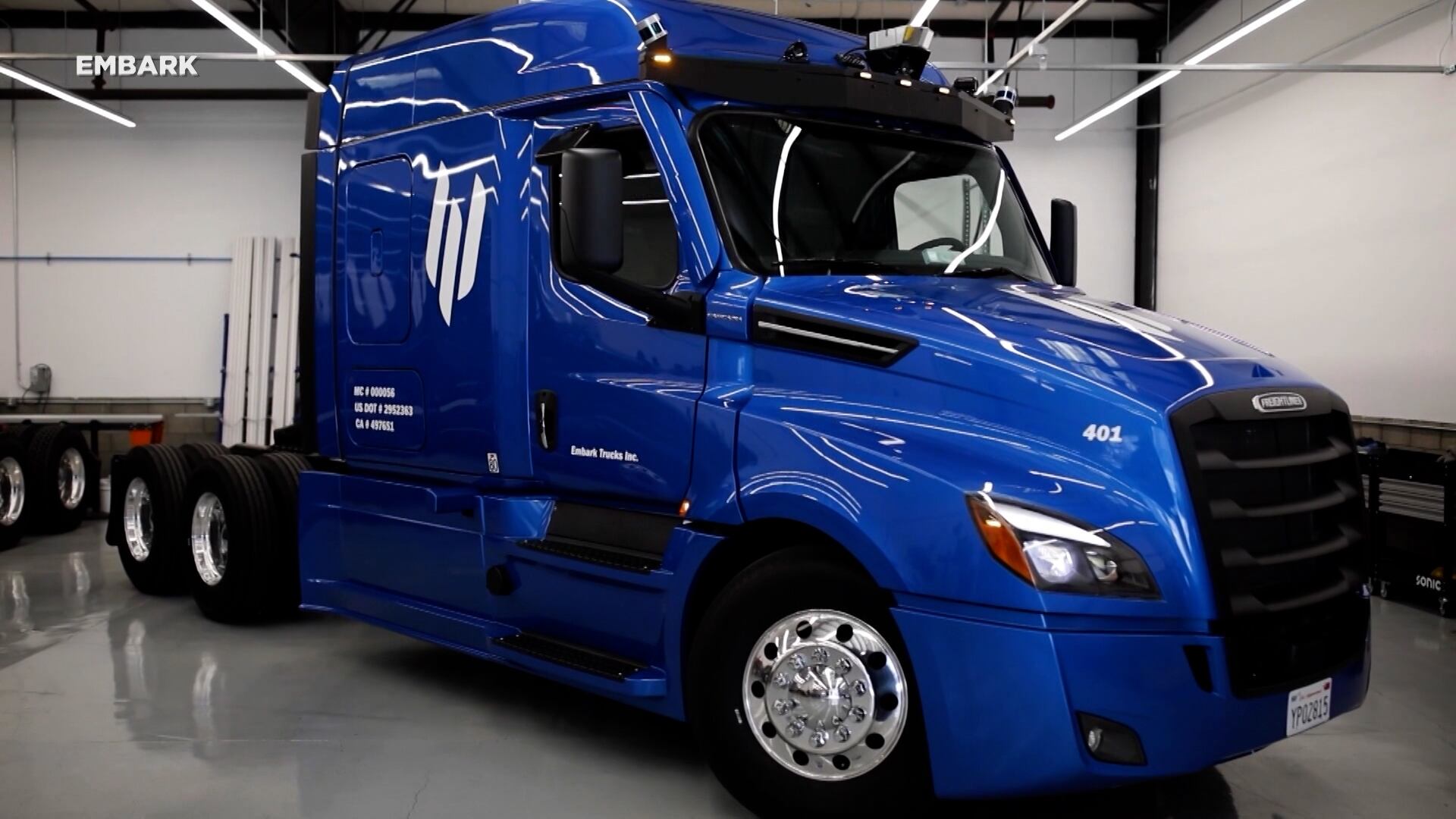
Just weeks after launching its IPO, Embark Trucks is looking to take trucking to the next level by establishing an autonomous truck lane between Houston and San Antonio, Texas. CEO Alex Rodrigues joined Cheddar's "Closing Bell" to talk about the company's expansion into the Lone Star State and the efforts taken to make the driverless vehicles safe for the shipping corridor. "I think the biggest thing you'll notice as a person driving on the road is that they're going to be a little bit more patient, a little bit more law-abiding because they don't have to get there under the same kind of time pressure," he said. "They don't have the hours of service limitations." He also explained that the lane itself isn't a segregated road but a digital route on an existing roadway for the vehicles to follow.
As the saying goes, one man's trash is another man's treasure. That's exactly what artist David Anasagasti, also known as Ahol Sniffs Glue, was thinking when he created his scavenger hunt during Art Basel. Nearly 100 winners who followed the clues were able to get their piece of art signed, plus an NFT minted artwork. Artist Ahol Sniffs Glue joins Cheddar News to discuss the event and his exhibit.
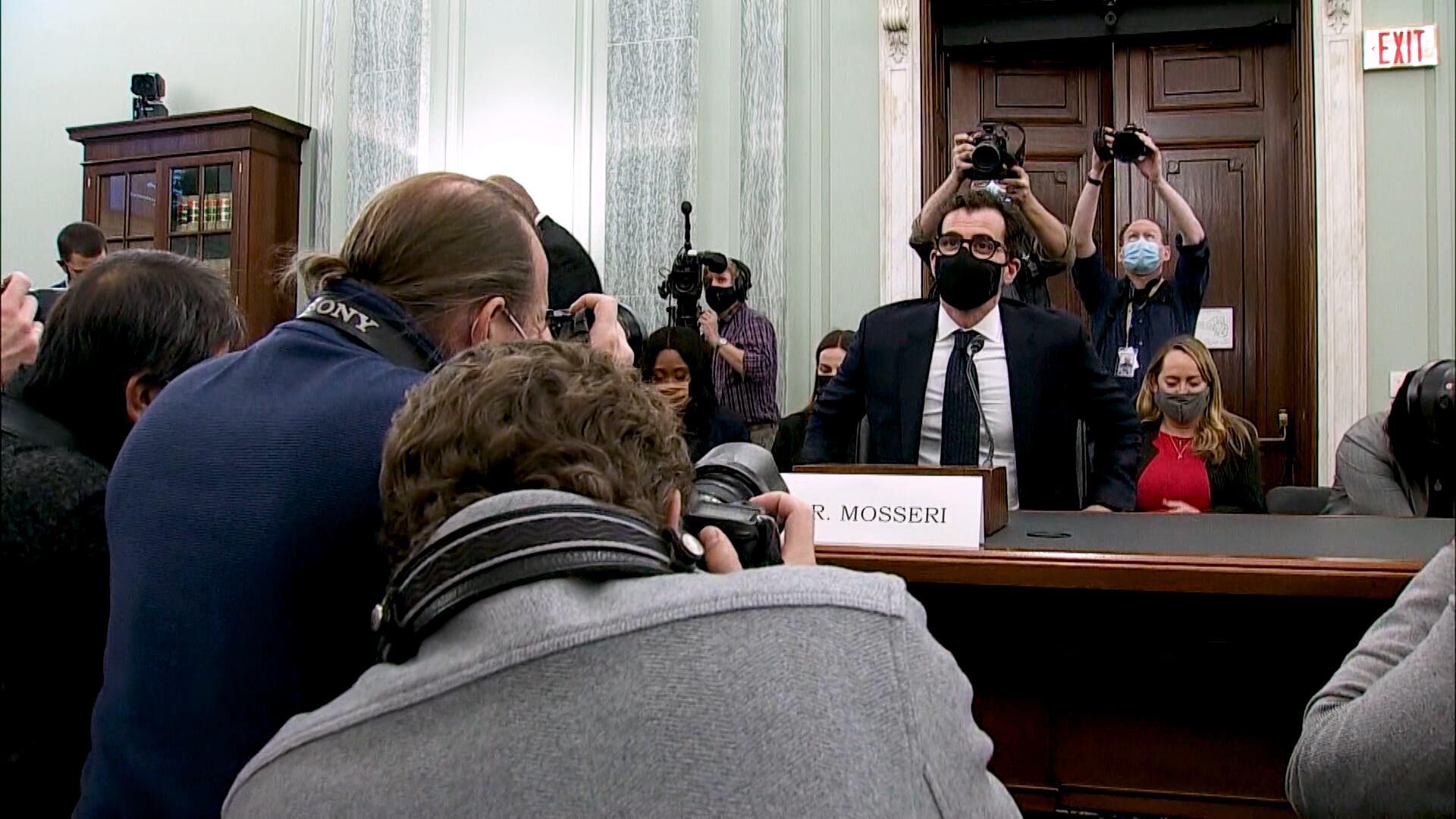
Instagram CEO Adam Mosseri faced a bipartisan Congressional grilling this week as the Senate inquired about safety practices for protecting the mental wellbeing of young people on the platform. Sen. Marsha Blackburn (R-Tenn.) joined Cheddar to talk about the hearing and how she was disappointed in Instagram coming unprepared with relevant information or documents. Blackburn also offered concern that the platform could continue with building a kids-only version despite having drawn significant opposition from the public.
If you were wondering what the most popular trends on Google were after a rollercoaster 2021, the search giant has released its annual trending list. Sports, politics, and "Squid Game" dominated the U.S. and global trends this year.
Ford Pro has teamed up with Salesforce to launch 'VIIZR.' a new software service designed to help small businesses and tradespeople succeed. The newly launched tool will help small businesses simplify commercial activities including invoicing, scheduling and managing requests, from one integrated, cloud-based platform. Ted Cannis, CEO, Ford Pro, joined Cheddar to discuss.
a new study by The Buy Safe America Coalition shows retail theft has ballooned to over $68 billion per year. Most of these thefts are the result of something called organized retail crime. Those stolen goods are resold to unsuspecting consumers, often on popular online marketplaces like Facebook marketplace, eBay, OfferUp, and letgo. Mike Combs, Director of Organized Retail Crime Investigations at The Home Depot, joined Cheddar to discuss organized retail crime, how to identify it, and what can be done to stop it.