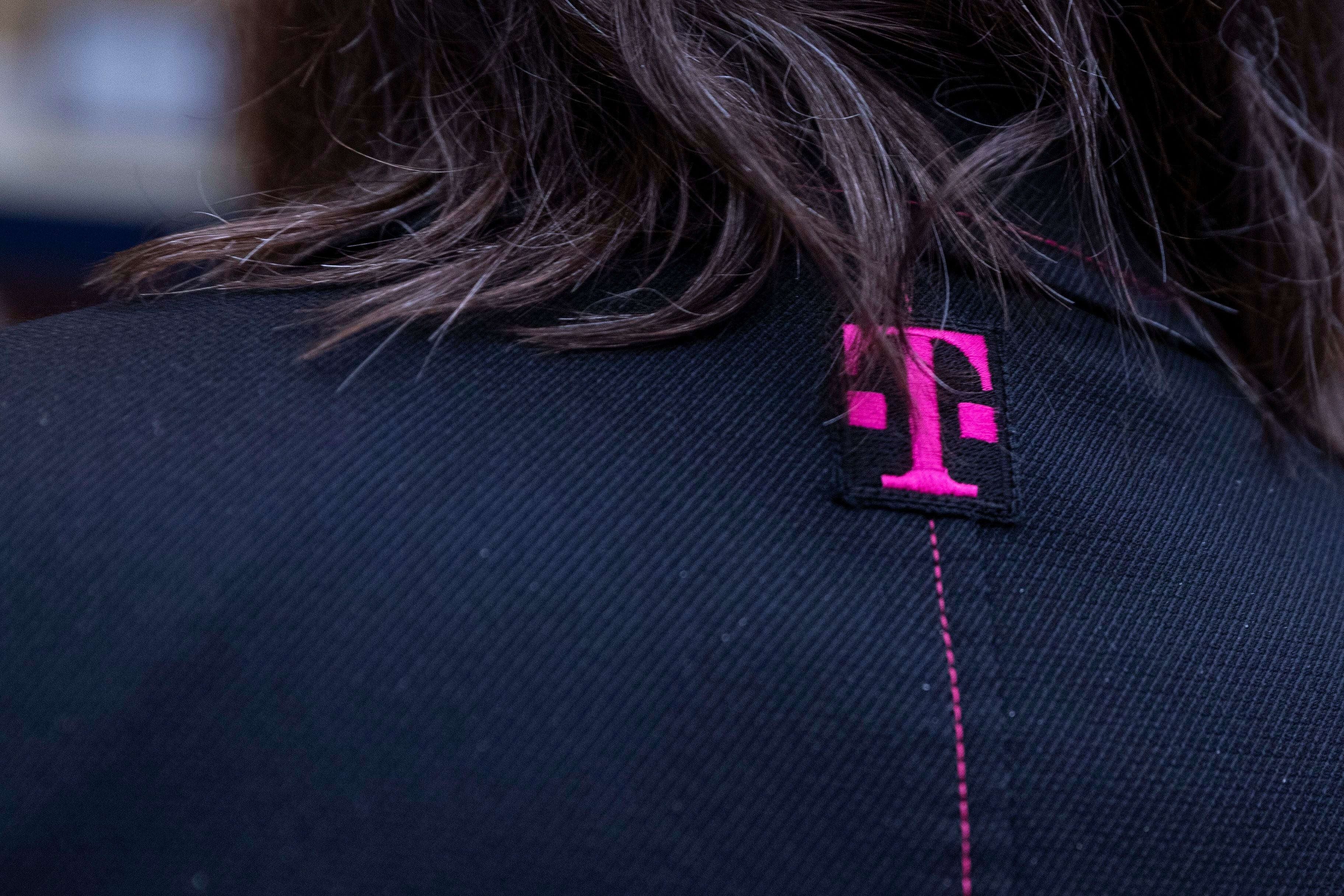
T-Mobile’s new bank account might not pose a competitive threat to the biggest U.S. banks, but it’s a strong competitor to the many startups vying to shape how people save and manage their money.
The wireless phone company partnered with BankMobile to create a debit account for its customers with a whopping 4 percent return on deposits, if they deposit at least $200 each month, and 1 percent back for prepaid customers and everyone else. It announced the offering last fall and rolled it out nationally on Thursday.
The product, called T-Mobile Money, will remain entirely separate from its core wireless business, according to Tiffany Minor, director of marketing for T-Mobile’s financial services business.
“We can’t see your transactions, your balance, or anything else you do,” Minor said. “That’s your Money account and that’s separate from your wireless. If questions come up like ‘What if I haven’t paid my bill? Can you see money in my T-Mobile Money account?’ We don’t, we don’t see it at all, as we should not, and that’s one of the reasons we partnered with a bank.”
Though T-Mobile offers device installment plans, Minor maintained that those plans are separate from the bank account as well. She also declined to comment on potential cross-selling opportunities, maintaining that as of today the company is focused on providing customers a better checking account and delivering on a strong value proposition, which it believes to be the 4 percent interest rate.
It isn’t exactly clear why T-Mobile launched a bank account or what the long-term value strategy is for it, but it does show evidence of a new reality in which major non-bank brands become distribution channels for fintech startups.
“Looking at the phone and the device as the epicenter for how we use and interact with banking, it became evident that [banking] was hard, expensive and there’s no value,” Minor said. “Money and banking have kind of outgrown the traditional banking.”
Banking startups once sought to disrupt their legacy counterparts by reinventing bank accounts that are easier to use, more fair and more valuable. But that’s proven to be impossible without the scale or the resources of a large corporation. The largest U.S. bank has about 50 million customers so any new startup starting from zero has a steep mountain to climb.
Those startups have had some success, however, selling their products as a service to bigger brands looking to provide more value to their own customers. For example, the point-of-sale financing company Affirm has said it eventually wants to become a full-service bank, but it’s the company’s Walmart partnership that will have a big hand in bringing Affirm new customers and gaining their trust.
“We are in the business of banking-as-a-service and look for partners that are in the business of creating the best customer experience for their customers, and focusing on solving pain points — especially if their businesses have an interaction with their customers that are transaction-based, payments-based, with a mobile experience component to it,” said Luvleen Sidhu, cofounder, president and chief strategy officer of BankMobile, T-Mobile’s partner bank.
BankMobile launched in 2015 as a digital-only checking account and has been focused on the student demographic. That account is designed differently than the one made available through T-Mobile.
The idea of retailers providing financial services is not new, but it is much easier to for the two to come together. Walmart famously tried and failed several times to obtain a banking license beginning in 1999, but today it offers several financial products through partnerships. This month Walmart is celebrating its customers’ $2 billion in savings in the last two years through Walmart’s prepaid MoneyCard.
Even though they can acquire customers at a higher rate and lower cost than traditional banks, traditional banks still have a head start. That’s particularly true for startups focused on improving basic banking — like Simple, Aspiration and Chime as well as the European soon-to-be newcomers in the U.S. market like N26, Monzo and Revolut — rather than trying to bring a previously inaccessible concept like investing or wealth management to the masses.
“There are a lot of people doing a ton of stuff with all these financial apps, but nobody’s come up with the solve for the everyday checking account,” Minor said. “People needed help with pain points. We’re addressing that for the customers.”