T-Mobile’s new bank account might not pose a competitive threat to the biggest U.S. banks, but it’s a strong competitor to the many startups vying to shape how people save and manage their money.
The wireless phone company partnered with BankMobile to create a debit account for its customers with a whopping 4 percent return on deposits, if they deposit at least $200 each month, and 1 percent back for prepaid customers and everyone else. It announced the offering last fall and rolled it out nationally on Thursday.
The product, called T-Mobile Money, will remain entirely separate from its core wireless business, according to Tiffany Minor, director of marketing for T-Mobile’s financial services business.
“We can’t see your transactions, your balance, or anything else you do,” Minor said. “That’s your Money account and that’s separate from your wireless. If questions come up like ‘What if I haven’t paid my bill? Can you see money in my T-Mobile Money account?’ We don’t, we don’t see it at all, as we should not, and that’s one of the reasons we partnered with a bank.”
Though T-Mobile offers device installment plans, Minor maintained that those plans are separate from the bank account as well. She also declined to comment on potential cross-selling opportunities, maintaining that as of today the company is focused on providing customers a better checking account and delivering on a strong value proposition, which it believes to be the 4 percent interest rate.
It isn’t exactly clear why T-Mobile launched a bank account or what the long-term value strategy is for it, but it does show evidence of a new reality in which major non-bank brands become distribution channels for fintech startups.
“Looking at the phone and the device as the epicenter for how we use and interact with banking, it became evident that [banking] was hard, expensive and there’s no value,” Minor said. “Money and banking have kind of outgrown the traditional banking.”
Banking startups once sought to disrupt their legacy counterparts by reinventing bank accounts that are easier to use, more fair and more valuable. But that’s proven to be impossible without the scale or the resources of a large corporation. The largest U.S. bank has about 50 million customers so any new startup starting from zero has a steep mountain to climb.
Those startups have had some success, however, selling their products as a service to bigger brands looking to provide more value to their own customers. For example, the point-of-sale financing company Affirm has said it eventually wants to become a full-service bank, but it’s the company’s Walmart partnership that will have a big hand in bringing Affirm new customers and gaining their trust.
“We are in the business of banking-as-a-service and look for partners that are in the business of creating the best customer experience for their customers, and focusing on solving pain points — especially if their businesses have an interaction with their customers that are transaction-based, payments-based, with a mobile experience component to it,” said Luvleen Sidhu, cofounder, president and chief strategy officer of BankMobile, T-Mobile’s partner bank.
BankMobile launched in 2015 as a digital-only checking account and has been focused on the student demographic. That account is designed differently than the one made available through T-Mobile.
The idea of retailers providing financial services is not new, but it is much easier to for the two to come together. Walmart famously tried and failed several times to obtain a banking license beginning in 1999, but today it offers several financial products through partnerships. This month Walmart is celebrating its customers’ $2 billion in savings in the last two years through Walmart’s prepaid MoneyCard.
Even though they can acquire customers at a higher rate and lower cost than traditional banks, traditional banks still have a head start. That’s particularly true for startups focused on improving basic banking — like Simple, Aspiration and Chime as well as the European soon-to-be newcomers in the U.S. market like N26, Monzo and Revolut — rather than trying to bring a previously inaccessible concept like investing or wealth management to the masses.
“There are a lot of people doing a ton of stuff with all these financial apps, but nobody’s come up with the solve for the everyday checking account,” Minor said. “People needed help with pain points. We’re addressing that for the customers.”
Joseph Pallant, Founder and Executive Director for the Blockchain for Climate Foundation, joins Cheddar Climate, where he discusses the among of energy crypto mining consumes and explains how his organization is on a mission to make the crypto industry more environmentally sustainable.
One of the world's largest transport companies is kicking off Black History Month with a new initiative aimed at the next generation of business leaders. Today, FedEx announced the launch of its Student Ambassador Program. Participants selected from eight historically black colleges and universities will receive career guidance from FedEx executives. The program is part of FedEx's ongoing commitment to HBCUs and will also help the company expand its pipeline for diverse talent. Cheddar News welcomes senior vice president at FedEx, Jenny Robertson, and Jerryl Briggs, President of Mississippi Valley State University, to discuss.
Driver assistance monitoring systems are meant to keep the driver's eyes on the road, but according to a report from AAA, different ways of monitoring provide significantly different results. The study found that direct camera-based systems that scanned the driver's eye movements were faster and more reliable than those indirect systems that looked at steering-wheel input. Megan McKernan, the manager of automotive services for the Automobile Club of Southern California, joined Cheddar to discuss the findings. "Triple-A is recommending that automakers include both direct and indirect systems just to really prevent consumers from trying to misuse these systems," she said, noting that neither system on its own is not foolproof.
Pinterest recently added augmented reality to its portfolio. The image sharing and social media platform's new e-commerce tech will allow consumers to interact with retailers and visualize online products inside their homes.
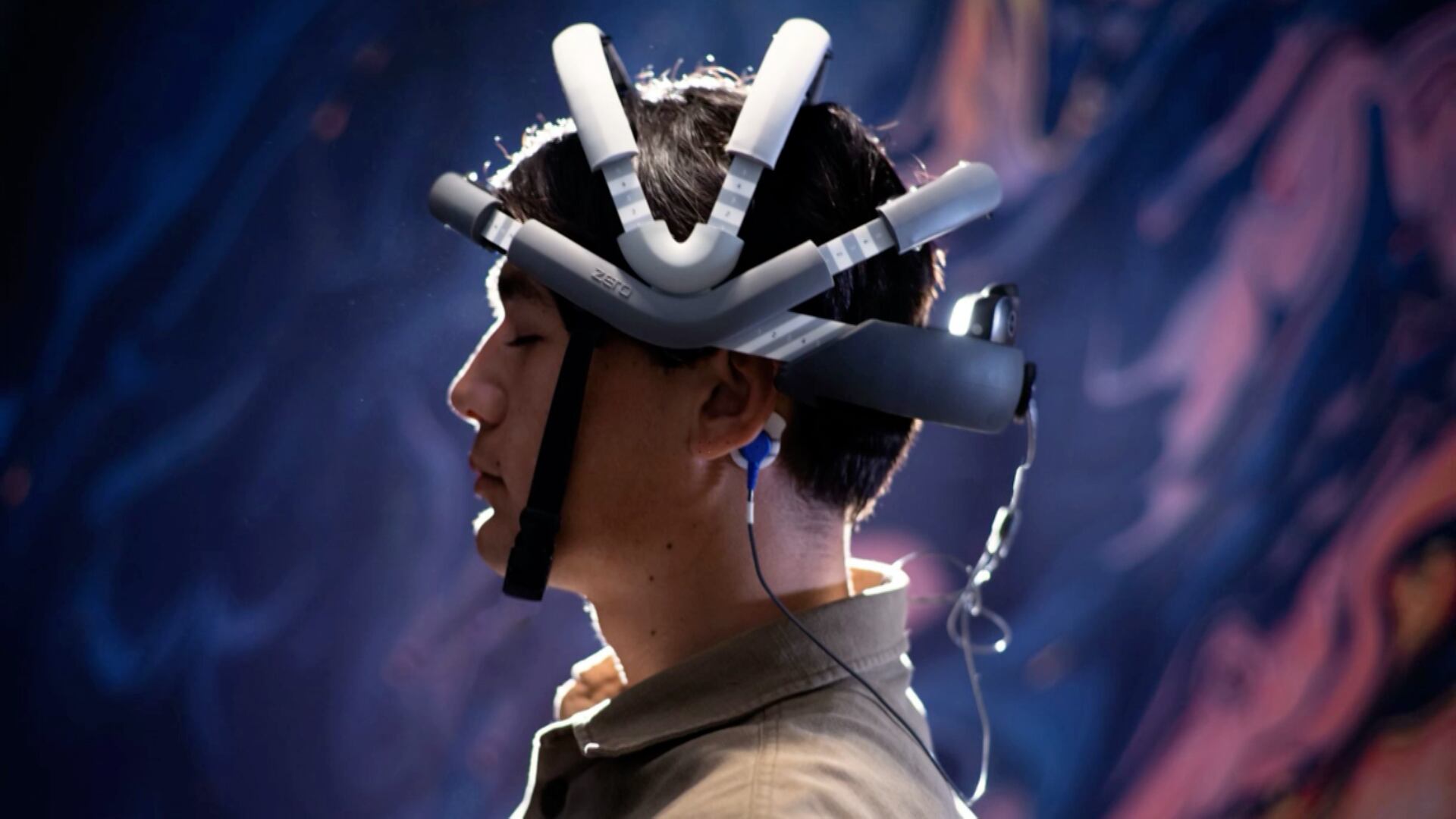
Wave Neuroscience is a neurological health tech company that specializes in clinical and at-home personalized brain stimulation technology. Erik Won, president and chief medical officer and Fred Walke, CEO, joined Cheddar's Opening Bell to discuss their company's hopes for allowing patients to identify and treat unique brain disorders while empowering them to understand their unique neurological makeups — including for the high-stress positions of professional athletes. "We have a mobile device that provides a very light stimulation that gives them a therapy that gives them confidence so there's a just knowing that they're doing something for it," said Walke. "But it also helps them get back into a rhythm. It helps their brain synchronize around certain frequencies that that we target, and it helps them really understand that they've done everything they can to get to their highest level of success."
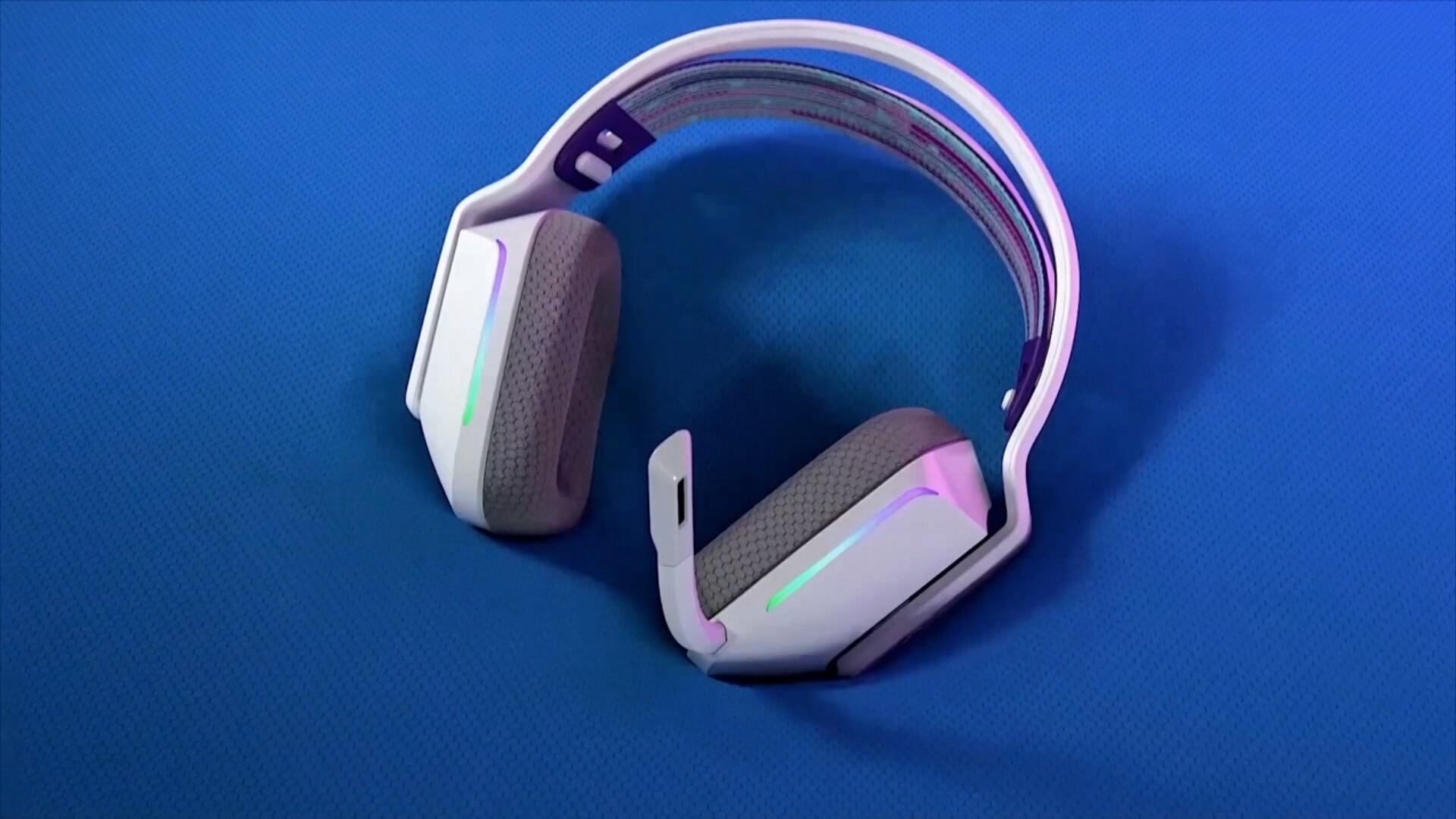
Logitech posted better-than-expected earnings in its third quarter, reporting sales of $1.63 billion dollars, down 2% from the year ago quarter, but well ahead of the Wall Street consensus of $1.48 billion dollars. The PC and gaming peripherals company also raised its annual guidance for both sales and profitability. Bracken Darrell, Logitech CEO, joined Cheddar to break down his reaction to the results, how the pandemic played a role in its growth, and where he wants to take the company next.
GM is scheduled to report its Q4 earnings after the bell on Tuesday February 1. Wall Street expects a miss as the automaker navigates the global chip shortage, which has hit car sales hard. Investors are looking for an update on production, as well as outlook for the electric vehicles that GM is investing billions to bring to market. Karl Brauer, executive analyst at iseecars.com, joined Cheddar to give a preview of the automaker's report.
Recent data reveals that streaming giants are struggling to retain subscribers in the months following a major release.
According to data from Antenna, subscriber trends show that users will subscribe to a given streaming service just to watch a particular show, and then cancel those subscriptions shortly after. This comes as the streaming space continues to heat up as new entrants crowd the space. Jon Christian, Founding Partner + Digital Supply Chain Leader at OnPrem joined Cheddar's Opening Bell to discuss.
As airlines continues to face massive pilot shortages, United Airlines is opening a training academy for future pilots. United projects that the academy will train around 5,000 new pilots by 2030. David Slotnick, Senior Aviation Business Reporter at The Points Guy joined Cheddar's Opening Bell to discuss.