By Deepa Bharath
Diwali is the most important festival of the year in India — and for Hindus in particular.
It is celebrated across faiths by more than a billion people in the world’s most populous nation and the diaspora. Over five days, people take part in festive gatherings, fireworks displays, feasts and prayer.
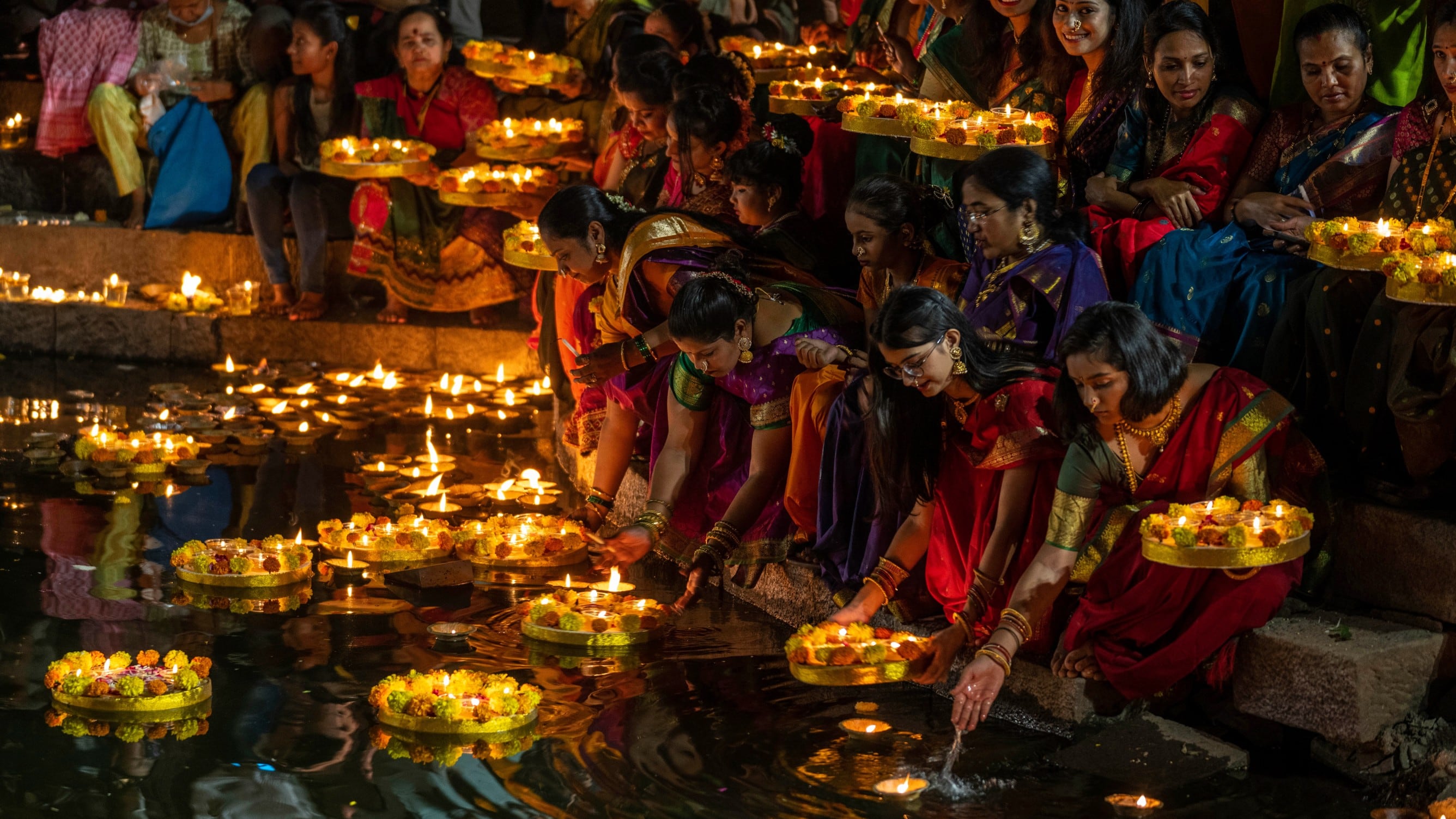
Diwali is derived from the word “Deepavali,” which means “a row of lights.” Celebrants light rows of traditional clay oil lamps outside their homes to symbolize the victory of light over darkness and knowledge over ignorance.
WHEN IS DIWALI?
The dates of the festival are based on the Hindu lunar calendar, typically falling in late October or early November.
This year, Diwali begins Nov. 10 and the festival will be observed on Nov. 12.
WHAT ARE SOME HINDU STORIES OF DIWALI?
While Diwali is a major religious festival for Hindus, it is also observed by Sikhs, Jains and Buddhists. The origin story of Diwali varies depending on the region. All these stories have one underlying theme — the victory of good over evil.
In southern India, Diwali celebrates the victory of Lord Krishna’s destruction of the demon Naraka who is said to have imprisoned women and tormented his subjects. In northern India, Diwali honors the triumphant return of Lord Rama, his wife Sita, and brother Lakshmana, from a 14-year exile in the forest.
HOW IS DIWALI CELEBRATED?
The festival brings with it a number of unique traditions, which also vary by region. What all celebrations have in common are the lights, fireworks, feasting, new clothes and praying.
In southern India, many have an early morning warm oil bath to symbolize bathing in the holy River Ganges as a form of physical and spiritual purification.
In the north, worshipping the Goddess Lakshmi, who symbolizes wealth and prosperity, is the norm.
Gambling is a popular tradition because of the belief whoever gambled on Diwali night would prosper throughout the year. Many people buy gold on the first day of Diwali, known as Dhanteras — an act they believe will bring them good luck.
Setting off firecrackers is a cherished tradition, as is exchanging sweets and gifts among friends and family. Diwali celebrations typically feature rangoli, which are geometric, floral patterns drawn on the floor using colorful powders.
WHAT ARE THE DIWALI STORIES FROM OTHER FAITHS?
Buddhists, Jains and Sikhs have their own Diwali stories:
Jains observe Diwali as the day the Lord Mahavira, the last of the great teachers, attained nirvana, which is liberation from the cycle of birth, death and rebirth.
Sikhs celebrate Bandi Chhor Divas — a day that overlaps with Diwali — to commemorate the release of Guru Hargobind, a revered figure in the faith, who had been imprisoned for 12 years by the Mughal emperor Jahangir.
Buddhists observe the day as one when the Hindu Emperor Ashoka, who ruled in the third century B.C., converted to Buddhism.
Associated Press religion coverage receives support through the AP’s collaboration with The Conversation US, with funding from Lilly Endowment Inc. The AP is solely responsible for this content.