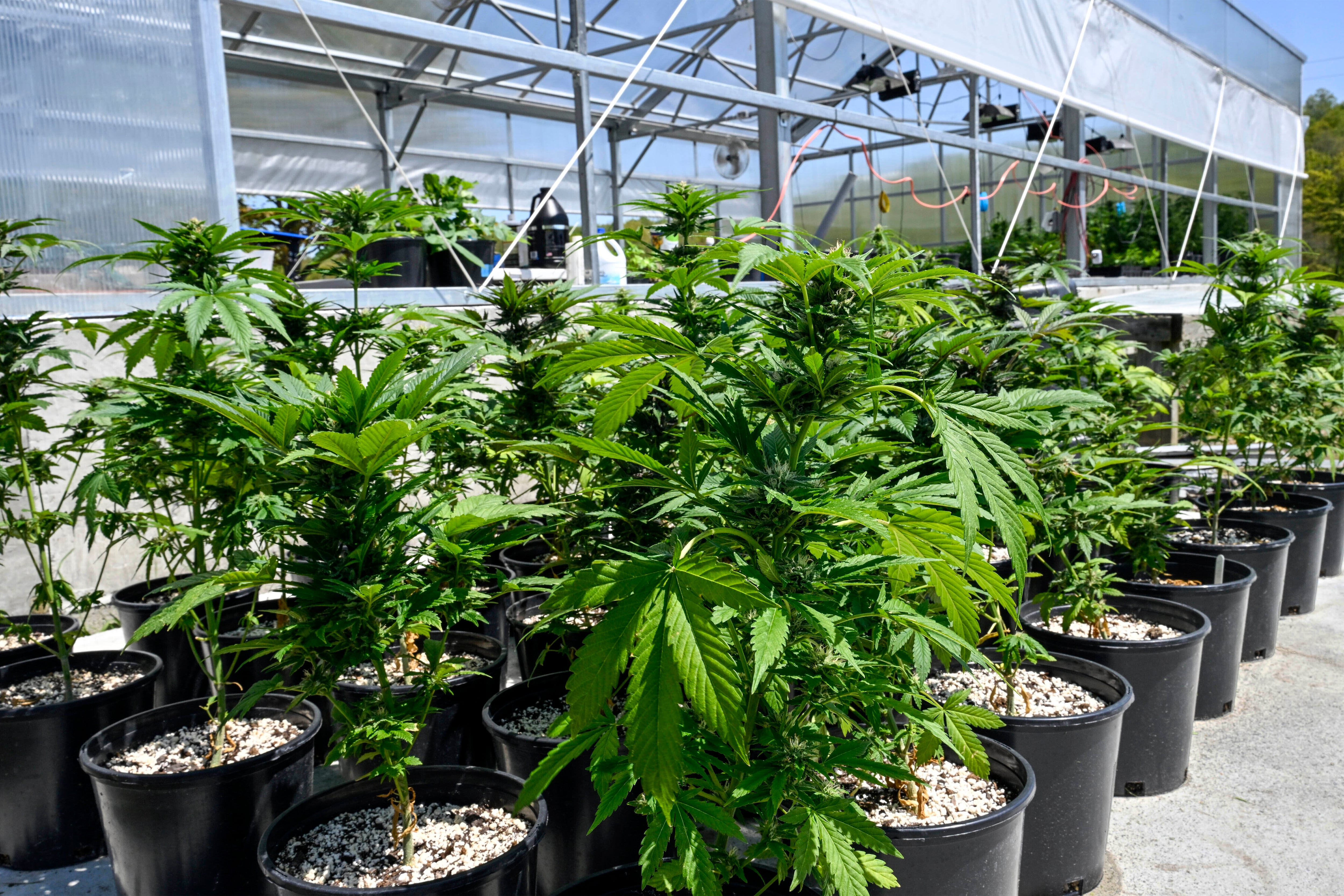
The U.S. Drug Enforcement Administration is moving toward reclassifying marijuana as a less dangerous drug. The Justice Department proposal would recognize the medical uses of cannabis, but wouldn’t legalize it for recreational use.
The proposal would move marijuana from the “Schedule I” group to the less tightly regulated “Schedule III.”
So what does that mean, and what are the implications?
What has actually changed? What happens next?
Technically, nothing yet. The proposal must be reviewed by the White House Office of Management and Budget, and then undergo a public-comment period and review from an administrative judge, a potentially lengthy process.
Still, the switch is considered “paradigm-shifting, and it’s very exciting,” Vince Sliwoski, a Portland, Oregon-based cannabis and psychedelics attorney who runs well-known legal blogs on those topics, told The Associated Press when the federal Health and Human Services Department recommended the change.
“I can’t emphasize enough how big of news it is,” he said.
It came after President Joe Biden asked both HHS and the attorney general, who oversees the DEA, last year to review how marijuana was classified. Schedule I put it on par, legally, with heroin, LSD, quaaludes and ecstasy, among others.
Biden, a Democrat, supports legalizing medical marijuana for use “where appropriate, consistent with medical and scientific evidence,” White House press secretary Karine Jean-Pierre said Thursday. “That is why it is important for this independent review to go through.”
If marijuana gets reclassified, would it legalize recreational cannabis nationwide?
No. Schedule III drugs — which include ketamine, anabolic steroids and some acetaminophen-codeine combinations — are still controlled substances.
They’re subject to various rules that allow for some medical uses, and for federal criminal prosecution of anyone who traffics in the drugs without permission.
No changes are expected to the medical marijuana programs now licensed in 38 states or the legal recreational cannabis markets in 23 states, but it’s unlikely they would meet the federal production, record-keeping, prescribing and other requirements for Schedule III drugs.
There haven’t been many federal prosecutions for simply possessing marijuana in recent years, even under marijuana’s current Schedule I status, but the reclassification wouldn’t have an immediate impact on people already in the criminal justice system.
“Put simple, this move from Schedule I to Schedule III is not getting people out of jail,” said David Culver, senior vice president of public affairs at the U.S. Cannabis Council.
But rescheduling in itself would have some impact, particularly on research and marijuana business taxes.
What would this mean for research?
Because marijuana is on Schedule I, it’s been very difficult to conduct authorized clinical studies that involve administering the drug. That has created something of a Catch-22: calls for more research, but barriers to doing it. (Scientists sometimes rely instead on people’s own reports of their marijuana use.)
Schedule III drugs are easier to study, though the reclassification wouldn’t immediately reverse all barriers to study.
“It’s going to be really confusing for a long time,” said Ziva Cooper, director of the University of California, Los Angeles Center for Cannabis and Cannabinoids. “When the dust has settled, I don’t know how many years from now, research will be easier.”
Among the unknowns: whether researchers will be able to study marijuana from state-licensed dispensaries and how the federal Food and Drug Administration might oversee that.
Some researchers are optimistic.
“Reducing the schedule to schedule 3 will open up the door for us to be able to conduct research with human subjects with cannabis,” said Susan Ferguson, director of University of Washington’s Addictions, Drug & Alcohol Institute in Seattle.
What about taxes (and banking)?
Under the federal tax code, businesses involved in “trafficking” in marijuana or any other Schedule I or II drug can’t deduct rent, payroll or various other expenses that other businesses can write off. (Yes, at least some cannabis businesses, particularly state-licensed ones, do pay taxes to the federal government, despite its prohibition on marijuana.) Industry groups say the tax rate often ends up at 70% or more.
The deduction rule doesn’t apply to Schedule III drugs, so the proposed change would cut cannabis companies’ taxes substantially.
They say it would treat them like other industries and help them compete against illegal competitors that are frustrating licensees and officials in places such as New York.
“You’re going to make these state-legal programs stronger,” says Adam Goers, of The Cannabist Company, formerly Columbia Care. He co-chairs a coalition of corporate and other players that’s pushing for rescheduling.
It could also mean more cannabis promotion and advertising if those costs could be deducted, according to Beau Kilmer, co-director of the RAND Drug Policy Center.
Rescheduling wouldn’t directly affect another marijuana business problem: difficulty accessing banks, particularly for loans, because the federally regulated institutions are wary of the drug’s legal status. The industry has been looking instead to a measure called the SAFE Banking Act. It has repeatedly passed the House but stalled in the Senate.
Are there critics? What do they say?
Indeed, there are, including the national anti-legalization group Smart Approaches to Marijuana. President Kevin Sabet, a former Obama administration drug policy official, said the HHS recommendation “flies in the face of science, reeks of politics” and gives a regrettable nod to an industry “desperately looking for legitimacy.”
Some legalization advocates say rescheduling weed is too incremental. They want to keep the focus on removing it completely from the controlled substances list, which doesn’t include such items as alcohol or tobacco (they’re regulated, but that’s not the same).
Paul Armentano, the deputy director of the National Organization for the Reform of Marijuana Laws, said that simply reclassifying marijuana would be “perpetuating the existing divide between state and federal marijuana policies.” Kaliko Castille, a past president of the Minority Cannabis Business Association, said rescheduling just “re-brands prohibition,” rather than giving an all-clear to state licensees and putting a definitive close to decades of arrests that disproportionately pulled in people of color.
“Schedule III is going to leave it in this kind of amorphous, mucky middle where people are not going to understand the danger of it still being federally illegal,” he said.