*By Jacqueline Corba and Carlo Versano*
Celebrations broke out across Canada in the early hours of Wednesday morning when the country became the second ー and largest ー in the world to legalize recreational marijuana at the federal level.
The first sales took place in the easternmost parts of the nation ー St. John's, New Foundland ー shortly after midnight, with customers lining up outside retailers to get their hands on legal bud.
It marks a sea change in global policy, one many other countries will look to as they review shifting attitudes toward the drug.
"We are ready from a store perspective as well as from an e-commerce perspective," said Jean-François Bergeron, vice-president at SAQ, Québec's liquor corporation, which is overseeing the government's brand new cannabis retailer known as SQDC.
"We have inventory, we have the stock on site, we have all the points-of-sale ready to kick in."
Access to marijuana is regulated province to province in Canada. Some, like New Foundland, will open brick-and-mortar locations right away, while others, such as Ottawa, will start with online-only retail.
"People will be allowed to purchase it through the mail first, then we will have dispensaries or shops people will be able to go to next April," Riley Brockington, City Councillor for Ottawa's River Ward, told Cheddar.
But he knows legalization is as much about regulation and taxation as it is about acceptance of marijuana.
"I don't condone drug use," said Brockington. "I live in reality ー there is a fairly moderate demand for cannabis, and what the federal government is trying to do is basically undercut or undermine the black market by making it legal."
Meanwhile, Québec will open 12 physical shops through the SQDC. Cheddar visited one of those stores in Montreal one day before legalization and found it to be organized and easy-to-understand from a customer perspective.
"You have to realize that our mission is not to make a profit," said SAQ's Bergeron, the Québec retail representative.
"Our mission is a social mission."
Bergeron said any revenue from sales will go back into funding public education, addiction programs, and safety. Québec also expects to capture 30 percent of the black market sales in the first year and will offer cannabis at the most competitive prices compared to other provinces, according to Bergeron.
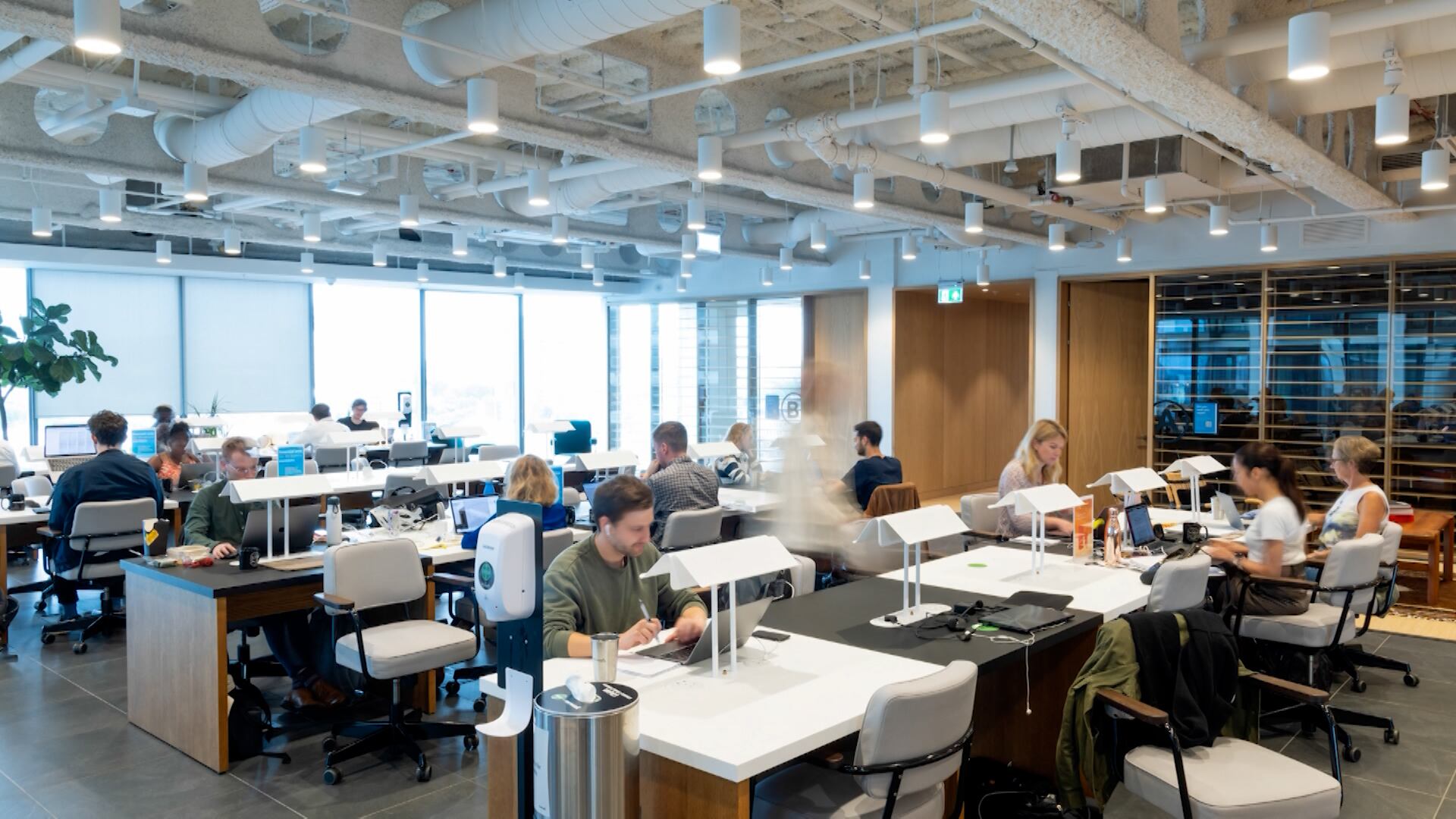
Businesses face more challenges for building a positive work environment as offices reopen. Workplace tech platform Envoy's At Work Report showed that hybrid work is currently in vogue, featuring focused work in both the office and at home. Annette Reavis, chief people officer for Envoy, joined Cheddar to discuss how employers can smooth the rough edges for their returning employees. "It is about hybrid though, it's really important for the future that we change our mindset from five days a week," she said. "Those are days of the past to working hybrids. So when you're in the office, you're focused, you're working cross-functionally."
Following the invasion of Ukraine, a multitude of Western companies have paused doing business with Russia. PepsiCo, Coca-Cola, McDonald's, and Starbucks are the most recent companies to temporarily cease operations in Russia. Dean of Miami Herbert Business School at the University of Miami, John Quelch, joined Cheddar News to discuss what message this sends to Russia and the Russian consumer. “I would not underestimate the collective strength of all of these multinational companies, essentially coming together to make their collective statement in support of the political statements that have come out of Washington," he said.
Cristyl Kimbrough, real estate attorney and star of 'Ladies Who List: Atlanta,' joins Cheddar News to discuss her new show on OWN and breaking into Atlanta's luxury real estate space.
Carl Tobias, professor of law at the University of Richmond, joins Cheddar News to talk about how Johnson & Johnson funded experiments on mostly Black men comparing the effects of talc and asbestos on their skin.
Amazon unveiled its new mobile app called Amp as a direct competitor to Clubhouse, allowing people to host live radio shows. Although it is still in beta, users can join the waitlist from the iOS store.
President Biden announced a ban on Russian oil and natural gas imports to the U.S. in response to its invasion of Ukraine, a move he warned could lead to an even greater surge in gas prices. The ban is prompting a conversation about the current oil production levels in the U.S. and whether or not the industry can ramp up production to soften the blow to American families at the gas pump. Clark Williams-Derry, Energy Finance Analyst with the Institute for Energy Economics and Financial Analysis, breaks down the state of the U.S. oil industry and how the ban might impact production levels here at home.
PepsiCo, Coca-Cola, McDonald’s, and Starbucks are the latest American food brands to have halted business operations in Russia after having faced scrutiny and criticism for originally failing to do so amid the country's invasion of Ukraine.