Axios recently published a National Security Council memo considering the possibility of a national 5G network. Since that report was published Sunday, the Trump administration responded saying it has no current plans to nationalize a 5G network, according to Recode. Axios Chief Technology Correspondent Ina Fried, and The Verge Reporter Chaim Gartenberg explain what a 5G network would look like.
Fried says this would be massive, and unprecedented. "Building a 5G network takes years, it takes lots of planning," said Fried. "The whole industry is moving towards 5G very slowly and methodically. So the idea of anyone just coming in and doing it, let alone the government would be a massively bid deal."
This could greatly impact business competition among telecommunication companies explains Gartenberg. "It would mean dramatically decreased competition in terms of cell phone bills," said Gartenberg. "We never really had anything like this."
On Monday FCC Chairman Ajit Pai tweeted in opposition of this deal. Axios reports all five FCC commissioners are united against 5G nationalization.
Tech-enabled residential hospitality company Mint House recently raised $35 million in a Series B round led by Mohari Hospitality. Mint House was described by one of its backers as 'the best of a hotel without the worst of a hotel, and the best of an Airbnb without the worst of an Airbnb.' Mint House offers apartment-style lodging across the country. The company claims its spaces combine the comfort of a home with the luxury of a hotel in order to give guests all of the perks and none of the tradeoffs. Will Lucas, Founder and CEO of Mint House, joins Cheddar News' Closing Bell to discuss.
Social media platforms walk a fine line when it comes to free speech, especially when posts lead to real-life negative consequences. Texas lawmakers are trying to enforce a law that would prohibit platforms from taking any action when it comes to malicious or violent posts, and they insist it does not violate the First Amendment. But the Supreme Court thinks otherwise, at least for now. Matt Schruers, President of the Computer & Communications Industry Association, joins Closing Bell to discuss what threat the Texas law poses to social platforms, why his organization sued over the law, what it could mean for users, and more.
Fintech company Acrisure recently raised $725 million in a new funding led by a wholly-owned subsidiary of the Abu Dhabi Investment Authority, bringing the company's valuation to $23 billion. Acrisure offers financial solutions including insurance, reinsurance, real estate services, cyber services, and asset management. The company says its financial solutions are powered by the best of human and artificial intelligence. Greg Williams, co-founder, CEO and President of Acrisure, joins Cheddar News' Closing Bell to discuss.
On Today's Biz Breakdown, the oil shortage being compared to the 1970s gas crisis, home prices surged In March, and 56% of tech workers say they would quit if recorded by their employer.
After two subway shootings in two months and the more recent mass shootings in Uvalde, Texas, and Buffalo, New York, Mayor Eric Adams is calling for gun detection scanners to be installed in New York City subways. The tech would be similar to that used in sporting arenas, however, experts note multiple difficulties with such a setup including the need for nearby human operators.
Catching you up on what you need to know on Wednesday, June 1, 2022, House lawmakers hold an emergency hearing on gun control measures in the wake of the Uvalde shooting, the Supreme Court temporarily blocks Texas' law stopping social media moderation, and the James Webb Space Telescope gets a new mission.
On today's Biz Breakdownm, Ford beats Tesla to the first EV truck Deliveries, massive flight cancelations wrap up Memorial Day Weekend, and Apple announces new IOS 16 features one week before the WWDC.
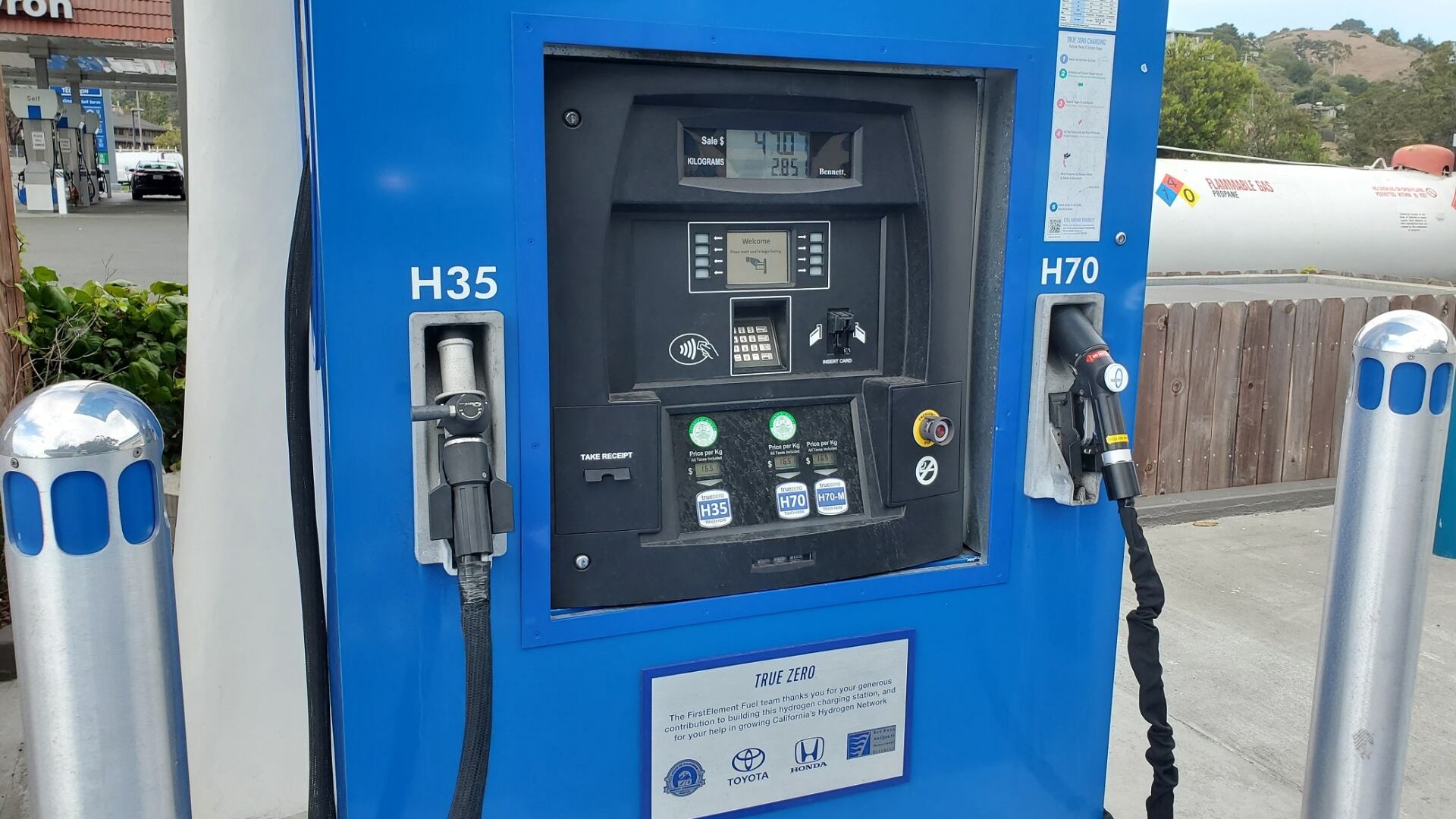
Scientists are hoping that the simplest element in the universe — hydrogen — can be the solution to slowing down climate change. However, it does not come without cost. The process of making hydrogen could potentially add more CO2.