By Zeke Miller and Kevin Freking
As he encouraged the country to “reopen,” President Donald Trump confronted cases of the coronavirus in the White House itself on Monday, spotlighting the challenge he faces in instilling confidence in a nation still reeling from the pandemic.
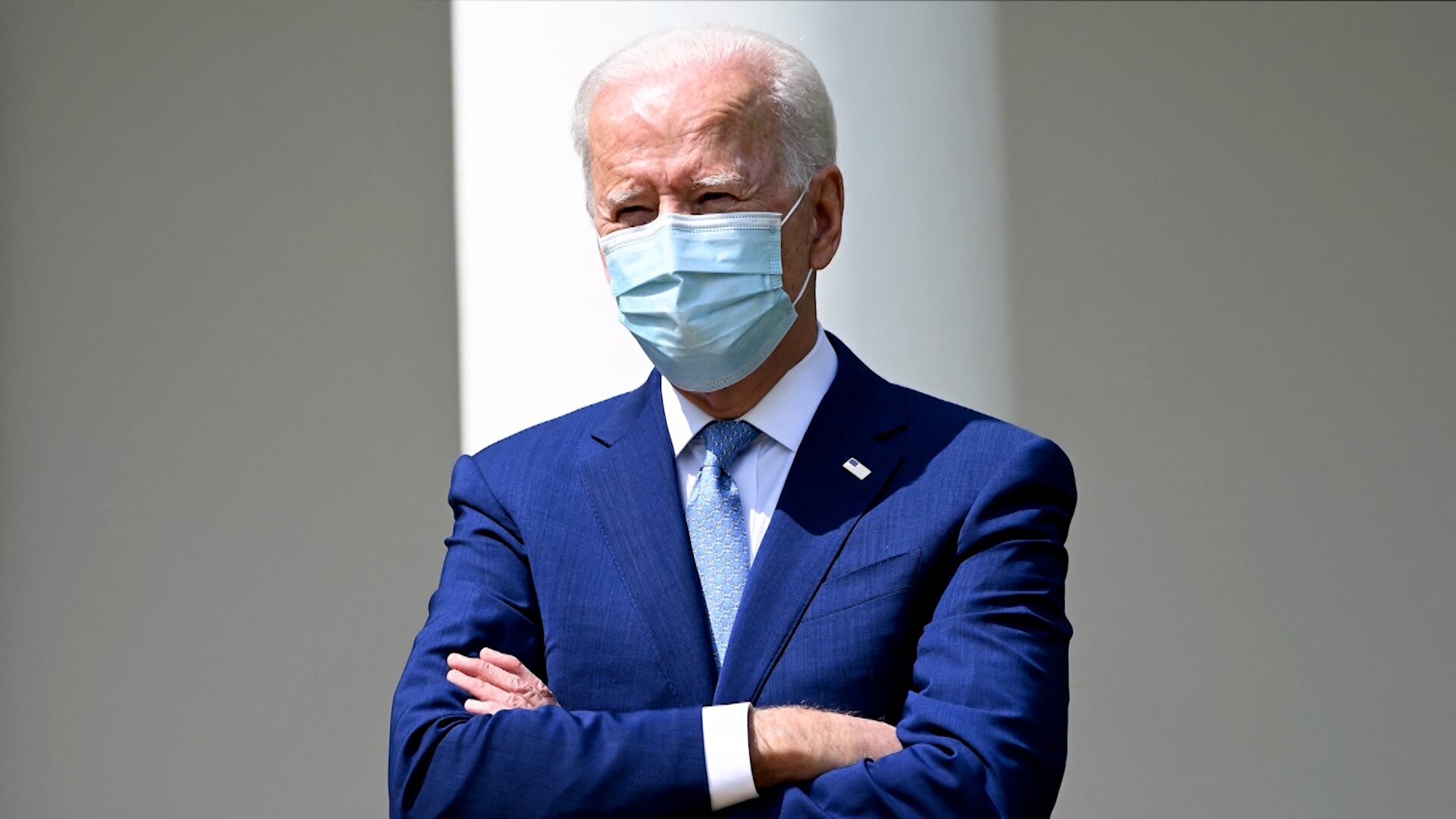
In a potent new symbol of the risk, Trump addressed a Rose Garden audience filled with mask-wearing administration officials. That was after two known cases of COVID-19 among staffers in one of the most-protected complexes in America sent three of the nation’s top medical experts into quarantine and Vice President Mike Pence into “self-isolation.”
Trump himself, not wearing a mask, was emphasizing to the American people the steps being taken to ensure their safety — in hopes that will coax them to resume normal activities.
At one point Monday, he declared “We have met the moment, and we have prevailed.” Trump later clarified he was only referring to ‘prevailing’ in connection to testing for the virus. Yet that contention, too, is widely challenged.
His upbeat message in the sunny White House Rose Garden was undercut by the sight of all the officials in face masks, a result of the positive cases at the White House itself and new protective measures implemented to keep Trump safe.
A memo to staff Monday directed "everyone who enters the West Wing to wear a mask or facial covering.” Staff will be allowed to remove their face coverings if they sit at least six feet apart from their colleagues. The directive apparently doesn't apply to the president.
At Trump's Monday briefing, meant to highlight the availability of COVID-19 testing that governors in both parties have said is essential for their reopening plans, many White House aides, including senior adviser Jared Kushner, appeared in public for the first time wearing face coverings.
Trump insisted that any American who wants a test for the virus can get one, even though experts say there is no capacity for testing on that scale.
Only on Monday did the administration believe it had enough tests to mount a nationwide testing campaign to address significant death rates in nursing homes and other senior care facilities. On a call with governors, Pence and Dr. Deborah Birx, the White House coordinator for the virus response, recommended that every nursing home occupant and staffer be tested for COVID-19 in the next two weeks, with vigilant monitoring going forward, especially of staff.
Pence led the weekly call with governors from an isolated room, after his press secretary tested positive Friday. Birx and other staffers participated as usual from a conference room in the Situation Room, Pence said, explaining the “slightly different circumstance.”
“We are taking the appropriate countermeasures to protect the president’s health," Pence added, according to a recording obtained by the AP. The White House was moving to daily testing of some staff members to detect the disease.
The stepped-up protective measures come as Dr. Anthony Fauci, the director of the National Institute of Allergy and Infectious Diseases, Dr. Robert Redfield, director of the CDC, and the commissioner of the Food and Drug Administration, Dr. Stephen Hahn, were all quarantining after exposure to the White House staffer.
The three experts are scheduled to testify before a Senate panel Tuesday on “Safely Getting Back to Work and Back to School." However, they, along with committee chairman Lamar Alexander, R-Tenn., will all participate remotely. Alexander is quarantining after a staff member of his own tested positive for COVID-19.
The images of top administration officials taking such precautions come as states seek to loosen economic restrictions put in place to mitigate the virus’ spread.
Trump on Monday was complaining that Democratic governors were too slow in lifting restrictions in their states.
“The great people of Pennsylvania want their freedom now, and they are fully aware of what that entails,” he tweeted. “The Democrats are moving slowly, all over the USA, for political purposes. They would wait until November 3rd if it were up to them. Don’t play politics. Be safe, move quickly!”
Trump was scheduled to travel to the state on Thursday, according to advisories from the Federal Aviation Administration.
Decisions about how fast to reopen are being made with the general election less than six months away, and Trump and other incumbents facing it in the midst of a public health and economic crisis.
“If we do this carefully, working with the governors, I don’t think there’s a considerable risk,” Treasury Secretary Steven Mnuchin said on “Fox News Sunday.” “Matter of fact, I think there’s a considerable risk of not reopening. You’re talking about what would be permanent economic damage to the American public.”
Mnuchin was one of several economic advisers the White House dispatched on Sunday to place the focus on the merits of loosening restrictions on the economy. Yet attention to possible risks of infection also turned to how the virus even found its way into the White House.
Fauci’s institute said he was “taking appropriate precautions” to mitigate the risk to others while still carrying out his duties, teleworking from home but willing to go to the White House if called. Officials said both Redfield and Hahn will be self-quarantining for two weeks.
Pence’s press secretary, Katie Miller, tested positive for the coronavirus on Friday, making her the second person who works at the White House complex known to test positive for the virus in the past week. A military service member who acts as a valet to the president tested positive on Thursday, the first known instance for a person in close proximity to Trump at the White House.
The announced precautions contrast with a president who has declined to wear a face-covering in meetings at the White House or at his public events.
Kevin Hassett, an adviser to Trump and the former chairman of the Council of Economic Advisers, acknowledged Sunday it’s “scary to go to work” in the White House, calling the West Wing a “small, crowded place. It’s, you know, a little bit risky.”
Hassett said he wears a mask when necessary and practices “aggressive social distancing.” Appearing on CBS’ “Face the Nation," he said any fears are tempered by frequent testing, access to an excellent medical team, and his belief that this is a time “when people have to step up and serve their country.”
___
AP writer Alan Suderman contributed from Richmond, Virginia.